
Berkshire Hathaway’s Leadership Transition: Greg Abel Steps into the Spotlight as Buffett Steps Aside
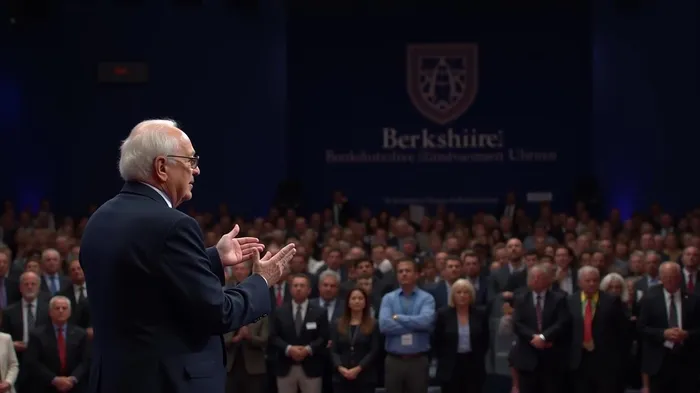
The annual shareholder meeting of Berkshire Hathaway, often dubbed the “Woodstock of Capitalism,” has long been a stage for Warren Buffett’s wisdom and wit. But this year’s event marked a historic shift: Buffett announced his intention to step down as CEO by the end of 2025, with Greg Abel, the vice chairman overseeing the conglomerate’s non-insurance businesses, set to succeed him. This transition, years in the making, signals a new era for the $1.1 trillion giant—and investors are watching closely to see how Abel will navigate its next chapter.
The Catalyst: A Decade-Long Transition Finally Formalized
Buffett’s announcement at the May 3 meeting crystallized a process that began in 2021 when Abel was first named his successor. Now, with formal board approval expected on May 4, the transition becomes irreversible. Buffett framed the move as both a natural succession and a vote of confidence in Abel’s leadership. “Greg will be more successful than I have been,” Buffett declared, emphasizing Abel’s operational expertise and alignment with Berkshire’s values.
The timing, however, came as a surprise to Abel himself. “I had no idea this was coming,” he admitted, though the board’s swift schedule for approval underscores the inevitability of the shift. Analysts note that this formal handover addresses lingering uncertainty for shareholders, who had long speculated about post-Buffett leadership.
Greg Abel: The Operator in Charge of Berkshire’s Engine
Abel, 60, is no stranger to the spotlight. For over two decades, he has managed Berkshire’s sprawling non-insurance empire, including BNSF Railway, Dairy Queen, and Berkshire Hathaway EnergyBRK.A--. His hands-on operational style contrasts with Buffett’s focus on investing, positioning him to tackle the company’s next challenges.
Key facts about Abel’s role:
- Subsidiary Performance: Under Abel, BNSF Railway’s revenue grew by 8% in 2024, while Berkshire Hathaway Energy expanded its renewable energy portfolio.
- Cash Management: Abel emphasized the strategic value of Berkshire’s $347.7 billion cash reserves, calling it a “strategic asset” to weather economic storms. “We’ll never rely on a bank,” he asserted, aligning with Buffett’s aversion to debt.
Abel’s vision also includes maintaining Berkshire’s decentralized structure, where subsidiaries operate independently—a model that has fueled its growth. “Berkshire’s strength is its people,” he noted, signaling a focus on empowering local leadership.
Navigating Challenges: Can Abel Sustain the Buffett Legacy?
While Abel’s operational acumen is clear, he faces significant hurdles. Berkshire’s Q1 2025 operating profit fell 14.1% to $9.64 billion, driven by underperforming insurance divisions. Meanwhile, the S&P 500’s 3% decline contrasts with Berkshire’s 18% year-to-date stock surge, reflecting investor confidence in its cash hoard and Abel’s credibility.
Key challenges ahead:
- Investment Strategy: Abel must decide whether to expand Berkshire’s portfolio beyond its core holdings. Buffett’s reluctance to invest large sums has drawn criticism, but Abel’s preference for operational businesses may shift focus.
- Global Risks: Trade tensions and geopolitical instability, which Buffett called “a big mistake” to weaponize, will test Abel’s ability to protect Berkshire’s international interests.
- Succession Beyond 2025: While Buffett remains chairman until his death, Abel must also prepare for the next generation of leaders.
Conclusion: A New Era, but Old Principles Remain the Anchor
Greg Abel’s ascension marks a pivotal moment for Berkshire Hathaway. While the world now turns its gaze to his leadership, the company’s foundation—its cash reserves, decentralized structure, and long-term focus—remains intact.
Investors should note two critical data points:
1. Cash Reserves: At $347.7 billion, Berkshire’s liquidity is unmatched. Abel’s ability to deploy this capital strategically will define his tenure.
2. Stock Performance: Despite Q1’s profit dip, Berkshire’s 18% YTD gain outperformed the broader market, signaling investor confidence in its resilience.
Abel’s path forward is clear: preserve Berkshire’s independence, leverage its operational strengths, and adapt its investment strategy to a post-Buffett world. For shareholders, this transition offers both continuity and innovation—a blend that could sustain the conglomerate’s legacy for decades to come.

Stay ahead of the market.
Get curated U.S. market news, insights and key dates delivered to your inbox.




Comments
No comments yet