
Berkshire Hathaway’s Leadership Transition: A New Era for the Oracle of Omaha’s Legacy
The investment world braced for a seismic shift last week as Warren Buffett, the 97-year-old iconICLR-- who turned Berkshire Hathaway into a $700 billion conglomerate, announced his retirement as CEO. The move, revealed at the 2025 annual shareholder meeting, marks the end of an era and thrusts the reins of one of the world’s most storied firms into the hands of Greg Abel, the 62-year-old executive Buffett has groomed for decades.
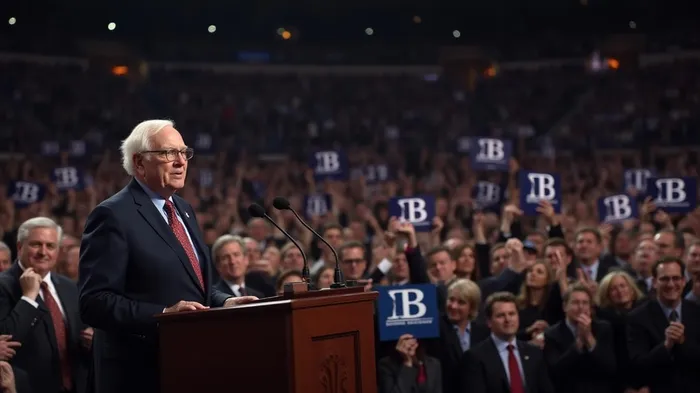
The End of an Icon’s Reign
Buffett’s departure is not merely a leadership change—it’s a historic pivot for a company synonymous with his name. The announcement, paired with first-quarter earnings that highlighted a 14.1% drop in operating income to $9.64 billion, underscores the challenges Abel will face. Key factors behind the decline include a $1.1 billion hit from California wildfires, a $713 million foreign exchange loss, and lingering fallout from trade policies that Buffett has openly condemned as “a big mistake.”
The CEO transition comes with unprecedented scrutiny. Abel, who oversees Berkshire’s non-insurance businesses, now faces the dual task of maintaining the firm’s cash reserves—now at a record $347.7 billion—and deploying capital in ways that honor Buffett’s legacy while adapting to a rapidly evolving economy.
Navigating a Landscape of Uncertainty
Abel’s first test will be navigating the geopolitical and economic crosswinds buffeting Berkshire’s sprawling empire. The company’s Q1 report highlighted vulnerabilities in its key divisions:
- Railroads: BNSF Railway’s freight volumes faced headwinds as trade tensions and supply chain bottlenecks slowed shipments.
- Insurance: Geico’s underwriting profits fell 49%, partly due to disaster-related losses.
- Manufacturing: Tariffs on steel and aluminum continue to pressure Berkshire’s Precision Castparts subsidiary, a critical supplier to the aerospace industry.
Yet Buffett’s legacy offers a lifeline. The firm’s massive cash hoard—a 10% jump from 2024—provides a buffer against volatility. Abel has already signaled his intent to maintain this financial fortress, calling it an “enormous asset” that ensures Berkshire’s independence.
The Buffett Effect: A Legacy in Transition
Buffett’s influence will linger, even in retirement. He plans to stay involved in a “limited capacity,” a move that could either reassure investors or complicate Abel’s autonomy. The dual narrative of continuity and change is evident in Buffett’s recent comments, such as his “We’re back in the game” tweet hinting at renewed deal-making—a stark contrast to his recent streak of net stock sales.
Analysts, however, remain divided. While Berkshire’s Class A shares rose 19% year-to-date, outperforming a tariff-weakened S&P 500, skeptics warn that Abel’s success hinges on deploying capital more aggressively than Buffett has in recent years. The new CEO must also address regulatory risks, including a $500 million EPA investigation into BNSF’s emissions and antitrust scrutiny of a $2.5 billion aerospace joint venture.
Conclusion: A New Era, But the Rules Remain
Greg Abel’s Berkshire will face a balancing act: honoring Buffett’s principles while adapting to a world of tariffs, climate regulations, and shifting consumer demands. The company’s $347.7 billion cash pile and first-quarter resilience—despite a 14% earnings drop—suggest it can weather near-term turbulence. However, long-term success depends on Abel’s ability to execute on two fronts:
- Strategic Acquisitions: Deploying the cash hoard into high-growth sectors like AI-driven tech or infrastructure, as hinted at in recent internal memos.
- Risk Management: Navigating regulatory and geopolitical headwinds without compromising Berkshire’s operational excellence.
The stock’s recent outperformance (up 19% YTD) reflects investor optimism, but Berkshire’s path forward is clear: Abel must prove he can replicate Buffett’s knack for identifying undervalued assets while thriving in a fast-changing economy. The world’s most iconic conglomerate will live or die by its next chapter.

Stay ahead of the market.
Get curated U.S. market news, insights and key dates delivered to your inbox.


AInvest
PRO
AInvest
PRO



Comments
No comments yet