
Berkshire Hathaway’s Leadership Shift: The Abel Era Begins as Buffett Steps Down
The OracleORCL-- of Omaha has handed the baton. On May 3, 2025, Warren Buffett, 94, announced his retirement as Berkshire Hathaway’s CEO, naming Greg Abel as his successor. The move, confirmed at Berkshire’s annual shareholder meeting, marks a historic transition for one of the world’s most influential conglomerates—and sets the stage for a new chapter in corporate leadership.
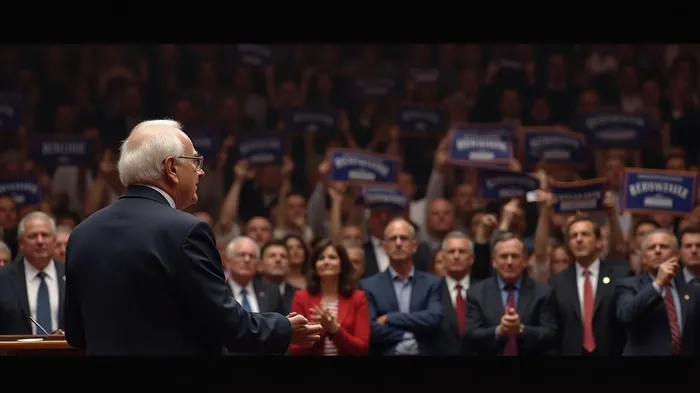
The End of an Era: Buffett’s Final Move
Buffett’s decision to step down by year-end was unexpected but inevitable. After six decades at the helm, the 94-year-old billionaire acknowledged the need for a younger leader to navigate Berkshire’s sprawling $1.2 trillion empire. Abel, 62, the vice chairman overseeing non-insurance operations, will take over full operational control—a role Buffett described as requiring “more hands-on management” than his own.
Key Data Point: Buffett’s net worth, tied entirely to Berkshire shares, exceeds $169 billion, underscoring his unwavering faith in Abel’s leadership.
The transition was met with immediate investor confidence. Berkshire’s Class A shares (BRK.A) rose 3% post-announcement, though they remain below their 2021 peak.
Abel’s Playbook: From Energy Expert to CEO
Abel’s rise is rooted in his 25-year tenure at Berkshire, where he revitalized subsidiaries like Berkshire Hathaway Energy. His hands-on approach contrasts with Buffett’s hands-off strategy, a distinction Buffett openly praised: “It’s working way better with Greg than with me.”
The Canadian-born executive faces a dual challenge: maintaining Berkshire’s core value-investment philosophy while adapting to evolving markets. Key priorities include:
- Renewables and Infrastructure: In May 2025, Berkshire announced a $5 billion partnership with a European firm to expand green energy grids—a shift aligning with Abel’s energy-sector expertise.
- Cash Management: Berkshire holds $347 billion in cash reserves, a figure Buffett calls “a lot to manage.” Abel’s ability to deploy this capital effectively will define his tenure.
Buffett’s Final Words: Tariffs, Trade, and Caution
During the shareholder meeting, Buffett doubled down on his skepticism of U.S. trade policies, calling tariffs a “big mistake” and warning of their economic fallout. Meanwhile, he reiterated Berkshire’s conservative stance: “Market volatility is nothing compared to history’s bear markets.”
Key Quote: “Greg’s leadership will require patience—Berkshire’s success has always been built on long-term thinking,” said Buffett, emphasizing continuity in strategy despite the leadership change.
Investor Implications: Riding the Abel Wave
For investors, the transition raises critical questions: Can Abel replicate Buffett’s success? How will Berkshire’s portfolio evolve?
- Continuity Over Chaos: Abel has pledged to uphold Buffett’s principles, focusing on undervalued equities and stable industrial assets. This bodes well for Berkshire’s existing holdings like Apple ($70 billion stake) and Coca-Cola.
- Growth in Renewables: The $5 billion green energy partnership signals a strategic pivot. As ESG standards tighten globally, Berkshire’s shift aligns with investor demand for sustainable investments.
Conclusion: A New Chapter, Old Wisdom
Greg Abel’s ascension to CEO is more than a generational handoff—it’s a test of Berkshire’s adaptability. With $347 billion in cash and a leader proven in operational excellence, the conglomerate is positioned to thrive. Yet, investors must remember: Abel’s success hinges on balancing innovation with Buffett’s timeless mantra—“It’s far better to be roughly right than precisely wrong.”
For now, the markets seem reassured. As Berkshire’s stock nears $1.2 trillion in value, the world waits to see if Abel can turn the page without closing the book on the Oracle’s legacy.

Stay ahead of the market.
Get curated U.S. market news, insights and key dates delivered to your inbox.






Comments
No comments yet