
Berkshire Hathaway’s New Era: Greg Abel’s Leadership and the Road Ahead
The annual Berkshire HathawayBRK.B-- shareholder meeting in Omaha is always an event, but this year’s gathering on May 3, 2025, marked a historic turning point. For the first time in 50 years, Warren Buffett stepped aside as CEO, passing the baton to Greg Abel, the 55-year-old executive whose operational expertise and strategic vision will now steer one of the world’s most storied conglomerates.
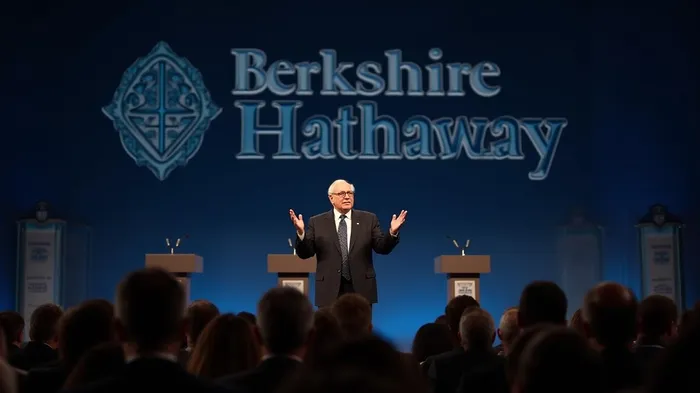
A New Era Begins
Abel’s formal appointment as CEO, announced during the shareholder meeting, signals the start of a transformative chapter for Berkshire. While Buffett remains chairman, the transition marks the end of an era defined by his legendary value-investing philosophy and the beginning of an era shaped by Abel’s operational rigor.
The immediate market reaction was positive: Berkshire’s Class B shares (BRK-B) rose 2.3% in after-hours trading following the announcement. However, the broader narrative is more nuanced. Year-to-date, Berkshire’s stock has lagged the S&P 500, reflecting investor anxiety over how Abel will deploy the company’s $334.2 billion cash reserves and rebalance its equity portfolio.
Strategic Shifts Under Abel
Abel’s rise to CEO underscores a shift from pure investing to operational execution. Unlike Buffett, whose legacy is built on buying undervalued companies and holding stakes for decades, Abel brings deep experience in managing complex businesses. As CEO of Berkshire Hathaway Energy and Vice Chairman of Non-Insurance Operations, he has overseen entities like BNSF Railway and Precision Castparts, where he prioritized cost discipline and capital efficiency.
Analysts speculate that Abel will push Berkshire to reinvent itself. Potential moves include:
- Deploying Cash: Analysts like Morningstar’s Gregg Warren suggest Abel may explore high-growth sectors like renewable energy or technology—areas aligned with his infrastructure background—or return capital to shareholders via dividends or spinoffs.
- Structural Overhaul: The conglomerate model, once Berkshire’s strength, now faces scrutiny for inefficiencies. Abel may spin off non-core units or refocus on high-margin sectors like utilities and energy.
But challenges loom. Berkshire’s equity portfolio, including stakes in Apple, Bank of America, and Coca-Cola, has underperformed in recent years. The S&P 500’s Q1 2025 gains, driven by tech and AI stocks, highlight the gap between Berkshire’s traditional holdings and market trends.
Navigating the Storm
Abel’s leadership will be tested by macroeconomic risks. Rising interest rates and inflation could strain Berkshire’s insurance divisions, which rely on underwriting profits and investments. Meanwhile, activist investors may push for shareholder returns, a departure from Buffett’s cash-hoarding strategy.
Lead director Sue Decker emphasized Abel’s readiness, noting his deep involvement in capital allocation decisions. “Greg has earned the trust of the board and Warren,” she said, underscoring his authority to reshape Berkshire’s priorities.
Yet succession beyond Abel remains unresolved. Vice Chairman Ajit Jain, 72, and other leaders are aging, and the company’s pipeline of younger talent is unclear. This raises questions about whether Abel can build a sustainable leadership team.
Conclusion: A Bridge to the Future?
Greg Abel’s ascension represents both continuity and change. The $334.2 billion cash reserves and Buffett’s legacy provide a foundation for growth, but the path forward hinges on Abel’s ability to modernize Berkshire without losing its core strengths.
Investors should watch two key indicators:
1. Capital Allocation: Will Berkshire’s cash be deployed into high-growth sectors or returned to shareholders? A dividend or spinoff announcement could signal a break from Buffett’s playbook.
2. Portfolio Rebalancing: Underperforming equity stakes (e.g., Apple’s declining share of Berkshire’s portfolio) may be trimmed in favor of dynamic sectors.
Abel’s success will define whether Berkshire can thrive as a 21st-century conglomerate. As one analyst put it, “This is a bridge to a new era—or a bridge too far.” The next 12 months will reveal which path the company takes.
In the coming years, the world will measure Abel’s leadership not just by stock performance, but by his ability to adapt Buffett’s principles to a fast-changing economy. The stakes are high, but the opportunity—for Berkshire and its shareholders—is monumental.

Stay ahead of the market.
Get curated U.S. market news, insights and key dates delivered to your inbox.
AInvest
PRO
AInvest
PRO



Comments
No comments yet