
Berkshire Hathaway’s Dual Focus: Greg Abel’s Rise and Buffett’s Strategic Legacy
Subheading: Leadership Transition, Renewable Investments, and Economic Confidence Define a Pivotal Week for Berkshire
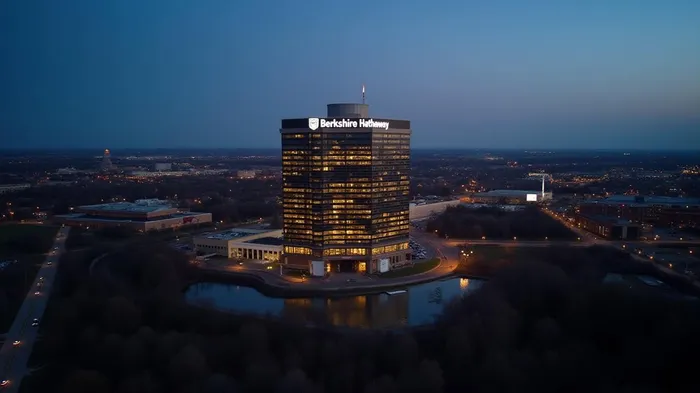
The annual Berkshire HathawayBRK.B-- shareholder meeting on May 4, 2025, marked a milestone in the company’s evolution. For the first time in decades, Warren Buffett shared the spotlight with CEO Greg Abel, underscoring a historic leadership transition and a bold pivot toward renewable energy. This week’s events revealed not just a changing of the guard but a strategic recalibration to meet 21st-century challenges.
The Leadership Shift: Abel’s Growing Influence
The shareholder meeting’s highlight was the formal delegation of oversight for Berkshire Hathaway Energy to Abel, a move detailed in the company’s annual letter. Buffett’s decision to reduce his day-to-day involvement in investments signals trust in Abel’s vision, particularly in energy and infrastructure.
> “Greg’s vision for sustainable growth is critical to Berkshire’s future,” Buffett stated in a April 30 press release announcing a $3.2 billion solar farm investment.
This transition was further solidified by Abel’s role as chair of the new executive committee, designed to streamline decision-making. Analysts note that Abel’s track record—doubling Berkshire Hathaway Energy’s revenue since 2018—positions him to lead the firm’s shift toward renewables.
Strategic Investments: Betting on Renewables and Railroads
The $3.2 billion Texas solar farm, announced on April 30, exemplifies Berkshire’s new direction. The project, paired with a first-of-its-kind battery storage facility, will power 500,000 homes annually. This aligns with Texas’s renewable mandates but also reflects a broader corporate strategy: leveraging Abel’s expertise to capitalize on energy demand.
Meanwhile, Abel’s May 2 keynote at the Transportation Summit outlined plans to modernize 1,200 miles of BNSF railroad track and integrate AI logistics systems. Buffett amplified this focus during a panel, declaring, “Inflation is easing, and consumer resilience remains strong—this bodes well for businesses like BNSF.”
Despite labor disputes at BNSF, both executives emphasized progress toward union agreements, a critical step for operational stability.
The Economic Outlook: Confidence Amid Transition
Buffett’s unwavering optimism about the U.S. economy—rooted in consumer resilience and inflation trends—anchors Berkshire’s strategy. The shareholder letter also highlighted record Q1 railroad freight volumes and insurance underwriting profits, signaling robust performance across core businesses.
Abel’s dual role as energy CEO and Berkshire’s de facto successor underscores the firm’s dual priorities: sustainable growth and smooth succession. At 95, Buffett’s reduced involvement is pragmatic, not premature. As Abel’s net worth ($2.2 billion) and Buffett’s ($116 billion) illustrate, their shared success is a testament to decades of disciplined investing.
Conclusion: A Blueprint for Sustainable Success
Berkshire Hathaway’s recent moves reveal a clear path forward. Abel’s leadership in renewables and infrastructure, coupled with Buffett’s legacy of value investing, positions the firm to thrive in a decarbonizing economy. The $3.2 billion solar investment and BNSF’s AI upgrades reflect a commitment to innovation, while the governance changes ensure continuity.
Investors should note Berkshire’s Q1 railroad freight volumes—up 8% year-over-year—and its expanding renewable portfolio, which now includes 20 GW of energy capacity. With Abel’s track record and Buffett’s confidence, Berkshire is primed to capitalize on both energy transitions and economic resilience. The coming years will test this strategy, but the groundwork is laid for a smooth handover—and a sustainable future.

Stay ahead of the market.
Get curated U.S. market news, insights and key dates delivered to your inbox.
AInvest
PRO
AInvest
PRO



Comments
No comments yet