
Berkshire Hathaway’s 2025 Annual Meeting: The Oracle Passes the Torch
Lead:
Warren Buffett’s announcement at Berkshire Hathaway’s 2025 annual meeting marked the end of an era. The 94-year-old “Oracle of Omaha” revealed plans to step down as CEO by year-end, anointing Greg Abel as his successor. The move, met with a standing ovation, signals a critical shift for a $1.2 trillion conglomerate built on Buffett’s contrarian wisdom—and now, the question is whether Abel can replicate its success.
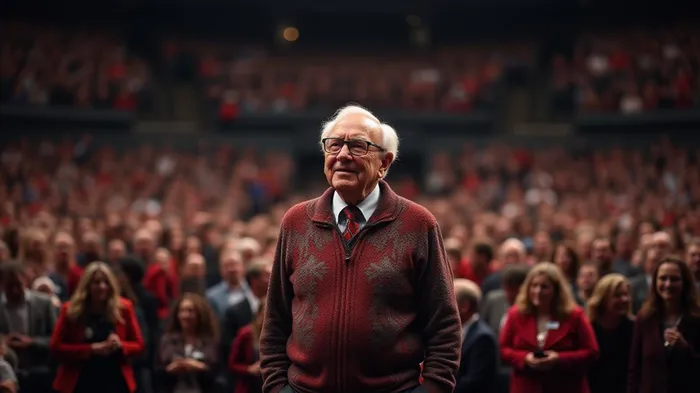
The Succession Plan: A Smooth Transition?
Buffett’s decision to hand the reins to Abel, 62, came as a surprise to all but his family. The board, unaware of the plan until the meeting, will vote unanimously to approve Abel’s elevation. The move underscores Buffett’s confidence in Abel’s leadership, particularly his hands-on management style—a stark contrast to Buffett’s famously hands-off approach.
> “Greg’s active leadership works way better for Berkshire’s subsidiaries than mine,” Buffett admitted, praising Abel’s track record turning underperforming businesses into cash cows.
Abel’s 25-year tenure at Berkshire began when MidAmerican Energy was acquired in 2000. As CEO of Berkshire’s non-insurance operations, he oversees 60 subsidiaries, including BNSF Railway and Dairy Queen, employing nearly 400,000 people. His ability to grow Berkshire HathawayBRK.B-- Energy into a $347 billion cash-reserve powerhouse has positioned him as the logical heir.
Buffett’s Final Words: Cash, Tariffs, and Confidence
While Abel’s succession dominated headlines, Buffett’s warnings and reflections provided deeper insight into Berkshire’s future.
- Cash Reserves and Strategic Patience
Berkshire’s $347 billion cash pile—up from $334 billion in late 2024—remains a strategic asset. Buffett emphasized the need for patience, stating, “It’s very unlikely to happen tomorrow, but not unlikely in five years.” Analysts note this hoard could fuel acquisitions in sectors like regional banking, where Berkshire recently invested $3 billion.
Trade Tariffs: A “Big Mistake”
Buffett lambasted U.S. trade policies, calling tariffs a “big mistake” that risk global economic specialization. His critique aligns with Berkshire’s quarterly report, which cited tariffs as a material risk to earnings.Market Volatility: No Bear Market Yet
Dismissing recent stock swings as “nothing,” Buffett reaffirmed faith in Berkshire’s value-investing ethos. The company’s top holdings—Apple, Bank of America, and Coca-Cola—remain untouched despite reduced Apple stakes.
Market Reactions and the Road Ahead
The announcement fueled a 4.2% surge in Berkshire’s Class A shares within three days post-meeting, reflecting investor confidence in the transition. Analysts highlighted Abel’s potential to modernize Berkshire’s operations, particularly through AI-driven efficiencies in subsidiaries like Geico.
However, challenges loom. The $347 billion cash pile demands sizable deals to move the needle—no easy task in a saturated market. Abel’s ability to balance Buffett’s decentralized culture with growth ambitions will be key.
The shareholder lunch auction’s record $4.2 million bid—donated to Glide Foundation—also underscored Berkshire’s enduring mystique. As Buffett quipped, “We don’t think it’s improper to sit for life [uninvested],” but shareholders hope Abel’s tenure will prove otherwise.
Conclusion: A New Era, Same Values?
Greg Abel’s ascent to Berkshire’s helm marks a historic transition, but the question remains: Can he sustain the firm’s legacy?
- Strengths: Abel’s operational acumen, proven by turning CalEnergy into a global energy giant, positions him to optimize Berkshire’s sprawling subsidiaries. His focus on preserving Buffett’s “independence, integrity, and trust” culture aligns with shareholder expectations.
- Challenges: Deploying $347 billion requires megadeals—a rarity in today’s market. Abel’s pledge to uphold value investing may limit aggressive moves, but Buffett’s cash hoard provides a buffer for patient opportunism.
With Berkshire’s stock up 20% YTD despite Q1 earnings declines, the market is betting on continuity. As Buffett fades into an advisory role, Abel’s first test lies in proving that Berkshire’s magic isn’t confined to the Oracle’s chair. The world—and Omaha’s shareholders—are watching closely.

Stay ahead of the market.
Get curated U.S. market news, insights and key dates delivered to your inbox.
AInvest
PRO
AInvest
PRO



Comments
No comments yet