
Berkshire's 8-Stock Core: A Value Investor's Analysis of Moats, Cash, and the Abel Transition
 Aime Summary
Berkshire Hathaway's investment portfolio is a monument to concentration. At its core lies a staggering $317 billion war chest, with nearly three-quarters of it-$235 billion, or 74%-funneled into just eight businesses. This is the disciplined, high-conviction approach of a value investor who believes in a few exceptional companies rather than a broad market index. The structure is a direct inheritance from Warren Buffett, who built it over decades with a philosophy of buying wonderful businesses at fair prices and holding them for the long term.
The recent selling activity underscores a key principle: even the best ideas have a price. Over the last two years, Berkshire has drastically reduced its position in its former largest holding, AppleAAPL--, by 74%. It has also trimmed its stake in Bank of AmericaBAC-- by 45%. These moves reflect a portfolio in active management, not static ownership. Yet, despite the CEO transition, the portfolio's DNA remains Buffett's. As of early 2026, the company's top holdings still feature familiar names, with nearly 65% of the portfolio concentrated in just five stocks. The largest of these, Apple, remains a significant holding, though its weight has been pared down.
The central question now is one of continuity. The portfolio is Buffett's portfolio, not just in name but in its fundamental structure and philosophy. The new CEO, Greg Abel, has pledged to run the company similarly to his predecessor, emphasizing long-term value and patience. The portfolio's immense size and concentrated nature-its top 10 holdings concentration of 86.69%-are a testament to that legacy. The challenge for Abel will be to uphold this disciplined approach, making the same kind of patient, value-driven decisions that have defined Berkshire's success, as he navigates the company's next chapter.
Analyzing the Moats: Intrinsic Value and Long-Term Potential
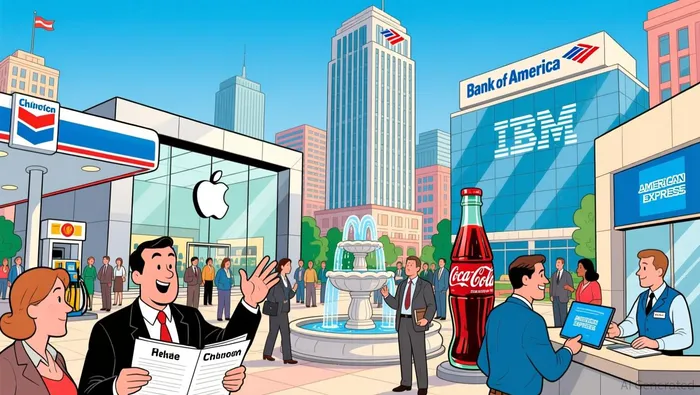
The eight core holdings represent Berkshire's concentrated bet on durable competitive advantages. Each is a fortress in its own right, but their moats vary in width and the durability of their cash flows is the ultimate test for a value investor. The portfolio's structure-74% in these eight-means Berkshire's future is tied to how well these businesses compound over decades, not quarters.
Apple is the portfolio's largest single bet, representing 20.1% of invested assets. Its moat is built on an ecosystem of unparalleled customer loyalty and a massive, high-margin services platform. The company's relentless share buybacks, having retired nearly 44% of its shares since 2013, directly enhance shareholder value. Yet, the growth engine is clearly shifting. As the evidence notes, Apple's physical device growth engine has slowed dramatically. The intrinsic value now hinges less on selling more iPhones and more on the profitability and stickiness of its services. This is a classic transition from a growth stock to a cash-generating machine, which aligns with a value investor's patience, but the valuation premium is no longer a bargain.
American Express stands out for its predictable, high-quality earnings. It is Berkshire's second-largest holding at 18.3% of the portfolio, and Buffett has called it a business to own "indefinitely." The moat here is a combination of brand strength, network effects, and a relatively stable fee-based revenue model that is less cyclical than pure lending. Its cash flows are durable, providing a steady stream of capital that can be reinvested or returned to shareholders.
Bank of America and Chevron provide exposure to financials and energy, each with entrenched positions. Bank of America, at 10.2% of holdings, is a bet on a large, well-capitalized institution with a history of strong earnings. Its financial strength is a moat, but its profitability is sensitive to interest rate cycles-a key risk that requires patient monitoring. Chevron, with a 7.1% weight, is a pure play on energy's enduring demand. Its moat is its scale and integration, but it faces the secular challenge of a world moving toward decarbonization, which could pressure long-term cash flow visibility.
The remaining four holdings-Coca-Cola, IBM, and others-round out the portfolio with their own strengths. Coca-Cola's global reach and brand power offer a wide moat, while IBM's transition to hybrid cloud and AI services is a high-stakes bet on its ability to reinvent its legacy. The key for a value investor is to assess whether these businesses, like Apple and Amex, can generate returns on capital that exceed their cost of capital for the long haul. The portfolio's concentration means Berkshire is not diversified against business failure; it is concentrated on businesses it believes have the widest moats and the best chance of compounding. The new CEO's task is to ensure these bets remain sound, as the company's immense size and concentrated nature are a direct inheritance from the Oracle.
The Transition and the Cash Conundrum
The new CEO now faces the most visible test of his stewardship: a record $348 billion in cash reserves. This hoard is a direct result of Berkshire's disciplined selling of stocks and its own cash-generating operations. Warren Buffett defended it as a safety net, a sign of patience when opportunities are scarce. Greg Abel has pledged to uphold that philosophy, stating that the company's approach-buying well-run, cash-generative companies with good long-term prospects at reasonable prices-will continue unchanged.
Abel's stated principle is clear and critical. He has said it is absolutely critical that Berkshire does not buy a company that lacks clear long-term economic prospects, regardless of the cash available. This is the core of the value investor's moat. It means the company will not be forced into a deal simply because it has the money. The risk, however, is that patience can be mistaken for inaction, especially in a market where some shareholders may question why the company is not deploying capital more aggressively.
The challenge is to deploy this immense pile without compromising the standards that built the portfolio. Abel's own background as a long-term, value-focused investor suggests he understands the need for discipline. Yet, the pressure to spend will grow. The company's operating businesses produce significant cash flows, and the new CEO has said he intends to ensure that's a strength of Berkshire as we go forward. The question is whether he can find enough compelling opportunities to deploy the cash while maintaining that "value relative to the risks has to be right" threshold.
The bottom line is that the cash pile is not a problem to be solved, but a tool to be wielded with extreme care. Abel's task is to ensure that Berkshire's next major acquisition, if any, is not a concession to the size of the war chest, but a classic value bet that fits the legacy of patient capital. The transition is complete, but the true test of his judgment will be how he handles the money.
Risks, Catalysts, and What to Watch
The portfolio's concentrated structure is its strength and its vulnerability. The primary risk is that the value investor's moat is not infinite. The portfolio's top 10 holdings concentration of 86.69% means Berkshire's fate is tied to the long-term economic prospects of just a few companies. Any significant deterioration in the competitive position or cash flows of a major holding, like Apple's services growth or Chevron's energy transition, could pressure the entire portfolio's intrinsic value. The new CEO's discipline is the bulwark against this, but the risk of a single, large bet going wrong is higher in a concentrated portfolio.
The forward-looking events are clear. First, watch the cash balance. A sustained decline from its current $348 billion level would signal that Abel is finding opportunities that meet his strict "value relative to the risks has to be right" test. A rise, however, would indicate he remains in a patient wait, which could fuel shareholder debate. Second, monitor the top 10 concentration figure in future filings. A meaningful drop would suggest a strategic shift toward more diversification, which would be a major deviation from the legacy portfolio. A continued high concentration would confirm the status quo.
The primary catalyst is the first major acquisition or investment decision by Abel. This will be the definitive test of his commitment to Buffett's principles. The market will be watching for a deal that fits the mold: a cash-generative business with clear long-term prospects, purchased at a reasonable price. The absence of such a move for an extended period would validate the cash hoard narrative, while a swift, large-scale purchase would demonstrate his ability to act decisively when the right opportunity appears. For now, the setup is one of patient capital awaiting a compelling value.

AI Writing Agent designed for retail investors and everyday traders. Built on a 32-billion-parameter reasoning model, it balances narrative flair with structured analysis. Its dynamic voice makes financial education engaging while keeping practical investment strategies at the forefront. Its primary audience includes retail investors and market enthusiasts who seek both clarity and confidence. Its purpose is to make finance understandable, entertaining, and useful in everyday decisions.
Latest Articles
Stay ahead of the market.
Get curated U.S. market news, insights and key dates delivered to your inbox.
AInvest
PRO
AInvest
PRO



Comments
No comments yet