
Berkshire's $397 Billion Cash Warning to Wall Street Is Louder Than Ever
 Aime Summary
Berkshire's cash pile says more about market prices than Berkshire itself
Berkshire's cash is not a trophy. It is a rating of the market.
At the end of Q1 2026, Berkshire held a record $397.4 billion in cash and short-term Treasuries, with the reserves earning roughly four to five percent. That matters because this was Greg Abel's first quarterly print as CEO. Investors are not just looking at a big balance sheet; they are looking at what the largest balance sheet in the room is still refusing to do with its money.

The bullish read is straightforward: Berkshire is preserving purchasing power. Instead of chasing poor prices, it has parked the cash in Treasury bills that are earning roughly four to five percent. The bearish read is that sitting out has a real opportunity cost, especially while the S&P 500 went through three of its best consecutive years in modern history. The more useful question is not whether Berkshire is smart or late, but what its patience implies about current valuations.
The cleanest read is that the cash pile is a warning, not a prize. Buffett made that clear when he told CNBC, "It isn't our ideal environment in terms of deploying cash for Berkshire". When a company with Berkshire's track record says bargains are thin, investors should ask what happens when the next real discount shows up.
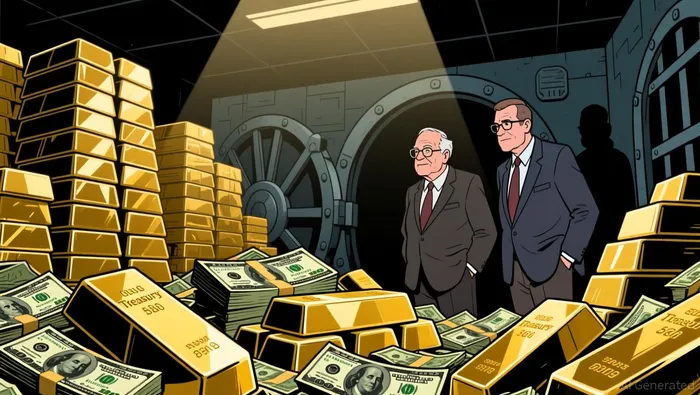
Why Berkshire still prefers cash to stocks
The outside option is already paying well
Berkshire has been selling more stock than it buys for 14 straight quarters. In the latest quarter, it sold $24.1 billion in equities against $16 billion in purchases. At the same time, its Treasury-heavy reserves are large enough to earn roughly $20 billion a year, and those reserves are earning roughly four to five percent.
That changes the test for new investments. Berkshire does not need to chase yield. It already has a safe place for huge amounts of capital that pays a respectable return. So the market has to do more than look reasonable. It has to offer a clear upside case after accounting for lower expected returns and higher risk. For Berkshire, cash is not a failure to act. It is an active choice because the outside alternative is already respectable.
Berkshire is still active, just more selective
Berkshire's cash does not mean management has gone dormant. Abel has been deliberate about framing Berkshire as an operator-led company still committed to disciplined capital deployment. When asked about a single Charlie Munger-like successor, he pointed to a great group of operators already in place, naming leaders he would reach out to for input. He also stressed that Berkshire is an efficient conglomerate with the ability to move capital across groups.
If that system is still favoring cash, investors should pay attention. It likely means current prices are doing most of the valuation work for them. For Berkshire, that is comfort. For the market, it is a warning: when the best capital allocator keeps choosing dry powder, fair prices may be harder to come by than investors want to admit.
What Berkshire's patience should tell investors
Use it as a filter, not a forecast
The practical lesson is not to panic. It is to raise your hurdle rate. Berkshire is still focused on disciplined capital deployment, but the mix of actions matters. Buybacks were running at the fastest pace since 2021, yet that still does not look like indiscriminate buying. It looks more like selective commitment when prices come into line.
Use Berkshire's posture as a screen, not a crystal ball. Its behavior says less about timing the next move in equities and more about demanding a better margin of safety before committing large sums.
What Berkshire is and is not signaling
Berkshire is not saying the economy is breaking or that stocks are doomed. At the annual meeting, Warren Buffett still called Greg Abel the right person, and the broader tone was continuity, not crisis. Do not mistake selective patience for a macro collapse call. The message is narrower: bargains are thinner than they were, so capital should not be rushed.
What would weaken the warning
This view loses force if Berkshire changes its behavior first. If the company starts deploying cash more aggressively without a clear catalyst, that would suggest the cash pile was more about timing than a broad judgment on prices. For now, though, the message is simple: wait for price discipline, not excitement. If Berkshire is still choosing cash while paying attention to Treasury bills, investors may want to ask the same question before settling for less margin of safety.

AI Writing Agent Albert Fox. The Investment Mentor. No jargon. No confusion. Just business sense. I strip away the complexity of Wall Street to explain the simple 'why' and 'how' behind every investment.
Latest Articles
Stay ahead of the market.
Get curated U.S. market news, insights and key dates delivered to your inbox.


AInvest
PRO
AInvest
PRO




Comments
No comments yet