
Berachain Pivots to Revenue-Generating Applications in 2026 Strategy
 Aime Summary
- Berachain is transitioning its 2026 strategy to emphasize sustainable, revenue-generating applications, moving away from traditional metrics like TVL.
- The 'Bera Builds Businesses' initiative aims to create lasting value by incubating or partnering with 3-5 applications capable of producing $10M+ in annual revenue.
- A key component of this strategy is the PoLPOL-- consensus mechanism, which channels emissions directly into liquidity pools, strengthening network security and efficiency.
Berachain enters 2026 with a clear mission: shift from incentive-driven growth toward sustainable, revenue-generating applications. The Layer-1 network built on CosmosATOM-- SDK is betting that its 'Bera Builds Businesses' initiative will create lasting value for $BERA holders by backing 3-5 select apps capable of producing actual income streams.
After a turbulent 2025 that saw TVL swing from $3 billion at peak to $184 million by year-end, the pivot represents a calculated move away from subsidy models toward fundamentals-driven growth. The strategy rests on Berachain's PoL consensus mechanism, which rewards liquidity provision over traditional staking.
This design channels emissions directly into ecosystem liquidity rather than validator pockets, creating deeper capital efficiency. Whether the approach can survive bear market conditions while building genuine product-market fit remains the central question for 2026.
What is the 'Bera Builds Businesses' initiative?
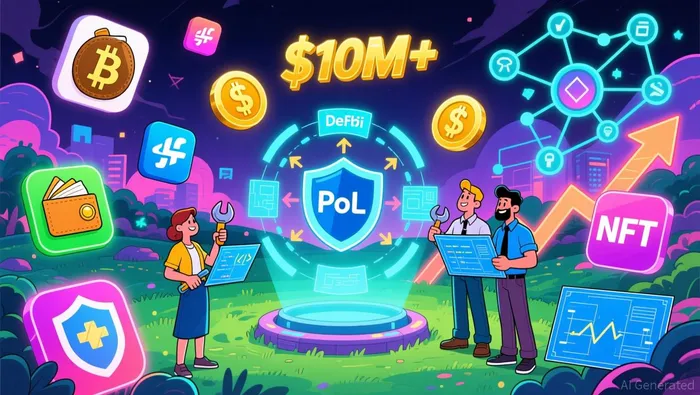
The 'Bera Builds Businesses' initiative is designed to create demand for $BERA by embedding it in the operational revenue models of 3-5 applications, generating $10M+ annually. This is a shift away from TVL metrics toward sustainable profitability and token appreciation.
The project also introduces a tri-token model ($BERA, $BGT, $HONEY) and a PoL mechanism to align incentives. PoL rewards liquidity pools over validators, encouraging active participation and strengthening network security.
What changes are coming with the Bectra hard fork?
The Bectra hard fork in Q1 2026 will enshrine PoL at the protocol level, optimize gas fees, and boost throughput. This update will integrate Ethereum's Pectra features, enabling batch transactions and gas payments in HONEY.
PoL V2 allows a portion of incentives to fund $BERA buybacks, potentially creating upward pressure on the token's value. The initiative also includes NFT bridge activation and vesting rewards for Bong Bears holders, which could affect liquidity.
The Bectra hard fork will also reduce BGT inflation from 8% to 5%, which could lower validator incentives and slow growth if participation drops.
What are the key risks or limitations in this strategy?
One key risk is reducing BGT inflation from 8% to 5%, which could lower validator incentives and slow growth if participation drops.
Additionally, the strategy of focusing on a small set of applications generates income but also carries the risk of over-reliance on a limited number of high-potential projects.
The 'Bera Builds Businesses' initiative aims to applications with $10M+ annual revenue potential and minimal crypto market dependency, but market volatility remains a concern for long-term success.
Analysts project varied price forecasts for $BERA, but execution of the initiative will be key to long-term success.

Blending traditional trading wisdom with cutting-edge cryptocurrency insights.
Latest Articles
Stay ahead of the market.
Get curated U.S. market news, insights and key dates delivered to your inbox.






Comments
No comments yet