
Berachain Faces 41.7% Token Unlock on February 6, 2026
 Aime Summary
The February 6, 2026 unlock of 41.7% of Berachain's total BERABERA-- supply could lead to immediate liquidity pressure and short-term price volatility according to analysis.
Historical data suggests similar unlocks have resulted in price drawdowns of 10–25% within the first 3–7 days, depending on market conditions and tokenomics as reported.
The unlock could amplify selling pressure if recipients choose to liquidate their tokens, particularly if BERA's liquidity conditions remain weak according to market analysis.
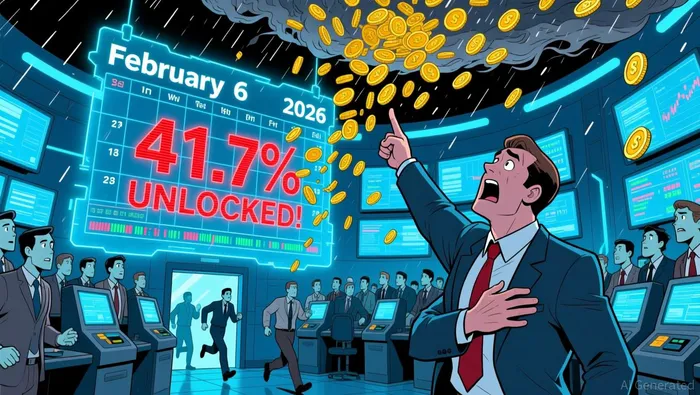
Berachain will release 63.75 million BERA tokens on February 6, 2026, representing a large portion of its circulating supply according to data. This event could influence broader market sentiment and introduce volatility in the token's price as market reports indicate. The size and timing of the unlock make it a critical event for investors monitoring Berachain's tokenomics and market performance according to analysis.
The February 6 unlocks of HYPE and BERA inject significant supply into the market, potentially triggering short-term selling pressure as reported. If recipients liquidate their tokens, this could result in sharp price corrections, especially in tokens with thin liquidity. Traders are advised to reduce exposure pre-unlock and use hedging tools like options or perpetuals to manage risk.
What is the expected market impact of the BERA unlock?
The BERA unlock is one of the largest in recent months, representing 41.7% of the circulating supply. This large-scale unlock can introduce substantial liquidity pressure, especially if recipients choose to sell their tokens. The dollar value of the unlock is approximately $28.8–$30 million, and this could trigger volatility in BERA's price and liquidity conditions.
The unlock could also be amplified by the concurrent unlocks of HYPE and XDC, which together represent $333.3–$335 million in unlocked value. This combined selling pressure could influence broader market sentiment and create uncertainty for traders and investors. Historical patterns suggest large unlocks can lead to 10–25% drawdowns in the first 3–7 days, particularly in tokens with weaker liquidity.
How does BERA's tokenomics address the unlock risk?
Berachain's tokenomics include deflationary mechanisms and buybacks to manage supply and stabilize prices. The effectiveness of these strategies depends on market conditions and execution timing. The unlock represents a high percentage of the supply, but its dollar value is relatively moderate compared to BERA's total market cap.
The Proof-of-Liquidity (PoL) consensus model is designed to align network security with liquidity provision. This model is expected to support long-term ecosystem growth and provide incentives for liquidity provision. The actual price and liquidity impact will depend on how recipients manage their unlocked tokens and the broader demand from TVL (Total Value Locked) and protocol fees.
What are the risk management strategies for investors and traders?
Traders are advised to reduce exposure to BERA before the unlock and use hedging tools like options and perpetuals to manage risk. Investors should also assess tokenomics, team behavior, and market sentiment to identify potential entry points after volatility.
Smart investors should treat the unlock as a tradable opportunity rather than a random risk. This includes managing leverage and maintaining dry powder for potential dips after the volatility subsides. The effectiveness of these strategies will depend on how the market reacts to the unlock and whether the tokenomics can absorb the increased supply.
The unlock event underscores the importance of understanding tokenomics and liquidity conditions for investors in the crypto market. As more real-world assets and financial products move on-chain, platforms that offer secure, compliant, and scalable token frameworks are expected to see growing demand.

Blending traditional trading wisdom with cutting-edge cryptocurrency insights.
Latest Articles
Stay ahead of the market.
Get curated U.S. market news, insights and key dates delivered to your inbox.


AInvest
PRO
AInvest
PRO



Comments
No comments yet