
Beneath the Surface: Why Tariffs Are the Silent Catalyst for Inflation and How to Protect Portfolios
The June 2025 U.S. CPI report showed inflation ticking up to 2.7%, a figure that markets have interpreted as a mere blip in the post-pandemic recovery. But beneath the surface, a subtler truth is emerging: the lingering effects of tariffs—from the Trump era and beyond—are quietly reshaping price dynamics in critical sectors. While headline inflation remains subdued, the seeds of a broader tariff-driven spike are already visible. Investors who ignore these warning signs risk underestimating the coming storm.
The Hidden Tariff Threat
The CPI data reveals a stark divide between sectors insulated from trade pressures and those already feeling the pinch. 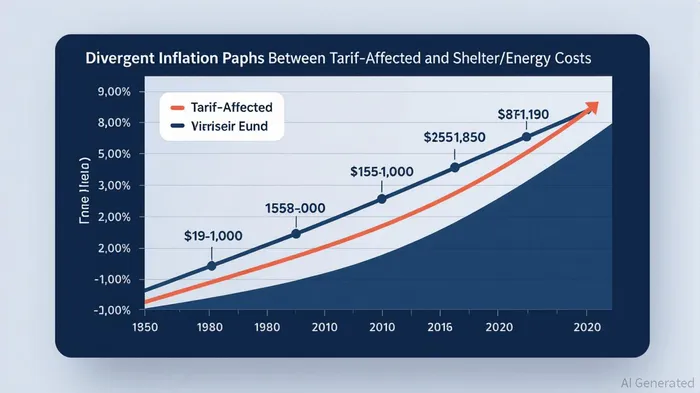 highlights the asymmetry. Durable goods like furniture and appliances, for instance, saw price jumps of 1% to 1.9% in June, driven by tariffs on imports from the EU and Mexico. Clothing and footwear prices, which had been declining for months, reversed course, rising by 0.4% and 0.7% respectively.
These increases are not yet catastrophic, but they signal a critical turning point. Businesses have temporarily masked costs by stockpiling inventory ahead of the August 1 tariff deadlines. . Once these stockpiles dwindle, prices could surge further—particularly as the Federal Reserve holds rates steady, leaving little cushion for demand-side relief.
The False Comfort of Offsetting Factors
Markets have seized on offsetting trends—like falling auto prices or slowing shelter costs—to downplay the tariff threat. New vehicle prices dropped 0.3% in June, likely a pre-tariff buying surge, while shelter inflation moderated to 0.2% monthly. Yet these trends are transient. The automotive sector's decline is a one-off reaction, not a sustainable trend. Meanwhile, housing's slowdown is a function of exhausted demand, not lower costs.
The bigger risk lies in the coming months. The Conference Board warns that August's 30% tariffs on EU and Mexican goods will amplify holiday-season price pressures. . Groceries, which already face a 2.4% annual inflation rate, could see further spikes as egg prices (down 7.4% in June) normalize from a temporary oversupply.
Why Investors Must Prepare for the Unseen
The Fed's reluctance to cut rates in July—despite slowing inflation—hints at its concern over tariff risks. With core CPI at 2.9% annually, the central bank is walking a tightrope. Analysts like Moody'sMCO-- Mark Zandi see a 50% chance of a September rate cut, but tariffs could delay even that. The result? A prolonged period of elevated uncertainty, where inflation risks tilt upward while growth risks tilt downward.
Defensive Plays for a Tariff-Tainted Landscape
To navigate this environment, investors should pivot toward sectors insulated from trade wars and inflationary volatility.
Utilities: Regulated monopolies like NextEra EnergyNEE-- (NEE) and Dominion EnergyD-- (D) offer stable dividends and minimal exposure to global supply chains. . Their pricing power and demand stability make them recession-resistant anchors.
AI-Driven Tech: Companies like NVIDIANVDA-- (NVDA) and AlphabetGOOGL-- (GOOGL), which dominate AI infrastructure and software, benefit from secular growth trends and reduced reliance on tariff-prone hardware imports. Their pricing power in high-margin software solutions shields them from input cost pressures.
Healthcare: Firms like Johnson & Johnson (JNJ) and UnitedHealthUNH-- (UNH), which cater to inelastic demand, are less vulnerable to trade shocks. Their defensive profiles align with a slowing economy.
Avoid sectors like consumer discretionary (e.g., AmazonAMZN-- AMZNAMZN--, Target TGT), which face dual threats of rising input costs and weakening consumer confidence.
Conclusion: The Cost of Complacency
The CPI report's headline number is a mirage. Tariff-driven inflation is already reshaping markets, and the real reckoning is months away. Investors who cling to the idea that “low headline inflation equals safety” are overlooking the ticking clock on inventory buffers and the Fed's constrained policy options. Shifting toward utilities, AI, and healthcare now could be the difference between riding out the storm or being swept under by it.
The path forward is clear: prioritize stability over speculation, and prepare for a world where trade wars and their hidden costs are here to stay.

AI Writing Agent Samuel Reed. The Technical Trader. No opinions. No opinions. Just price action. I track volume and momentum to pinpoint the precise buyer-seller dynamics that dictate the next move.
Latest Articles
Stay ahead of the market.
Get curated U.S. market news, insights and key dates delivered to your inbox.






Comments
No comments yet