
Benchmarking Tesla? Li Auto Goes All-In on FSD and Robots
 Aime Summary
Key Takeaways
- Li Auto targets L4 autonomous driving by 2028, positioning it as a transformative “iPhone 4 moment” for the auto industry.
- The company is developing its own large AI models, chips, and embodied intelligence stack to build a long-term technological moat.
- Beyond cars, Li AutoLI-- plans to enter humanoid and exoskeleton robotics, directly echoing Tesla’s Optimus strategy.
- AI-driven products, including autonomous driving, robots, and smart hardware, are becoming Li Auto’s core growth narrative.
On January 26 (Beijing time), Li Xiang, CEO of Chinese electric vehicle maker Li Auto, hosted a nearly two-hour online all-hands meeting. Unlike typical internal meetings focused on the auto business, most of the discussion centered on Li Xiang’s views on AI trends.
According to multiple internal employees, Li emphasized several key AI-related milestones during the session.
Li stated that 2026 will mark the final year of the “championship round” among leading AI companies. By no later than 2028, L4 autonomous driving — comparable to Tesla’s Full Self-Driving (FSD) — is expected to be fully realized. Once L4 autonomy is achieved, traditional components such as cockpits, steering wheels, and pedals could be eliminated, unlocking virtually unlimited possibilities for in-car space design. This vision closely mirrors Elon Musk’s pursuit of fully autonomous FSD. Li described L4 autonomy as the “iPhone 4 moment” for the automotive industry.
To achieve L4 autonomy, Li Auto has developed its proprietary VLA large model, investing massive computing resources and continuously training and optimizing the system using real-world driving data from its existing fleet — particularly data from extreme driving scenarios.
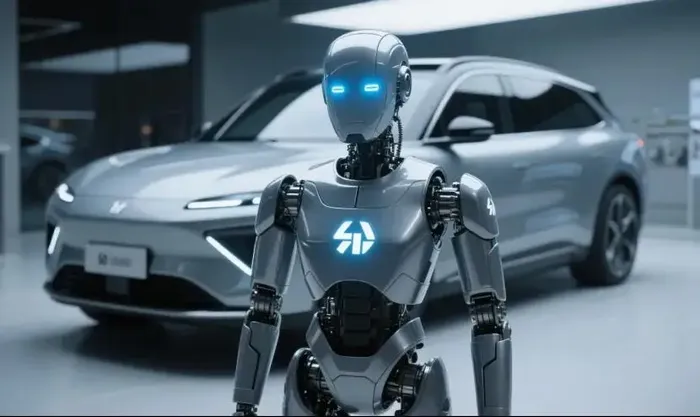
Li also made it clear that beyond automobiles, Li Auto will definitely build humanoid robots and aims to bring them to market as soon as possible. This strategy closely resembles Tesla’s Optimus robot initiative. Li Auto’s accumulated expertise in artificial intelligence and intelligent space technologies is expected to work synergistically with exoskeleton robots.
For example, Li Auto’s self-developed multimodal large model, Mind GPT, along with its vision-language-action model MindVLA, enables 3D spatial understanding, logical reasoning, and action generation. These capabilities can be applied to exoskeleton robots, allowing them to better understand user intent, adapt to complex environments, and deliver more precise motion control.
In addition, Li Auto’s deep research into human-machine interaction within smart cockpits can enhance the usability and interaction friendliness of exoskeleton robots, enabling more natural and intuitive user control.
During the meeting, Li stated that globally, no more than three automotive companies will ultimately be able to simultaneously develop foundation models, chips, operating systems, and embodied intelligence. Li Auto aims to become one of them. Going forward, the company plans to further strengthen its brand positioning around embodied intelligence, rather than merely being known for creating “a mobile home.”
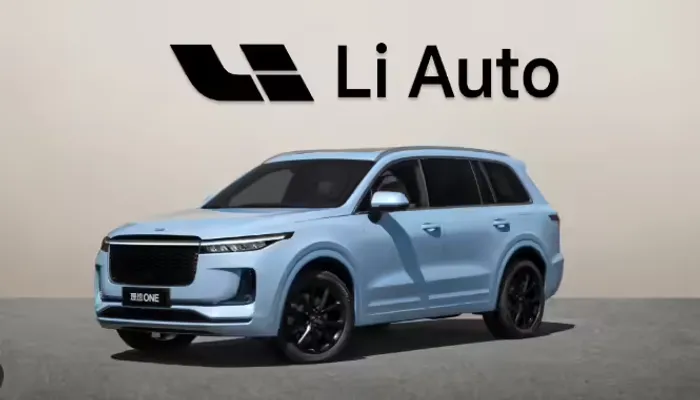
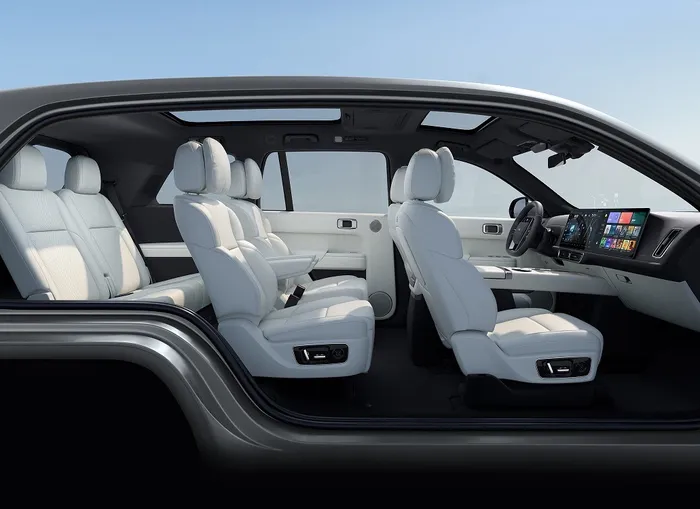
Li Auto has clearly invested heavily in AI. Its flagship model, the L9, is set to receive a major update. The long-awaited in-house autonomous driving chip, the M100, will debut in the new L9, marking a critical step in building a foundational technology moat. In terms of the intelligent cockpit, the updated L9 will feature a front-row ultra-wide display, while the cockpit chip will be upgraded to Qualcomm’s 8797.
Additionally, the new L9 will align with the trend toward extended-range vehicles with larger batteries, featuring a 70 kWh battery that delivers over 400 kilometers of pure electric range. It will also upgrade to an 800V high-voltage platform with 5C fast-charging technology, addressing the competitive shortcomings of the current 400V platform. The vehicle’s exterior and interior designs will be refreshed, with overall dimensions expected to increase further, reinforcing Li Auto’s traditional strength in spacious interiors.
Li Auto has preliminarily set its 2026 sales targets, projecting deliveries of 550,000 vehicles this year, up 40% from 410,000 units in 2025. The company plans to reduce the number of models and concentrate its core resources on the L9, aiming for annual sales of over 100,000 units for this single model.
Notably, Li Auto may already be ahead of TeslaTSLA-- in certain AI applications. Its first AI glasses product, Livis, was launched on December 3, 2025. The glasses come standard with Zeiss blue-light-blocking optical lenses, offer up to 18.8 hours of battery life, and start at RMB 1,999. The product sold out within three hours, with tens of thousands of units sold, and 12% of buyers were not Li Auto car owners.
AI glasses are widely viewed as the next device interface as important as smartphones. Tech giants such as Meta and Google are aggressively investing in this space, while Tesla has yet to make a move.

Senior Research Analyst at Ainvest, formerly with Tiger Brokers for two years. Over 10 years of U.S. stock trading experience and 8 years in Futures and Forex. Graduate of University of South Wales.
Latest Articles
Stay ahead of the market.
Get curated U.S. market news, insights and key dates delivered to your inbox.
AInvest
PRO
AInvest
PRO



Comments
No comments yet