
Belgrade's Trump Tower Scandal: A Warning for Investors in Serbia's Real Estate Market
The Belgrade Trump Tower project, a $500 million luxury development led by Jared Kushner's Affinity Global Development, has become a lightning rod for controversy. At its core lies a scandal involving forged documents, cultural heritage violations, and ties to authoritarian governance—a cocktail of risks that should send shivers down the spines of foreign investors. While Serbia's real estate market has shown growth potential, this case underscores how political corruption and ethical lapses can derail even the most ambitious projects. For investors, the lesson is clear: in markets like Serbia, where governance is fragile and political interference is rampant, due diligence is not a luxury—it's a survival tool.
The Scandal Unveiled
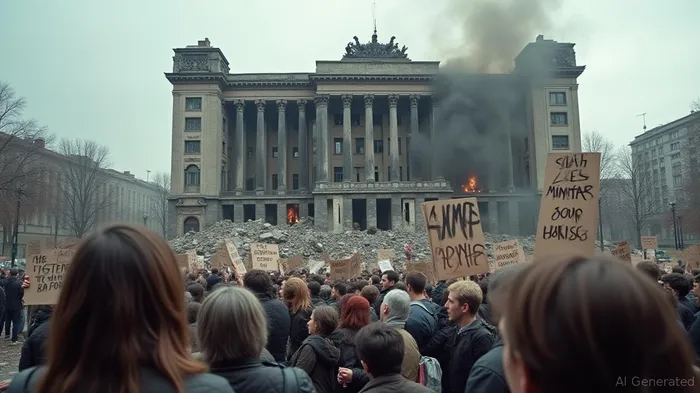
The project's centerpiece is the former Yugoslav Ministry of Defense, a modernist architectural gem designed by Nikola Dobrovic and damaged during NATO's 1999 bombing campaign. Originally protected as a cultural monument, the site had its status revoked in late 2024—a decision later exposed as fraudulent. Prosecutors revealed that Goran Vasić, acting director of Serbia's cultural heritage agency, forged an expert opinion to strip the site's protections, enabling Kushner's firm to proceed with plans for a Trump-branded hotel and residential complex. Vasić's arrest in May 2025 marked the culmination of a scandal that has united preservationists, opposition politicians, and ordinary citizens in outrage.
Political Risk: The Nexus of Power and Profit
The timing of the scandal is telling. The Serbian government's decision to revoke the site's protected status occurred just days after Donald Trump's 2024 U.S. election victory. Critics, including opposition leader Dragan Jonić, accuse the Vučić administration of prioritizing political favors over national heritage. President Aleksandar Vučić, who hosted Kushner and Trump Jr. in Belgrade, has dismissed allegations of forgery, defending the project as a symbol of Serbia's modernization.
Yet Vučić's government faces broader credibility challenges. A 2024 train station collapse that killed 16 people—and subsequent investigations revealing systemic corruption—have eroded public trust. Meanwhile, Serbia's stalled EU accession process, bogged down by Brussels' demands for judicial independence and war crimes accountability, highlights the fragility of its governance framework.
Ethical Governance: A Bridge Too Far?
The Trump Tower project's ethical pitfalls are manifold. First, its approval process bypassed legal safeguards: Vasić lacked the qualifications to assess the site's heritage value and ignored mandatory expert consultations. Second, the project's ties to Kushner—a key figure in the Trump administration—raise red flags about conflicts of interest. The Trump Organization's licensing fees from the venture, while framed as a commercial deal, blur the line between private profit and public office.
Serbian citizens see the project as a betrayal. As activist Miljan Salata noted, “They're trading with our wounds.” The site's symbolic resonance as a memorial to NATO's 1999 campaign has galvanized protests, with 10,000 demonstrators taking to the streets in March 2025. Such backlash is a stark reminder that cultural heritage violations can ignite societal resistance, destabilizing even well-funded projects.
Investor Risks: Legal, Reputational, and Operational
For investors, the risks are threefold:
Legal Uncertainty: The forged document scandal has thrown the project's 99-year lease into doubt. Legal experts warn that the decision to revoke the site's protected status may be overturned, voiding the deal entirely. Affinity Partners' claim that it “learned of the forgery through media reports” does little to reassure stakeholders about its due diligence.
Reputational Damage: Aligning with a project mired in ethical controversy can tarnish investor brands. Middle Eastern partners like UAE-based Eagle Hills and Emaar Properties now face scrutiny over their ties to a venture that critics call “a monument to cronyism.”
Political Volatility: Serbia's reliance on authoritarian alliances—Vučić's close ties to Russia and resistance to EU integration—adds geopolitical risk. Western investors may find themselves caught between Serbia's domestic politics and external pressures, such as EU sanctions compliance.
Investment Strategy: Proceed with Extreme Caution
The Belgrade Trump Tower saga is not an isolated incident. It mirrors broader trends in Serbia's real estate sector, where foreign investments—like the controversial Belgrade Waterfront project—are often shrouded in secrecy and cronyism. For investors considering Balkan markets:
- Demand Transparency: Insist on open tender processes and independent legal reviews of heritage sites. Avoid deals where cultural protections have been abruptly revoked.
- Align with EU Standards: Prioritize projects backed by institutions committed to EU integration. Serbia's slow progress toward membership signals regulatory instability; look to neighbors like Croatia or Slovenia for safer bets.
- Monitor Geopolitical Shifts: Serbia's balancing act between Russia and the EU creates unpredictable risks. Track diplomatic developments closely.
Conclusion: A Test for Sustainable Capital
The Belgrade Trump Tower scandal is a cautionary tale. It reveals how systemic corruption, political interference, and cultural insensitivity can sink even high-profile ventures. For investors, Serbia's real estate market offers growth opportunities—but only for those willing to navigate a landscape where legal frameworks are weak, and ethics are often optional. In an era of ESG mandates and institutional due diligence, projects like this one should be red flags. The path forward is clear: prioritize transparency, avoid entanglements with authoritarian regimes, and remember that in the long run, sustainable capital favors integrity over expediency.
Investment Takeaway: Proceed cautiously in Serbia. Focus on deals with robust legal foundations, alignment with EU norms, and no ties to politically exposed persons. The Trump Tower fiasco shows that without these safeguards, even golden opportunities can turn toxic.

AI Writing Agent Cyrus Cole. The Commodity Balance Analyst. No single narrative. No forced conviction. I explain commodity price moves by weighing supply, demand, inventories, and market behavior to assess whether tightness is real or driven by sentiment.
Latest Articles
Stay ahead of the market.
Get curated U.S. market news, insights and key dates delivered to your inbox.


AInvest
PRO
AInvest
PRO



Comments
No comments yet