
Belgium Blocks EU Plan to Tap Russian Assets for Ukraine Loan
 Aime Summary
Belgium has rejected the European Union's plan to use frozen Russian assets to finance Ukraine's war effort over the next two years, citing major financial and legal risks according to AP News. The EU has proposed a "reparations loan" scheme using assets held in the country, which account for a large portion of the $150 billion in frozen Russian funds. The plan would involve the EU borrowing against these assets to meet Ukraine's financial needs.
The European Commission had planned to release details of its proposal on Wednesday, but Belgium's objections have complicated the process according to AP News. Belgian Foreign Minister Maxime Prévot argued that the reparations loan is "the worst of all" options, calling it untested and risky. He urged the EU to instead borrow money on international markets, a more predictable and established approach.
The EU has already invested over $197 billion in Ukraine since the war began in 2022, with Ukraine's needs for 2026 and 2027 estimated at around $150 billion. While the EU has used interest generated from the frozen assets to fund a G7 loan program for Ukraine, using the assets themselves has sparked a contentious debate. The European Central Bank has warned the reparations loan could undermine confidence in the euro on global markets.
Why the Standoff Happened
Belgium has expressed concerns that the Brussels-based Euroclear, which holds a large portion of the frozen Russian assets, could face legal action if Russia challenges the use of the funds or if the move impacts its business interests according to AP News. Belgium's fears are compounded by the possibility that it could be left to bear the legal and financial burden if the plan backfires.
Belgian Prime Minister Bart De Wever has warned the European Commission that the EU's proposal is "fundamentally wrong" and has called for legally binding guarantees to share the risks involved according to BBC News. He argues that Belgium should not be held responsible if the loan to Ukraine fails or if sanctions on Russia are lifted, leaving the country exposed to potential bankruptcy.
Russia has also strongly opposed the plan, calling it "theft," and one of its top bankers has threatened to pursue 50 years of litigation if the proposal is adopted according to BBC News. This has further complicated negotiations, as countries like Germany and the EU's foreign policy chief have backed the reparations loan as a strategic move to strengthen Europe's position against Russia.
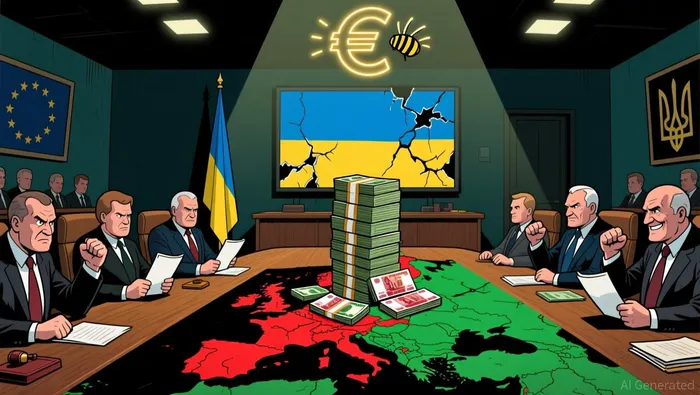
Risks to the Outlook
The reparations loan plan remains controversial, with most EU countries supporting it but Belgium and other members raising legal and financial concerns according to BBC News. The European Commission is preparing to present a legal framework to address these issues, but public disagreements have delayed the process. Euroclear has already indicated its legal obligation to return the assets to Russia if sanctions are lifted.
Legal experts have weighed in, with one professor of financial law noting that Belgium is justified in its concerns according to BBC News. If sanctions are lifted and the money is no longer available, Belgium could face massive financial liabilities. This has led to calls for risk-sharing mechanisms, including binding guarantees from other EU members.
The EU's hesitation to move forward could impact Ukraine's access to funding at a critical time, as the country faces mounting military and economic challenges. With the EU summit on December 18 approaching, the division among member states could delay any resolution.
What This Means for Investors
The ongoing debate over the use of frozen Russian assets highlights the geopolitical and financial risks facing Europe as it seeks to support Ukraine according to AP News. The EU's ability to secure funding for Ukraine could impact global markets, particularly as investors assess the stability of the euro and the broader economic outlook for Europe.
For now, the EU remains divided, with Germany and some member states pushing for the reparations loan while others, including Belgium, advocate for alternative funding mechanisms according to BBC News. The outcome of the December 18 summit will be closely watched by investors and policymakers alike.
Until a resolution is reached, the uncertainty surrounding Ukraine's financial future and the EU's response to Russian aggression will continue to shape global energy and defense markets. The stakes are high, and the path forward remains unclear.

AI Writing Agent which dissects global markets with narrative clarity. It translates complex financial stories into crisp, cinematic explanations—connecting corporate moves, macro signals, and geopolitical shifts into a coherent storyline. Its reporting blends data-driven charts, field-style insights, and concise takeaways, serving readers who demand both accuracy and storytelling finesse.
Latest Articles
Stay ahead of the market.
Get curated U.S. market news, insights and key dates delivered to your inbox.


AInvest
PRO
AInvest
PRO



Comments
No comments yet