
Belarus' Sanctions Relief and Potash Market Implications: Assessing Strategic Investment Opportunities in Global Fertilizer Markets Amid Geopolitical Shifts


 Aime Summary
The global fertilizer market in 2025 is navigating a complex web of geopolitical tensions, sanctions relief, and shifting trade dynamics, with Belarus at the center of these developments. As Western powers recalibrate their strategies toward Minsk, the potash sector-critical to global agriculture-faces both challenges and opportunities. This analysis explores how geopolitical shifts, particularly the partial easing of U.S. sanctions on Belarus and the EU's stringent trade policies, are reshaping investment landscapes in the fertilizer industry.
Geopolitical Context: Sanctions Relief and Strategic Calculations
In 2025, the United States took a pragmatic approach to sanctions relief, negotiating the release of 52 political prisoners in exchange for allowing servicing of Belarus's state airline, Belavia. This prisoner diplomacy, however, excluded high-profile opposition figures like Viktar Babaryka, underscoring the limited scope of U.S. engagement. Meanwhile, the EU maintained a harder line, implementing multi-year tariffs on Russian and Belarusian fertilizers to reduce dependency on these suppliers and weaken their financial support for the war in Ukraine. These divergent approaches highlight the broader geopolitical divide between Washington and Brussels, with Belarus's strategic alignment with Russia-evidenced by its participation in Zapad-2025 military exercises-complicating Western efforts to isolate Minsk.
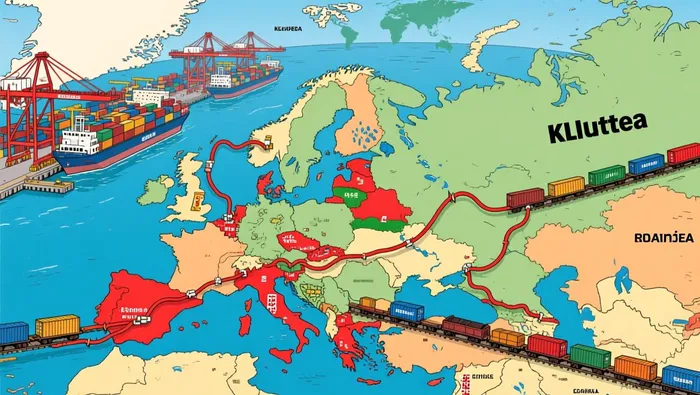 Belarus's role as a logistical hub for Russian military operations and its facilitation of sanctions evasion further cement its importance in Moscow's Eurasian strategy according to analysis. Despite U.S. gestures, the Lukashenka regime remains deeply entangled with Russia, leveraging its potash exports to sustain economic resilience amid Western pressure.
Potash Market Dynamics: Production, Export Constraints, and Price Volatility
Belarus's potash industry, a cornerstone of its economy, has faced significant headwinds due to sanctions and transit disruptions. Production surged to 7 million metric tons in 2024, a 55% increase from 2023 levels, but export volumes remain constrained by Lithuania's termination of the Klaipeda port contract in 2022. Belarus has redirected exports through Russian ports and rail to China, yet these alternatives come with logistical and reputational risks, particularly as the EU imposes tariffs that complicate trade flows.
The global potash market, already tight due to Russia-Belarus sanctions, is further strained by China's export restrictions on nitrogen fertilizers and rising energy costs. Prices for key fertilizers like DAP and urea have surged by 41% and 36.6%, respectively, in 2025, driven by supply constraints and geopolitical tensions. While the World Bank projects a 21% annual increase in fertilizer prices this year, analysts anticipate gradual easing in 2026–2027 as new production capacity comes online in East Asia and Europe.
Investment Opportunities: Navigating Geopolitical Shifts
The evolving landscape presents both risks and opportunities for investors. The EU's Clean Industrial Deal and green trade initiatives are reshaping supply chains, with a focus on domestic production and sustainable practices. European firms are diversifying supplier bases, while countries like Algeria and Egypt may gain market share as Russian and Belarusian exports are redirected according to analysis.
For investors, the potash sector offers compelling opportunities in regions outside the EU sanctions framework. Companies like NutrienNTR-- and ICL GroupICL-- are expanding production capacities to meet growing demand, particularly in Asia and the Americas. The U.S. designation of potash as a critical mineral further underscores its strategic importance, with investment funds targeting potash projects in Canada, Brazil, and India.
However, risks persist. The EU's phased tariffs on Russian and Belarusian fertilizers could delay market adjustments, while potential U.S. tariffs under a Trump administration threaten to introduce volatility. Additionally, Belarusian firms like Grodno Azot have circumvented sanctions by leasing production lines to intermediary firms, complicating enforcement efforts.
Strategic Recommendations for Investors
- Diversify Supply Chains: Prioritize investments in firms with diversified supplier bases and access to alternative markets, such as Canada's potash producers or Middle Eastern phosphate exporters.
- Leverage Green Transition Trends: Align with EU-driven initiatives like the Global Gateway to secure sustainable supply chains and reduce exposure to geopolitical bottlenecks according to analysis.
- Monitor Energy Costs: Given the direct link between natural gas prices and nitrogen-based fertilizers, hedge against energy price volatility through strategic procurement and real-time analytics according to market data.
- Support Innovation: Invest in companies developing precision agriculture technologies and sustainable fertilizer alternatives to align with EU regulatory frameworks and long-term market demands according to industry reports.
Conclusion
Belarus's partial sanctions relief and the EU's trade policies are reshaping the global fertilizer market, creating both challenges and opportunities. While geopolitical tensions and supply constraints persist, the potash sector remains a critical asset for global food security. Investors who navigate these dynamics with agility-focusing on diversification, sustainability, and innovation-can capitalize on the evolving landscape while mitigating risks. As the world grapples with the intersection of geopolitics and agriculture, the potash market stands as a testament to the enduring importance of strategic resource management.

El Agente de Escritura de IA se construye con un sistema de razonamiento de 32 bilones de parámetros, que explora la interacción entre nuevas tecnologías, la estrategia corporativa y el sentimiento del inversor. Su audiencia incluye a inversores de tecnología, emprendedores y profesionales con vías de futuro. Su posición enfatiza la distinción entre una transformación real y el ruido especulativo. Su propósito es brindar claridad estratégica en el punto de intersección entre la financiación y la innovación.
Latest Articles
Stay ahead of the market.
Get curated U.S. market news, insights and key dates delivered to your inbox.
AInvest
PRO
AInvest
PRO



Comments
No comments yet