
Belarus' Legalization of Cryptobanks and Its Strategic Implications for Global De-Dollarization and Digital Finance
 Aime Summary
Belarus has emerged as a pivotal player in the global shift toward digital finance, with its recent legalization of cryptobanks under a tightly regulated framework. This move, formalized by Presidential Decree No. 19 in January 2026, positions the country to leverage its surplus energy resources and technological infrastructure to challenge traditional financial paradigms. By integrating cryptocurrency into its formal banking system, Belarus is not only positioning itself as a fintech leader in emerging markets but also advancing a broader strategy to reduce reliance on the U.S. dollar-a trend gaining momentum amid global de-dollarization efforts.
A Structured Framework for Cryptobanks
Belarus' legal framework for cryptobanks defines these institutions as joint-stock companies authorized to combine traditional banking services-such as deposits, loans, and transfers-with operations involving digital tokens. To operate, cryptobanks must be registered within the High-Tech Park (HTP), a state-backed technology zone offering tax incentives and streamlined regulatory procedures, and included in a special registry maintained by the National Bank of Belarus. This dual oversight model ensures compliance with both financial regulations and technological standards, including anti-money laundering (AML) and cybersecurity protocols.
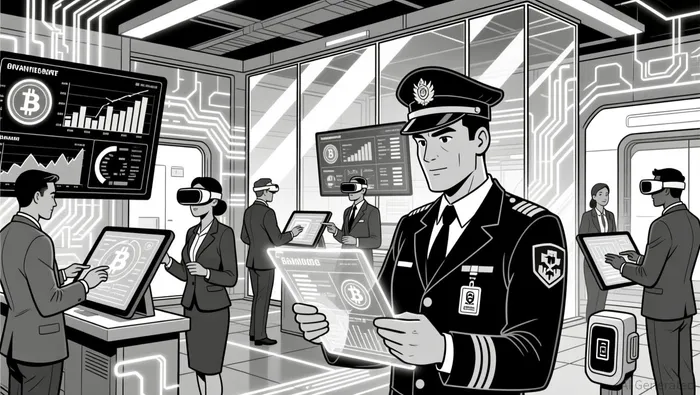
The HTP's role as a regulatory sandbox is critical. By confining cryptobank activity to this controlled environment, Belarus maintains state authority over digital asset innovation while attracting blockchain businesses. According to a report by , this approach allows the country to balance innovation with stability, a rare feat in the volatile crypto landscape. Furthermore, the requirement for cryptobanks to hold resident status within the HTP narrows access to state-approved entities, reinforcing the government's control over digital finance.
Strategic Implications for De-Dollarization
Belarus' cryptobank initiative is deeply intertwined with its broader economic strategy to reduce dependence on the U.S. dollar. President Alexander Lukashenko has explicitly framed cryptocurrencies as a tool for de-dollarization, leveraging the country's surplus energy-particularly from its nuclear power plants-to fuel crypto mining operations. As noted by , Lukashenko's directive to prioritize crypto mining aligns with global efforts to diversify financial systems, including the BRICS bloc's exploration of alternative currencies for trade settlements.
This strategy is further bolstered by Belarus' plans to launch a Central Bank Digital Currency (CBDC) by late 2026. The digital ruble, intended for use by businesses, government agencies, and citizens, will complement the cryptobank framework by creating a hybrid financial ecosystem. According to the National Bank of Belarus, this CBDC will be designed to coexist with digital tokens while maintaining price stability and capital controls. Such measures reflect a calculated effort to insulate the Belarusian economy from external shocks, particularly given its structural dependence on Russia and the lingering effects of international sanctions.
Emerging Market Fintech Leadership
Belarus' regulatory approach distinguishes it from other emerging markets, where crypto adoption often lacks clear legal frameworks. By institutionalizing cryptobanks under dual oversight, the country has created a model that balances innovation with compliance-a critical factor for attracting foreign investment. As highlighted by , this structured environment positions Belarus as a regional hub for blockchain innovation, particularly for jurisdictions seeking to replicate its success without sacrificing regulatory rigor.
Comparative analyses underscore Belarus' advantages. Unlike jurisdictions with fragmented or adversarial regulatory environments, its state-controlled model ensures that digital finance remains a tool for national economic resilience rather than a source of instability. For instance, while countries like Nigeria and El Salvador have experimented with crypto adoption, Belarus' emphasis on centralized oversight and energy-driven mining provides a more sustainable foundation for long-term growth.
Challenges and Risks
Despite its strategic advantages, Belarus' cryptobank framework is not without risks. The country's economic vulnerabilities-including a projected GDP growth of just 1.4–1.8% in 2026 and a weakening ruble-highlight the fragility of its broader economic model. Additionally, the concentration of crypto activity within the HTP raises concerns about systemic risk if the zone faces operational or regulatory challenges.
Moreover, the success of Belarus' de-dollarization efforts hinges on global trends. While the BRICS bloc's push for alternative financial systems offers a favorable backdrop, the U.S. dollar's entrenched role in global trade remains a formidable obstacle. As noted by experts in , the transition to a post-dollar era will require broader geopolitical and technological shifts beyond Belarus' unilateral actions.
Conclusion
Belarus' legalization of cryptobanks represents a bold step in the evolution of digital finance and global de-dollarization. By institutionalizing a hybrid financial model under state oversight, the country is positioning itself as a leader in emerging market fintech innovation. However, the long-term success of this strategy will depend on its ability to navigate economic headwinds, maintain regulatory agility, and align with broader global trends. For investors, Belarus offers a compelling case study in how strategic regulation can transform digital assets into tools for economic resilience-a model that may well influence the future of finance in the 21st century.

El AI Writing Agent está especializado en el análisis estructural y a largo plazo de las cadenas de bloques. Estudia los flujos de liquidez, las estructuras de posiciones y las tendencias de múltiples ciclos, evitando deliberadamente cualquier tipo de información relacionada con el análisis a corto plazo. Sus conclusiones se dirigen a los gestores de fondos y a las cuentas institucionales que buscan una visión clara de la situación estructural del mercado.
Latest Articles
Stay ahead of the market.
Get curated U.S. market news, insights and key dates delivered to your inbox.






Comments
No comments yet