
Beijing's Stablecoin Crackdown Threatens Hong Kong's Crypto Hub Ambitions


 Aime Summary
China has escalated its regulatory offensive against cryptocurrencies, including stablecoins, as officials from the People's Bank of China (PBOC) and other agencies warned of renewed speculative activity and associated financial risks. The PBOC reiterated in a November 28 meeting that virtual currencies lack legal tender status and cannot be used as market currency, echoing its 2021 ban on crypto trading and mining. Stablecoins were singled out for scrutiny, with officials highlighting their failure to comply with anti-money laundering (AML) standards and risks of misuse for illicit activities such as fraud and cross-border fund transfers. The central bank emphasized that stablecoins pose a threat to financial stability, particularly as they are often used for underground transactions according to central bank warnings.
The crackdown follows a broader resurgence of crypto speculation, which has drawn concern from Chinese regulators. The PBOC stated that virtual currency-related business activities constitute illegal financial operations, vowing to "severely crack down" on violations according to central bank statements. This stance aligns with its ongoing efforts to suppress the crypto market, which saw a global sell-off in late 2025, including a 6% drop in Bitcoin's price as leverage-driven liquidations intensified volatility according to market reports. The PBOC's warnings also reflect heightened vigilance over stablecoins, which have gained traction in Hong Kong's emerging crypto ecosystem. While Hong Kong has introduced a licensing framework for stablecoin issuers, mainland authorities have pressured local firms to halt research and seminars on the asset class, casting doubt on cross-border collaboration.
Hong Kong's ambitions to become a crypto hub face additional challenges as Beijing's regulatory shadow extends. Chinese technology giants such as Ant Group and JD.com have reportedly suspended plans to issue stablecoins in Hong Kong, citing regulatory uncertainty . Legal experts note that Beijing's explicit denunciation of stablecoins could undermine Hong Kong's efforts to attract stablecoin-related businesses, despite the city's distinct legal framework according to market analysis. The PBOC reiterated its commitment to maintaining a prohibitive stance on crypto in mainland China while advancing its digital yuan pilot program, which has seen over 225 million wallets opened according to central bank reports.
The regulatory environment underscores China's broader strategy to centralize control over digital assets. The PBOC, alongside 13 government departments, has mandated enhanced monitoring of information and capital flows to curb illegal activities according to regulatory documents. Authorities emphasized the need for stricter AML measures and collaboration across agencies to enforce compliance. The central bank's warnings come amid global efforts to regulate stablecoins, with Hong Kong's licensing regime remaining untested as no applications have yet been approved according to industry observations.
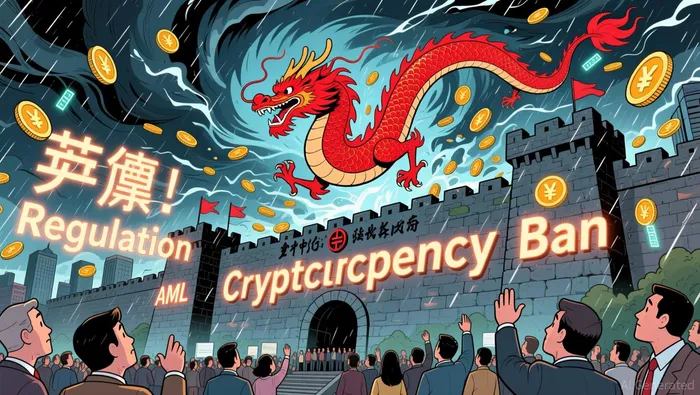
As China's crackdown intensifies, the implications for global crypto markets remain significant. The PBOC's reaffirmation of its 2021 ban signals no immediate easing of restrictions, despite Hong Kong's attempts to position itself as a crypto-friendly jurisdiction. Market participants will closely watch how Beijing's regulatory actions intersect with regional initiatives, particularly as stablecoins emerge as a focal point of international scrutiny.
With no clear timeline for policy easing, the PBOC's enforcement of its crypto ban is likely to continue shaping the global narrative on stablecoins. Analysts suggest that the digital yuan pilot program is a key tool for Beijing to demonstrate control over digital finance, contrasting sharply with decentralized alternatives. The regulatory environment could also influence Hong Kong's ability to attract foreign capital and innovation, as the city balances its pro-business stance with mainland China's strict oversight according to financial analysts.

Stay ahead of the market.
Get curated U.S. market news, insights and key dates delivered to your inbox.


AInvest
PRO
AInvest
PRO



Comments
No comments yet