
Bedrock Re-Staking Gains Momentum as Blockchain Ecosystem Innovation
 Aime Summary
Re-staking transforms large-scale blockchain assets into secure economic guarantees for new services and innovations.
It enhances liquidity and security by introducing a multi-party game-based penalty mechanism to protect node operations.
This approach encourages product development while providing economic incentives for stakers to support blockchain security and sustainability.
Re-staking has emerged as a significant trend in the blockchain space, gaining attention for its potential to unlock new economic guarantees and innovation pathways. The mechanism is akin to joint mining from the PoW era but introduces a novel layer of security through game-theoretic incentives. By aligning the interests of stakers and developers, re-staking helps reduce the risk of malicious behavior and ensures a more robust network. Developers can now focus on building applications, while stakers benefit from enhanced economic returns and network stability.
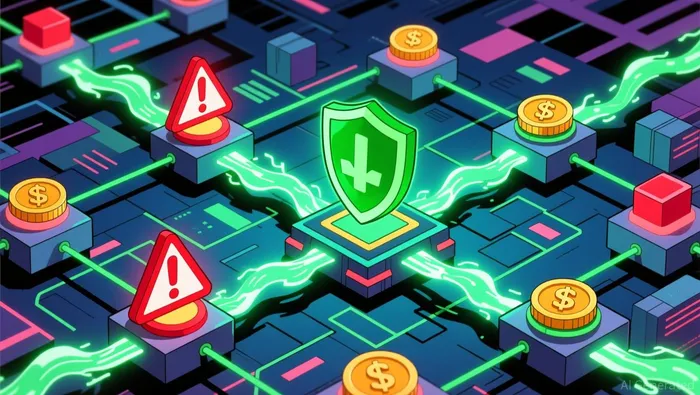
One of the key advantages of re-staking is its ability to diversify the types of assets used in staking mechanisms. This multi-asset approach not only improves the security of the network but also allows for a more flexible and inclusive staking ecosystem. By leveraging economic guarantees, re-staking supports the creation of novel blockchain services and applications that were previously constrained by traditional staking models. This opens up new opportunities for both institutional and retail participants to engage with blockchain technology in innovative ways.
What is re-staking and how does it function in blockchain ecosystems?
Re-staking involves taking assets that are already staked in a blockchain network and repurposing them to provide economic guarantees for other services. This allows the same assets to serve multiple functions, increasing their utility and reducing idle capital. The process is underpinned by a penalty mechanism designed to discourage malicious behavior from stakers. If a staker acts against the interests of the network, they face penalties, which help maintain the overall security and integrity of the system. This creates a self-regulating environment that encourages honest and responsible staking behavior.
The re-staking model introduces a multi-party game dynamic, where multiple participants have incentives to ensure the network's security. By distributing economic guarantees across a broader range of assets and stakeholders, re-staking reduces the risk of a single point of failure. This is particularly important in decentralized networks where trust is not central to the system's operation. Instead, trust is derived from the incentives and penalties embedded in the protocol.
Why is re-staking considered a transformative approach to liquidity and security?
Re-staking enhances liquidity by allowing staked assets to be used for multiple purposes simultaneously. This means that the same assets can be used to secure different services or applications, increasing their overall value and utility. The ability to derive economic returns from a single asset in multiple ways makes re-staking an attractive proposition for both developers and stakers. It also reduces the need for additional capital to be locked up, which can be a significant barrier to entry for new participants.
In terms of security, re-staking introduces a more robust mechanism for protecting the network. Traditional staking models can be vulnerable to attacks if a single entity controls a large portion of the network's staked assets. Re-staking mitigates this risk by distributing staking power across multiple parties and using a penalty system to deter malicious behavior. This helps maintain the network's decentralization and resilience, even in the face of potential attacks or systemic risks.
What are the key risks and considerations for stakeholders in re-staking mechanisms?
Despite its benefits, re-staking is not without risks. One of the primary concerns is the safety of the principal—stakers must ensure that the assets they stake are not at risk of being lost or devalued. The penalty mechanism, while designed to protect the network, can also lead to losses if a staker is penalized for unintentional actions. This underscores the importance of due diligence and risk management for participants in re-staking protocols.
Another consideration is the potential for excessive leverage to cause liquidations. If a staker borrows additional assets to increase their stake, they expose themselves to greater risk in the event of a price decline. This can lead to the forced liquidation of their position, which can have a cascading effect on the network. To mitigate this, it is recommended that stakers choose reputable and stable node providers that offer insurance protection or other risk-mitigation strategies.
Ultimately, re-staking represents a significant advancement in the blockchain ecosystem, offering new ways to enhance liquidity, security, and innovation. By aligning the incentives of stakers and developers, it creates a more sustainable and resilient network. However, participants must remain vigilant about the risks involved and take steps to ensure their investments are protected. As the re-staking model continues to evolve, it has the potential to reshape the way value is generated and distributed within blockchain networks.

Blending traditional trading wisdom with cutting-edge cryptocurrency insights.
Latest Articles
Stay ahead of the market.
Get curated U.S. market news, insights and key dates delivered to your inbox.


AInvest
PRO
AInvest
PRO



Comments
No comments yet