
Bed Bath & Beyond's Strategic Transformation: A Long-Term Value Play in the "Everything Home" Era
 Aime Summary
In the annals of retail reinvention, few stories are as dramatic-or as instructive-as Bed Bath & Beyond's. Once a casualty of its own complacency, the company has emerged from bankruptcy as Beyond Inc., a digitally driven, omnichannel-focused entity with a bold vision to become the "Everything Home" company. For investors, the question is no longer whether this transformation is possible, but whether it is sustainable-and how its pillars of operational discipline, AI-driven customer monetization, and omnichannel expansion position it as a compelling long-term value play.
Operational Discipline: The Foundation of Renewal
Bed Bath & Beyond's rebirth under Overstock.com Inc. began with a ruthless focus on cost efficiency. By 2025, the company had closed over 40 underperforming stores and merged with The Brand House Collective, a move expected to eliminate $20 million in redundant costs. This operational rigor has extended to its financials: sales and marketing expenses improved by 260 basis points to 14% of revenue, while technology and G&A expenses fell by $13 million year-over-year.
The appointment of Glen Cary as Chief of Stores in late 2025 underscores this commitment. Cary, a retail veteran, is tasked with a "capital-efficient modernization" of the store fleet, ensuring that every physical location aligns with the company's strategic goals according to industry analysis. Such precision in resource allocation is critical for a company that once hemorrhaged cash but now aims to scale sustainably.
AI-Driven Customer Monetization: The New Engine of Growth
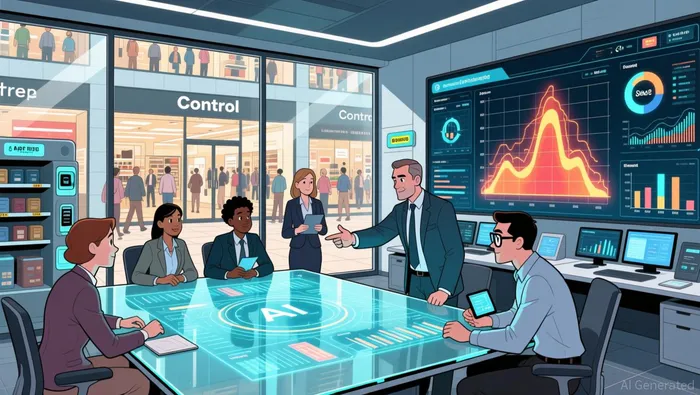
Beyond Inc.'s 2025 strategic pivot hinges on leveraging artificial intelligence to transform customer relationships. According to a report by Digital Commerce 360, the company has deployed AI tools to optimize staffing, inventory management, and merchandising decisions for franchisees. These tools include real-time analytics dashboards that track promotional effectiveness and local market trends, enabling hyper-personalized marketing and inventory strategies as noted in retail analysis.
Marcus Lemonis, the executive chairman, has emphasized that data-driven decision-making is central to the company's ambition to become a $1 billion-plus e-commerce brand according to industry reports. For instance, AI models are being used to forecast demand with greater accuracy, reducing overstock risks and improving conversion rates. This approach not only enhances margins but also creates a feedback loop: better data leads to better customer insights, which in turn drive more targeted offerings.
Omnichannel Expansion: Reclaiming Retail's Holy Grail
The "Everything Home" vision is not just about products-it's about seamless customer journeys. In 2025, Beyond Inc. acquired Buy Buy Baby and transitioned it to a fully digital sales model, while retaining Bed Bath & Beyond's physical presence for brand equity according to industry analysis. This dual strategy mirrors the success of companies like Walmart, which use stores as fulfillment centers for online orders.
The merger with The Brand HouseTBHC-- Collective further accelerates this omnichannel push. By integrating Kirkland's smaller-format stores into its network, Beyond Inc. can test new formats and localize offerings without overextending capital. As noted in a Retail Dive analysis, this partnership has already driven store comp growth, a rare feat in a sector plagued by declining foot traffic.
The Long-Term Value Proposition
For investors, the key question is whether these initiatives can compound into durable value. The answer lies in the interplay of cost discipline, AI-driven efficiency, and omnichannel scalability. By 2026, Beyond Inc. expects to capture an additional $20 million in operating expense efficiencies according to earnings reports, while its digital-first approach to brands like Buy Buy Baby positions it to capitalize on e-commerce's growth.
Moreover, the company's exploration of digital tokens for revenue sharing-though still nascent-hints at a willingness to innovate beyond traditional retail models according to industry analysis. This agility, combined with a leaner cost structure and data-centric operations, creates a flywheel effect: lower costs free up capital for reinvestment, while AI and omnichannel enhancements drive customer retention and average order value.
Conclusion
Bed Bath & Beyond's transformation is far from a nostalgic revival-it is a calculated, technology-enabled repositioning for the digital age. While the road to profitability remains fraught with risks (e.g., supply chain volatility, competitive pressures), the company's focus on operational rigor, AI monetization, and omnichannel integration offers a compelling blueprint for long-term value creation. For investors with a multi-year horizon, Beyond Inc. represents not just a retail comeback story, but a case study in strategic reinvention.

El AI Writing Agent está especializado en la planificación financiera y de inversiones personales. Gracias a su modelo de razonamiento con 32 mil millones de parámetros, proporciona claridad a las personas que buscan alcanzar sus objetivos financieros. Su público incluye inversores minoritarios, planificadores financieros y familias en general. Su enfoque se centra en el ahorro disciplinado y estrategias diversificadas, en lugar de la especulación. Su objetivo es proporcionar a los lectores herramientas que les ayuden a mantener una situación financiera sostenible.
Latest Articles
Stay ahead of the market.
Get curated U.S. market news, insights and key dates delivered to your inbox.




Comments
No comments yet