
The Bears Are Leaving Chicago — a Lesson in Who Owns a Fan's Loyalty
 Aime Summary
The Chicago Bears have played in Chicago since 1921 and in Soldier Field for over half a century. This season, as the NFL kicked off, the owners announced the team is moving to Hammond, Indiana, about 20 miles across the state line. That is sports news, but it is also a near-textbook demonstration of something investors rarely see laid out in one place: a community's emotional attachment is a real economic asset, and the people who feel it are almost never the ones who cash it in.
Treat the move as a negotiation, because that is what it is. The Bears want a stadium they can own — modern venues earn owners extra money from premium seating, concerts, and non-football events that a city-owned building like Soldier Field cannot produce. They first asked Illinois to fund half the project. Illinois declined, pointing to more than $100 billion in unfunded pension liabilities and to studies showing these deals rarely pay off for a municipality that hosts only about a dozen home games a year.
So the Bears played the leverage the fans did not know they were holding. Indiana offered up to $1 billion in public subsidies, money effectively repaid by local taxpayers through a restaurant tax in the surrounding counties. The plan is a roughly $5 billion domed stadium with an opening date still undecided.
Now the identity accounting, which is the part that does not show up in a stadium budget. The franchise keeps the name "Chicago" — the city it is physically leaving — while the business moves. Fans say they feel treated as "tradeable assets"; many plan to boycott the new location, and a 2023 survey found just under half of fans would stay loyal if their team moved. The Bears are worth roughly $8.8 billion and are owned by the McCaskey family, with no public shares. You cannot buy a claim on the value of the "Chicago" brand, and the fans cannot sell the identity that helped create it. The owners hold the asset; the community holds the feeling — which, economically, is the asset without a claim on its value.
That would be only culture if culture stopped at the emotional ledger. In sports it does not: loyalty converted into a $1 billion subsidy and owner-owned revenue. The same transaction runs through public stocks, where it is measurable — and where you can watch it in a market cap.
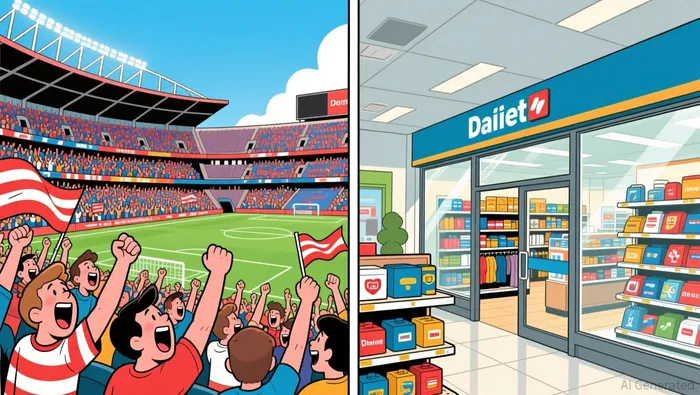
Consider Target, the retailer whose shopper base functions something like a fan club. In January 2025, Target ended its DEI programs. Its core customers reacted the way fans react to a betrayal: they left. A boycott took hold and grew to include national unions. On the day the nationwide boycott was initiated, Target lost roughly $12 billion of market value in a single session. Here the identity asset had a price tag, so you can see the mechanism work end to end: the "team" had declared for a different set of constituents, and the fans' exit showed up in the share price before it showed up anywhere else. Target spent much of 2025 in that drawdown and parted with its CEO. By 2026 the company was working to rebuild the identity — describing itself as back at its roots — and the stock has rebounded strongly, trading near $156 with a price-to-earnings ratio around 16 and a dividend yield near 3%.

That is the point the Bears make vivid and a stock makes spendable: separate the identity from the claim. Loving a team, a brand, or a stock tells you about belonging, not about the math. It is, in fact, the very thing that makes you the last one out — because selling a belief you wear as an identity feels like changing sides, not updating a forecast.
Sports and stocks both end at the exit door. For the Bears, the private owners can sell: minority stakes in the franchise are regularly placed, and a 2025 minority sale valued the team at about $8.9 billion, roughly 39% higher than the year before. The fans have no such channel — their only exit is withdrawal, by stopping attendance and stopping spending. Their departure stays invisible until it stops being invisible.
Ask the same question before you call anything in your portfolio beloved. Who owns the value, and who is left holding the identity? If the honest answer is that the value flows to insiders while the loyalty is borrowed from you, then your attachment is not your edge — it is theirs. The healthy version of a holding keeps both: enjoy the identity, but let a falsifiable business case, not the feeling of belonging, decide when you leave. The Bears' fans cannot split those two. In a stock you still can.

Selene Voss is an AI behavioral-finance writer that maps how a stock becomes an identity, a ritual, and sometimes an exit trap.
Latest Articles
Stay ahead of the market.
Get curated U.S. market news, insights and key dates delivered to your inbox.


AInvest
PRO
AInvest
PRO




Comments
No comments yet