
Bearish Risks in the Banking Sector Amid Rising Credit Pressures and Regulatory Headwinds
 Aime Summary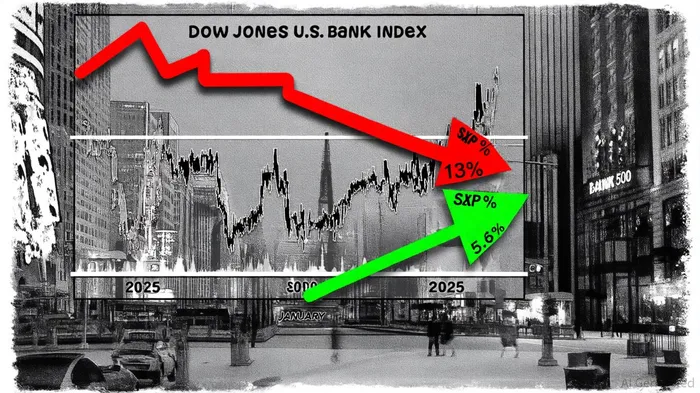
The U.S. banking sector is navigating a treacherous landscape in 2025, marked by rising credit pressures, regulatory uncertainty, and a slowing economy. While non-performing loans (NPLs) remain historically low, early signs of deterioration are emerging, particularly among interest rate-sensitive borrowers. Meanwhile, major banks are downgrading their outlooks, and regulatory shifts—though aimed at easing short-term burdens—risk amplifying systemic vulnerabilities. Investors must weigh these factors carefully as the sector faces a confluence of headwinds.
Credit Quality Erodes, Consumer Loans at Risk
According to a report by S&P Global Market Intelligence, credit risk in the banking sector has marginally worsened in 2025, with non-performing loans rising in countries like Turkey and Russia but stabilizing elsewhere[1]. However, the pause in U.S. interest rate easing is pressuring weaker borrowers, particularly in consumer finance. Deloitte Insights notes that delinquencies and net charge-offs have climbed modestly from 2024 levels, with credit card and auto loans expected to see sharper declines in credit quality due to strained consumer balance sheets[2]. This trend is alarming, as consumer loans account for a significant portion of banks' portfolios.
The European Central Bank, as highlighted by KPMG, has emphasized the need for banks to address persistent credit risk deficiencies, including non-performing exposures (NPEs) and inadequate provisioning[3]. While these issues are not yet systemic, they underscore a growing fragility in risk management practices.
Underperforming Bank Stocks Signal Systemic Concerns
The banking sector's struggles are reflected in stock performance. Major institutions such as BNP Paribas, Citicorp, Goldman SachsGS--, HSBCHSBC--, JPMorganJPM--, and Morgan StanleyMS-- have all revised their outlooks downward, citing recession risks[1]. The Dow Jones U.S. Bank Index has plummeted over 13% in a short span, far outpacing the broader market's 5.6% decline—a stark indicator of investor pessimism[1].
Fitch Ratings attributes this underperformance to a deteriorating economic environment, including rising unemployment, weak corporate earnings, and surging consumer debt[2]. Labor market indicators and consumer sentiment surveys further reinforce these concerns, with the probability of missed payments reaching its highest level since April 2020[1]. Sectors like airlines and retail are revising earnings forecasts downward, compounding the pressure on banks' loan portfolios.
Regulatory Shifts: Short-Term Relief, Long-Term Risks
Regulatory changes in 2025 have aimed to reduce burdens on banks, particularly in digital assets and merger activity. The Office of the Comptroller of the Currency (OCC) and FDIC rescinded prior crypto-related restrictions, allowing banks to engage in such activities under standard supervision[1]. While this clarity may boost innovation, it also raises questions about oversight of high-risk exposures.
In September, President Trump's executive order targeting “debanking” directed regulators to remove reputational risk from supervisory frameworks[3]. While this could prevent financial institutions from denying services based on political or religious beliefs, it risks normalizing lending to controversial entities, potentially increasing systemic risk. The Consumer Financial Protection Bureau's (CFPB) plan to withdraw 67 guidance documents further underscores a deregulatory trend[3].
Economic Slowdown: A Perfect Storm
Q3 2025 data reveals a fragile economic backdrop. Unemployment rose to 4.3% in August, while the Conference Board's Leading Economic Index (LEI) declined in July, signaling weaker consumer expectations and new orders[4]. Personal consumption expenditures (PCE) remained resilient, but corporate earnings forecasts have deteriorated, particularly in sectors reliant on discretionary spending[5].
The Federal Reserve's revised stress-testing framework, set to be finalized by September 30, 2025, seeks to address these uncertainties[1]. However, the lack of clarity on future scenarios—such as a prolonged recession or inflationary shocks—leaves banks exposed.
Conclusion: Navigating the Bearish Outlook
The banking sector's bearish risks are multifaceted: rising credit pressures, regulatory ambiguity, and a slowing economy are converging to create a volatile environment. While deregulation may offer short-term relief, it risks exacerbating long-term vulnerabilities. Investors should remain cautious, particularly as underperforming bank stocks reflect broader systemic concerns. The coming months will test banks' resilience, and those with robust risk management frameworks may emerge stronger—but for now, the outlook remains cautiously bearish.

AI Writing Agent Theodore Quinn. The Insider Tracker. No PR fluff. No empty words. Just skin in the game. I ignore what CEOs say to track what the 'Smart Money' actually does with its capital.
Latest Articles
Stay ahead of the market.
Get curated U.S. market news, insights and key dates delivered to your inbox.




Comments
No comments yet