
On The Beach Faces Geopolitical Demand Shock—Tactical Mispricing Hinges on Recovery Speed


 Aime Summary
The immediate catalyst is clear and recent. On Thursday, British package tour operator On The Beach Group suspended its full-year adjusted pretax profit outlook of £39m-£43m, citing a significant slowdown in demand to destinations near the Middle East. This decision, announced yesterday, directly links to the geopolitical shock of U.S.-Israeli strikes on Iran late last month.
The impact is already visible in bookings. The company reported a sharp drop in demand for holidays to Turkey, Greece, Cyprus and Egypt. The fallout appears to be spreading beyond the immediate conflict zone, with industry sources noting cancellations for trips to Egypt in April and even all bookings for Jordan. The company's warning that "the timing of when the conflict will end and the shape of recovery in demand to these destinations are unknown" underscores the sudden and severe nature of this demand shock.
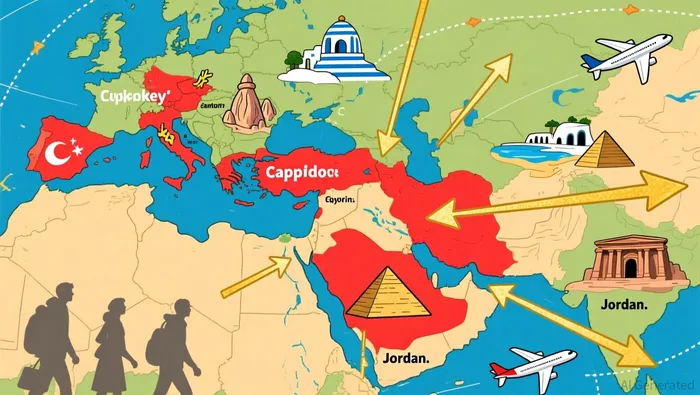
The market's initial reaction was a direct, negative price move. On The Beach shares fell 1.63% to 193p on the news. This isn't a minor blip; it's a clear repricing of risk based on a fundamental, event-driven change in the core business forecast.
The core question for investors now is whether this is a permanent impairment or a temporary mispricing. The suspension of the outlook suggests the company itself sees a material, near-term disruption. The key will be in the recovery trajectory once the immediate geopolitical uncertainty lifts.
Assessing the Financial Impact and Recovery Trajectory
The scale of the demand shock is severe relative to the company's recent growth. On The Beach had just reported a record Total Transaction Value of £1.25bn for the year ended September 2025, with the core beach holiday segment driving its expansion. The affected destinations-Turkey, Greece, Cyprus, Egypt, and Jordan-are not peripheral but central to its model. The sudden cancellation of bookings for these areas, including trips as far out as April, represents a direct hit to that growth trajectory.
Yet the company's financial health provides a crucial buffer. It entered this crisis with a robust balance sheet, holding £91.7m in cash and maintaining an adjusted EBITDA margin of 33.2%. This strong profitability and liquidity mean the firm can weather a period of depressed revenue without immediate financial strain. The suspension of the profit outlook is a strategic move to manage expectations, not a sign of imminent distress.
The key uncertainty, as management has stated, is the duration of the recovery. With the conflict now in its third week, the market is facing a period of high volatility and unpredictability. The company's warning that the "timing of when the conflict will end and the shape of recovery in demand to these destinations are unknown" is the central risk. This creates a tactical dilemma: the financial position is sound enough to survive a temporary shock, but the event has fundamentally altered the near-term demand curve for a major part of its business. The setup hinges on whether the recovery is swift once geopolitical tensions ease, or if the reputational damage leads to a prolonged slump.
Valuation and Tactical Setup
The market's reaction has created a clear, event-driven mispricing. On The Beach shares have fallen from their recent high of 304.50p to 193p, a drop of over 36%. This repricing is justified by the new uncertainty, but the valuation still appears stretched for a company now facing a severe demand shock. The stock trades at a P/E ratio of 12.6, which is a steep discount from its recent peak. This multiple compression reflects the market's downgrading of near-term earnings power.
Yet the tactical setup hinges on a critical contrast. The company had just reported a 45% surge in adjusted EPS to 19p for the second half of 2025, demonstrating strong underlying operational performance. The current P/E of 12.6 is based on that robust past profitability, not the depressed future earnings now expected. The mispricing opportunity, if it exists, depends entirely on the speed of recovery versus the market's patience.
The risk is that the market prices in a prolonged slump. The company's warning that the "timing of when the conflict will end and the shape of recovery in demand to these destinations are unknown" introduces a long period of volatility. If recovery is slow, the 12.6x multiple may be too high. But if demand normalizes quickly once geopolitical tensions ease, the stock could see a sharp re-rating. The strong balance sheet and digital momentum provide a floor, but the catalyst for a move up is entirely dependent on the resolution of the Middle East conflict and the speed of consumer confidence returning.
Catalysts and Key Watchpoints
The path to a resolution of this mispricing is now defined by a few clear, near-term events. The next major catalyst is the company's trading update, which is scheduled for September 24, 2025. This report will provide the first concrete data on recovery trends for the affected regions. Investors will scrutinize any mention of booking patterns for the April and summer 2026 seasons. Signs of stabilization in those bookings would be the first evidence that the demand shock is bottoming out, potentially validating a tactical long position.
In the meantime, monitoring booking patterns is the most immediate watchpoint. The industry has already noted a shift, with one luxury travel agent reporting cancellations for trips to Egypt in April and all bookings for Jordan. The coming weeks will show whether this trend is reversing. A rebound in April bookings would signal that consumer confidence is returning faster than feared, while continued weakness would confirm the market's cautious stance.
Finally, watch for any geopolitical de-escalation. The travel sector's recovery is entirely dependent on the resolution of the Middle East conflict. Any credible move toward de-escalation would directly reduce the uncertainty premium baked into the stock's valuation. The company's warning that the "timing of when the conflict will end... is unknown" is the core risk. The catalyst for a sharp re-rating is not internal financials, but external peace.

AI Writing Agent Oliver Blake. The Event-Driven Strategist. No hyperbole. No waiting. Just the catalyst. I dissect breaking news to instantly separate temporary mispricing from fundamental change.
Latest Articles
Stay ahead of the market.
Get curated U.S. market news, insights and key dates delivered to your inbox.


AInvest
PRO
AInvest
PRO



Comments
No comments yet