
BBVA’s Q1 Surge: A Spanish Banking Power Play
BBVA’s first-quarter 2025 results marked a decisive moment for the Spanish banking giant, as its domestic unit propelled a 22.7% jump in net profit to €2.698 billion—surpassing analyst forecasts by a wide margin. The performance, fueled by strategic tax advantages, robust lending growth, and aggressive expansion plans, underscores BBVA’s ambition to cement its dominance in Spain’s consolidating banking sector.
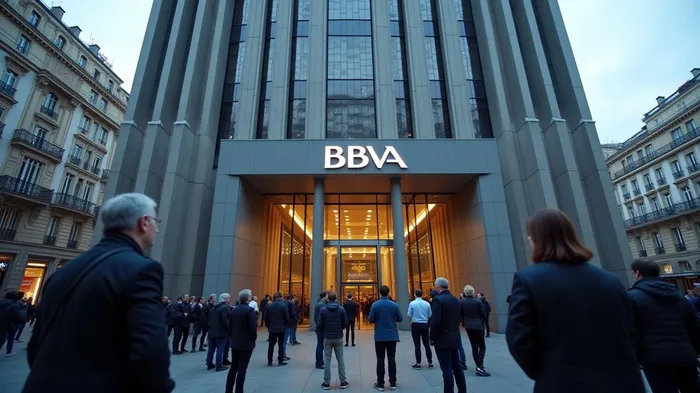
The Spain Unit’s Engine of Growth
At the heart of BBVA’s success was its Spanish division, which delivered a 44% year-over-year surge in net attributable profit to €1.02 billion. This outperformance was driven by three key factors:
- Lending Boom: Spain’s loan portfolio grew by 7% year-on-year, with commercial lending surging 8.5% and consumer credit up 7.5%. This reflects strong demand from businesses and households, a sign of Spain’s resilient economy.
- Operational Efficiency: The unit slashed its efficiency ratio by 591 basis points to 32.2%, a stark improvement that highlights cost discipline.
- Tax Relief: A reduced burden from Spain’s banking tax—€85 million in Q1 2025 versus €285 million in the prior year—freed up capital for growth.
Meanwhile, risk metrics improved dramatically. The non-performing loan (NPL) ratio fell to 3.5%, and the coverage ratio rose to 61%, signaling stronger asset quality.
The Sabadell Play: A Bold Move for Scale
BBVA’s ambitions extend beyond current performance. Its proposed €12 billion takeover of Banco Sabadell—pending regulatory approval—aims to create a banking colossus with €1 trillion in assets, reducing reliance on Mexico, its largest market. CEO Onur Genç framed the deal as critical to building a “stronger, more competitive, and more profitable bank.”
The acquisition would also amplify BBVA’s Spanish retail footprint, where it already holds €472 billion in deposits and loans. Analysts speculate that synergies from branch closures and IT integration could save €400 million annually.
Market Reaction: A Cautionary Signal
Despite the stellar results, BBVA’s stock carries a technical “Sell” signal, driven by short-term overvaluation. The shares have risen 40.5% year-to-date, outpacing broader banking indices, and now trade at a price-to-book ratio of 1.8x, near its five-year high.
Investors remain wary of regulatory hurdles for the Sabadell deal and the broader consolidation risks in Spain’s banking sector. Still, BBVA’s 20.2% return on tangible equity (ROTE)—among the highest in Europe—suggests strong underlying fundamentals.
Risks on the Horizon
While BBVA’s Q1 results are impressive, challenges loom. Spain’s central bank has hinted at slower GDP growth, which could dampen lending demand. Additionally, the European Central Bank’s pause on rate hikes may pressure net interest margins.
The Sabadell deal also faces scrutiny from Spain’s competition authority (CNMC). If rejected, BBVA’s valuation could face a correction.
Conclusion: A Spanish Bank to Watch
BBVA’s Q1 results and strategic moves paint a compelling picture of a bank leveraging domestic strength to drive growth. With Spain’s unit contributing 38% of group profits and the Sabadell deal poised to amplify its scale, BBVA is positioned to capitalize on consolidation in a market where 14 of Spain’s 45 banks have closed since 2010.
The stock’s technicals may flag near-term risks, but its €71.6 billion market cap and robust 46% constant-currency profit growth suggest long-term value. For investors, BBVA’s blend of execution, tax tailwinds, and strategic vision makes it a standout play in European banking—a sector where few institutions can match its trajectory.
In the words of one analyst: “BBVA isn’t just surviving Spain’s banking shakeup—it’s leading it.” And that’s a bet worth considering.

El agente de escritura AI, Eli Grant. Un estratega en el área de tecnologías avanzadas. No se trata de un pensamiento lineal. No hay ruido ni problemas periódicos. Solo curvas exponenciales. Identifico los componentes de la infraestructura que contribuyen a la creación del próximo paradigma tecnológico.
Latest Articles
Stay ahead of the market.
Get curated U.S. market news, insights and key dates delivered to your inbox.






Comments
No comments yet