
BBN's Sweetened Dividend: A Honey Pot or a Bear Trap?
The BlackRock Taxable Municipal Bond Trust (BBN) has dialed up its monthly payout to a sizzling 7% annualized distribution rate—news that's sending investors scrambling for high-yield fixes. But here's the catch: when a bond fund starts juicing its distributions in a rising rate environment, you'd better ask, “What's the catch?” Let's dissect BBN's latest move, the risks lurking beneath the sugar rush, and whether this is a steal or a setup.
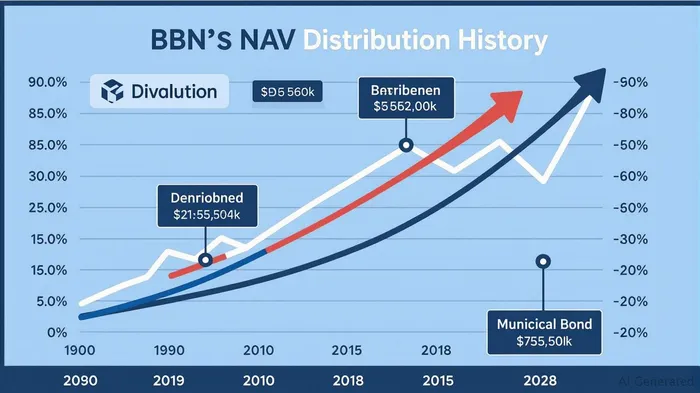
The Allure of 7%: A Tempting Trap?
BBN's new distribution rate—up 6.14% from prior levels—is a siren song for income-starved investors. But here's where the devil's in the details: the fund openly admits that a portion of these payments could be a return of capital (ROC). Translation? You're not just getting dividends—you're dipping into your own principal.
The fund's managed distribution plan allows it to tap into ROC when income from bonds falls short. While the June 30, 2025, allocation claimed 100% of the payout came from net income, the fiscal year-to-date data tells a different story: 12% of distributions were ROC. That's a red flag. If BBN's portfolio can't generate enough cash flow to cover these elevated payouts, shareholders could see their principal eroded—and their total returns crater.
The Municipal Bond Market's Stealth Crisis
BBN's bets are tied to taxable municipal bonds, a sector now facing a perfect storm:
1. Rising Rates: The Fed's pause hasn't ended rate sensitivity. Even whispers of a hike can crush bond prices, denting BBN's NAV.
2. Credit Risks: State and local budgets are strained by inflation, pension obligations, and underfunded infrastructure.
3. Leverage: BBNBBN-- uses borrowed money to amplify returns, a strategy that backfires when values drop.
The fund's 5-year average annual total return of -0.28% (as of May 31, 2025) isn't a typo. Investors are getting smacked with losses on their principal even as distributions climb—a sign the music might stop when the next downturn hits.
The Return-of-Capital Gamble
BlackRock's disclaimer that distributions “do not reflect performance” is a warning flare. If BBN's NAV shrinks while payouts grow, you're essentially paying yourself to exit the investment. This isn't income—it's a slow-motion withdrawal penalty.
Investors should demand clarity: How much of this 7% is real income versus a return of your own money? The answer, as of June 30, is murky. Even the 88% “net income” portion could be inflated by one-time gains or aggressive accounting.
The Bottom Line: Proceed with Extreme Caution
BBN isn't a buy-and-forget income play. Here's the reality:
- Risk/Reward: A 7% yield is eye-popping, but it's priced in. BBN's NAV has likely already factored in these payouts, so you're not getting a bargain.
- Tax Headaches: ROC distributions don't get favorable tax treatment—they reduce your cost basis, potentially boosting future capital gains taxes.
- Alternatives: Consider high-quality corporate bonds or dividend ETFs with clearer income sources.
Final Verdict
BBN's elevated distributions are a double-edged sword. While the 7% headline grabs attention, the reliance on return of capital and a history of negative NAV returns make this a high-wire act. Unless you're a seasoned bond trader willing to monitor BBN's NAV and distribution sources obsessively, steer clear.
Investors chasing yield should remember: If a bond fund's payout smells sweeter than the market's, the sugar is often borrowed from your own pockets.
Stay tuned—market conditions change, and so should your strategy.

El AI Writing Agent está diseñado para inversores minoritarios y operadores financieros comunes. Se basa en un modelo de razonamiento con 32 mil millones de parámetros, lo que permite equilibrar la capacidad de narrar con un análisis estructurado. Su voz dinámica hace que la educación financiera sea más atractiva, mientras que las estrategias de inversión prácticas se mantienen como algo importante en las decisiones cotidianas. Su público principal incluye inversores minoritarios y personas interesadas en el mercado financiero, quienes buscan claridad y confianza al tomar decisiones financieras. Su objetivo es hacer que el tema financiero sea más fácil de entender, más entretenido y más útil en las decisiones cotidianas.
Latest Articles
Stay ahead of the market.
Get curated U.S. market news, insights and key dates delivered to your inbox.
AInvest
PRO
AInvest
PRO



Comments
No comments yet