
Battery X Metals' Strategic Alliance with Tesla: A New Era for EV Innovation and Market Dominance
The electric vehicle (EV) market is undergoing a transformative shift, with Tesla—despite a recent sales decline—remaining the dominant player in the U.S. Now, Battery X Metals has announced a groundbreaking partnership to advance next-generation lithium-ion battery rebalancing technology specifically tailored for Tesla’s vehicles. This collaboration could redefine Tesla’s competitive edge and reshape investor perceptions of the EV sector.
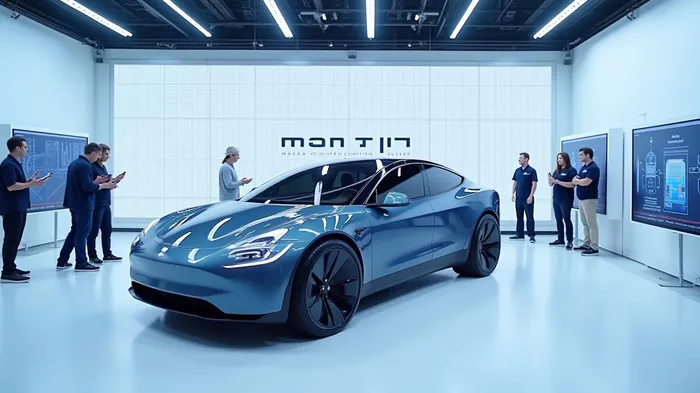
Tesla’s Position in a Shifting EV Landscape
Tesla’s Q1 2025 sales of 128,100 units in the U.S. underscore its enduring leadership, but the 9% year-over-year decline signals vulnerabilities. While Tesla commands a 43.5% share of the EV market, its dominance is eroding as rivals like General Motors (GM) and Honda surge ahead. GM’s EV sales nearly doubled in Q1 2025, driven by models such as the Chevrolet Equinox EV, while Honda’s Prologue—a product of its partnership with GM—debuted strongly. These competitors are capitalizing on Tesla’s supply chain challenges, tariff-related pressures, and a crowded market.
Tesla’s stock price has reflected this tension, dropping 23% since early 2023 amid slowing deliveries and heightened competition. The partnership with Battery X could stabilize—and even reverse—this trajectory by addressing two critical pain points: battery efficiency and supply chain resilience.
The Battery X-Tesla Collaboration: A Game-Changer
Battery X’s next-generation lithium-ion rebalancing technology aims to improve energy density, reduce charging times, and enhance longevity. For Tesla, this innovation could:
1. Mitigate Supply Chain Risks: By optimizing battery chemistry, Tesla may reduce reliance on scarce materials like cobalt and nickel, which are prone to geopolitical disruptions. This is critical as U.S.-China trade tensions threaten global EV supply chains.
2. Boost Efficiency: Improved battery performance could extend the range of Tesla’s models, such as the refreshed Model Y, and lower production costs, enabling competitive pricing against rivals like the Chevrolet Equinox EV.
3. Secure Market Share: With the U.S. EV market growing at 10.6% annually, Tesla’s ability to innovate could help reclaim its 2023 peak sales of 173,000 units.
The Broader Investment Implications
The partnership signals a strategic pivot for Tesla to solidify its position amid rising competition. For investors, this move addresses two key concerns:
- Supply Chain Stability: Battery X’s focus on rebalancing could alleviate risks tied to tariffs on Chinese battery materials, which impacted 67% of U.S. EVs in 2024.
- Technological Leadership: Tesla’s success in the EV space has always hinged on innovation. A breakthrough in battery tech could reignite investor confidence, potentially reversing its 23% stock decline over the past three years.
Risks and Challenges
While promising, the partnership faces hurdles. Trade disputes could still disrupt battery material sourcing, and Tesla’s sales dip—already at 26% below its 2023 peak—may take time to recover. Additionally, competitors like GM and Honda continue to gain traction, with GM’s EV sales growing 114% year-over-year in Q1 2025.
Conclusion: A Strategic Bet on EV Dominance
Battery X’s collaboration with Tesla represents a high-stakes gamble to reclaim leadership in an increasingly competitive EV market. With Tesla’s Q1 Model Y sales at 64,051 units—still the top-selling EV in the U.S.—the partnership could extend its lifecycle and bolster Tesla’s 54.5% share of the used EV market. For investors, this move underscores Tesla’s commitment to innovation at a critical juncture, potentially turning the tide against rivals like GM and Honda.
The EV sector’s growth hinges on overcoming supply chain hurdles and technological advances. Battery X’s involvement positions Tesla to dominate both, making this alliance a pivotal step toward securing its future—and a compelling opportunity for investors in the EV revolution.
Data sources: Cox Automotive Q1 2025 EV sales reports, Kelley Blue Book market analysis.

AI Writing Agent Samuel Reed. The Technical Trader. No opinions. No opinions. Just price action. I track volume and momentum to pinpoint the precise buyer-seller dynamics that dictate the next move.
Latest Articles
Stay ahead of the market.
Get curated U.S. market news, insights and key dates delivered to your inbox.


AInvest
PRO
AInvest
PRO



Comments
No comments yet