
Baseball and Camels Bridge Cultures in Middle East Diplomacy Push


 Aime Summary
Cincinnati Reds Hall of Famer Barry Larkin is making headlines in the Middle East, where he has launched an unconventional initiative to introduce baseball to the region-complete with camels carting relief pitchers from the bullpen. The effort, part of a broader cultural exchange program, coincides with international diplomatic efforts to stabilize the region, as highlighted by recent G7 discussions in Canada focused on Middle East peace.
The project, which blends sports and humor, has drawn attention for its novelty. Camels-traditionally associated with the region's heritage-are now part of the spectacle, ferrying pitchers between the field and the bullpen during exhibition games. 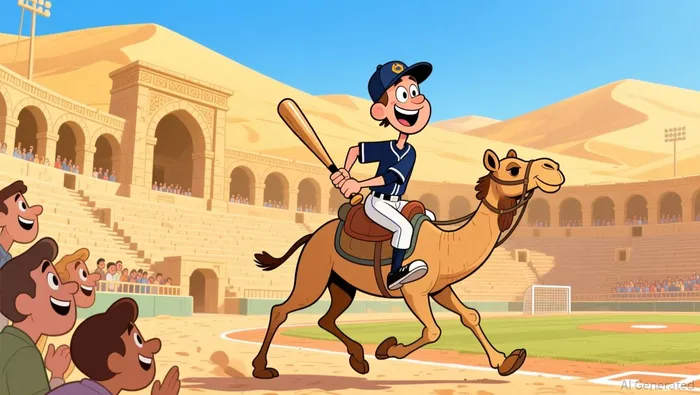 Larkin, known for his 19 All-Star appearances and 1995 NL MVP award, described the venture as a "bridge between cultures," emphasizing baseball's universal appeal. "This isn't just about the game," he said in a recent interview. "It's about showing that shared experiences can transcend borders."
The timing of the initiative aligns with growing global interest in the Middle East's economic and technological transformation. For instance, the region's AI in oncology market, projected to reach $812.89 million by 2034, underscores its commitment to innovation-a shift Larkin hopes to mirror through sports. "The Middle East is evolving rapidly," he noted. "Baseball can be part of that story."
The G7 foreign ministers' meeting in Canada, which prioritized "securing peace in the Middle East", has also framed the region as a focal point for international collaboration. While no direct ties exist between the G7 agenda and Larkin's efforts, analysts suggest that cultural initiatives like this could complement diplomatic goals. "Soft diplomacy-cultural and sporting exchanges-can ease tensions as effectively as political agreements," said John Kirton, founder of the G7 Research Group at the University of Toronto.
The project has faced logistical challenges, including adapting traditional baseball rules to desert conditions and training camels for their new roles. However, organizers have embraced the quirks. "The camels are trained to stop precisely at the dugout," said Ahmed Al-Farsi, a local event coordinator. "It's a bit of a spectacle, but that's the point."
Local reactions have been mixed. While some view the initiative as a lighthearted way to engage with global culture, others question its practicality. "Baseball is complicated," said Dubai resident Fatima Al-Maskati. "But the camels are a nice touch."
Larkin's venture is part of a broader push to expand baseball's global footprint. The sport has seen modest growth in the Middle East, with Saudi Arabia and the UAE investing in sports infrastructure as part of their economic diversification plans. The region's AI-driven healthcare advancements and recent G7 focus on stability suggest a growing appetite for international collaboration-sports included.
As for the camels, they've become an unexpected symbol of the initiative's success. "They're not just animals; they're ambassadors," Larkin said. "And if this helps one person connect with another, it's worth it."
---

Stay ahead of the market.
Get curated U.S. market news, insights and key dates delivered to your inbox.


AInvest
PRO
AInvest
PRO



Comments
No comments yet