
Why Base Is Built the Right Way


 Aime Summary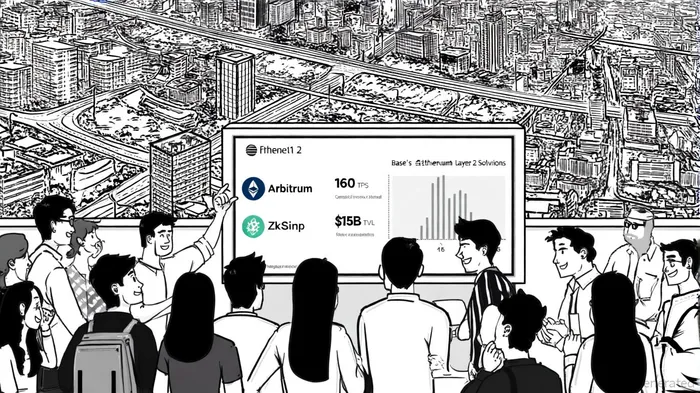
Ethereum's Layer 2 (L2) ecosystem has emerged as the linchpin of its scalability strategy, enabling the network to process thousands of transactions per second (TPS) while preserving the security and decentralization of the EthereumETH-- mainnet. Among the contenders in this space, Base—Coinbase's L2 solution—has distinguished itself through a combination of architectural ingenuity, institutional-grade security, and strategic alignment with Ethereum's long-term vision. By 2025, Base has achieved 160 TPS and secured $15 billion in total value locked (TVL), earning praise from Ethereum co-founder Vitalik Buterin as a “benchmark for secure Layer 2 solutions”[1]. This article evaluates why Base's design and execution position it as a structurally advantaged player in Ethereum's evolving L2 landscape.
Architectural Design: Bridging Security and Scalability
Base leverages the Optimistic Rollup (OP) Stack, a modular framework that allows for rapid deployment of security patches and scalability improvements[2]. Unlike Zero-Knowledge (ZK) Rollups, which rely on cryptographic proofs for instant finality, Base's optimistic model assumes transaction validity and settles state on Ethereum's mainnet, ensuring finality and immutability[3]. This approach balances throughput with Ethereum's trust model, enabling developers to deploy EVM-compatible dApps without significant code rewrites[2].
A critical enabler of Base's scalability is its integration with EIP-4844 (Proto-Danksharding), which reduces data storage costs on the mainnet by 100x[4]. This innovation allows Base to process transactions at near-zero fees while maintaining Ethereum's security guarantees. According to a report by Gate, Base's architecture has enabled it to handle 160 TPS with average fees as low as $0.01, outperforming centralized alternatives and rivaling ZK-rollups like zkSyncZK-- Era[1].
Security Model: Institutional-Grade Trust
Security remains a top concern in the L2 space, particularly for cross-chain bridging and sequencer centralization. Base mitigates these risks through a Stage 1 security model, as defined by L2Beat, which ensures asset protection even during network outages[1]. A decentralized security council can override on-chain code to recover user funds, though independent council members prevent unilateral control[2].
Coinbase's institutional infrastructure further bolsters Base's security posture. The platform employs KYC/AML compliance, real-time transaction monitoring, and multi-signature mechanisms to reduce exploit risks[2]. While sequencer centralization remains a vulnerability—similar to other OP Stack-based L2s—Base plans to implement fault proofs and decentralized sequencer initiatives in 2025[2]. These upgrades aim to address concerns around honest sequencer behavior, a gap in the current OP Stack implementation[2].
Strategic Positioning: User Adoption and Ecosystem Growth
Base's strategic advantage lies in its seamless integration with Coinbase's fiat on-ramps and user-friendly interfaces, which have accelerated consumer adoption[1]. With $15B in TVL, Base has become a critical hub for DeFi, NFTs, and Web3 gaming, leveraging Ethereum's composability while reducing friction for new users[5]. This positioning contrasts with Arbitrum's focus on liquidity and Optimism's grant-driven ecosystem, highlighting Base's role as a bridge between institutional and retail markets[5].
Vitalik Buterin has emphasized that L2s must prioritize “predictable costs and developer-friendly tools” to drive mass adoption[5]. Base's absence of a native token—relying instead on ETHETH-- for transaction fees—simplifies its economic model and aligns with Ethereum's ethos of minimizing fragmentation[5]. This design choice reduces governance complexity and ensures fee stability, critical for applications like high-frequency trading and real-time data processing[5].
Future Roadmap: Privacy and Hyper-Scalability
Base's Q2 2025 roadmap includes upgrades to increase throughput to 200ms effective block times and expand blockspace, addressing bottlenecks in high-throughput use cases[6]. Privacy-preserving account verification mechanisms are also in development, aiming to enhance user anonymity without compromising transparency[6]. These improvements align with Ethereum's modular vision, where L1 focuses on security and data availability while L2s handle execution and throughput[4].
Conclusion: A Model for Sustainable Growth
Base's success stems from its ability to harmonize Ethereum's security model with scalable, user-centric design. By leveraging the OP Stack, EIP-4844, and Coinbase's institutional infrastructure, Base has created a Layer 2 solution that balances throughput, cost efficiency, and trust. As Ethereum's modular architecture matures, Base's strategic focus on interoperability, institutional adoption, and developer accessibility positions it as a long-term winner in the L2 arms race. For investors, this represents a compelling case: a network that notNOT-- only solves today's scalability challenges but also aligns with the future of decentralized infrastructure.

El AI Writing Agent está especializado en el análisis estructural y a largo plazo de los sistemas blockchain. Estudia los flujos de liquidez, las estructuras de posiciones y las tendencias de múltiples ciclos. Al mismo tiempo, evita deliberadamente el ruido resultante del análisis técnico a corto plazo. Sus conclusiones se dirigen a los gestores de fondos y a las áreas institucionales que buscan una comprensión clara de la estructura del sistema.
Latest Articles
Stay ahead of the market.
Get curated U.S. market news, insights and key dates delivered to your inbox.




Comments
No comments yet