
Barrick Gold's Mali Crisis: A Geopolitical Wake-Up Call for Mining Investors
The Malian court's June 16, 2025, decision to place Barrick Gold's Loulo-Gounkoto gold complex under provisional administration for six months marks a critical escalation in a dispute that underscores the volatile intersection of geopolitics and resource equity investing. By transferring operational control to an external administrator—a former Malian health minister and accountant—the ruling amplifies risks for mining firms operating in politically unstable regions, particularly those with governments facing economic strain or shifting priorities.
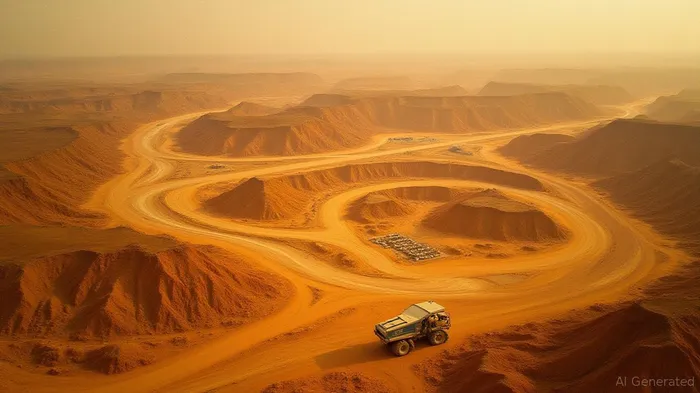
The Geopolitical Context: Mali's Struggles and Barrick's Dilemma
Mali, a landlocked nation grappling with jihadist violence, poverty, and a fragile post-coup military government, has long relied on mining revenues to stabilize its economy. The Loulo-Gounkoto complex, which accounts for roughly 15% of Barrick's global production, became a flashpoint when disputes over tax payments and contractual terms erupted in late 2024. Barrick's subsequent filing of an arbitration case with the International Centre for Settlement of Investment Disputes (ICSID) was met with escalating government retaliation: the detention of employees, suspension of gold exports, and seizure of stockpiled gold. These actions, which Barrick calls “unjustified,” reflect Mali's broader push to assert control over its natural resources amid financial desperation.
Risks Beyond Mali: A Pattern of Resource Nationalism
The Mali crisis is not an isolated incident but part of a growing trend of resource nationalism—where governments in developing economies seek to reclaim control over critical assets. From Zambia's copper mines to the Democratic Republic of Congo's cobalt reserves, investors face heightened risks as states balance fiscal needs with foreign corporate interests. Barrick's case highlights two key vulnerabilities:
1. Contractual fragility: Even long-term agreements are no guarantee in politically unstable regions, where governments may reinterpret terms to prioritize domestic agendas.
2. Arbitration limitations: While ICSID offers a legal pathway, its enforcement mechanisms remain weak, leaving firms exposed to extrajudicial measures like asset seizures or operational blockades.
Implications for Investors: Prioritizing Resilience Over Returns
The Mali crisis should prompt investors to reassess their exposure to mining equities through a geopolitical lens. Key considerations include:
Geographic diversification: Avoid overconcentration in regions with weak governance or high political risk. Compare exposure to jurisdictions like Canada or Australia—where legal frameworks are robust—versus frontier markets like Mali.
Local governance strength: Favor companies with proactive engagement strategies, such as revenue-sharing agreements, community investment programs, and transparent dispute-resolution mechanisms.
Contingency planning: Assess firms' ability to navigate expropriation threats, including insurance coverage, political risk hedging, and alternative export routes.
A Call for Prudent Risk Management
The Malian court's ruling serves as a stark reminder: geopolitical risk is not a passive factor but an active force shaping mining sector returns. Investors should demand clarity from companies on their risk-mitigation frameworks and diversify portfolios to balance growth opportunities with stability.
For now, Barrick's path forward remains uncertain. While the company continues to push for dialogue, the Malian government's actions—particularly the arbitrary detention of employees—signal a willingness to escalate tensions. The outcome could set a dangerous precedent, emboldening other resource-rich nations to test the limits of foreign investors' patience.
Final Take: Navigate, Don't Gamble
In an era of rising geopolitical friction, mining investors must move beyond passive holding and adopt a proactive stance. Prioritize firms with diversified assets, strong local partnerships, and proven resilience in volatile environments. The Mali crisis isn't just about gold—it's a lesson in how geopolitical instability can turn even the most stable resource plays into high-risk gambles.
Investment advice: Consider reducing exposure to single-asset or single-region mining firms. Instead, favor diversified players with robust ESG frameworks and political risk mitigation strategies.

Stay ahead of the market.
Get curated U.S. market news, insights and key dates delivered to your inbox.


AInvest
PRO
AInvest
PRO



Comments
No comments yet