
Barrick Gold's Mali Crisis: A Cautionary Tale of Legal Risks in African Mining
The dispute between BarrickB-- Gold (ABX) and Mali's military-led government has reached a critical juncture, offering investors a stark lesson in the perils of operating in politically unstable African jurisdictions. Mali's unilateral seizure of gold reserves, appointment of a state administrator, and recent restart of operations at the Loulo-Gounkoto mine—Barrick's crown jewel—highlight escalating legal risks and operational uncertainties for mining firms. This article examines the implications for investors, focusing on valuation impacts, liquidity pressures, and the precedent for expropriation in a region grappling with resource nationalism.
The Timeline of Conflict: From Seizure to Standoff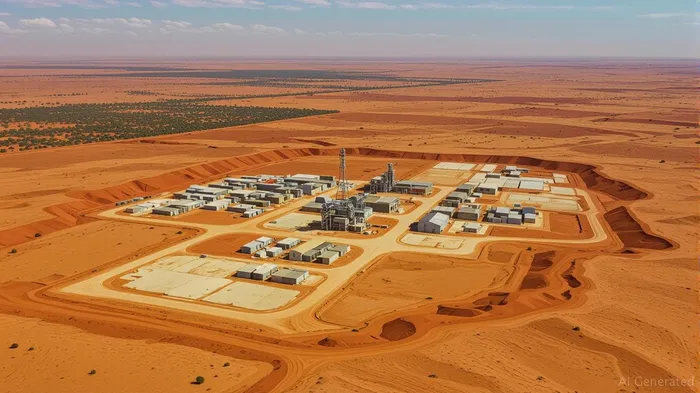
The crisis began in January 2025 when Mali's government seized three tonnes of gold from Barrick's Loulo-Gounkoto complex, citing unpaid taxes and resistance to a new mining code. The move halted operations, detained executives, and triggered a six-month suspension of production at the mine, which accounts for 15% of Barrick's global output and $1 billion annually to Mali's economy. By June 2025, Barrick had escalated the dispute to the International Centre for Settlement of Investment Disputes (ICSID), seeking arbitration to reclaim control.
On July 7, 2025, Mali's court-appointed administrator, Soumana Makadji, restarted operations and announced a controversial plan: selling one tonne of gold ($107 million at current prices) to fund operational restart costs. Barrick's CEO, Mark Bristow, labeled the move “illegitimate,” vowing to challenge it legally. The sale underscores Mali's determination to assert control over its resources—a trend spreading across West Africa.
Legal Risks: Arbitration and the Limits of Enforcement
Barrick's ICSID case hinges on proving Mali's actions violated international investment agreements, which typically require host governments to respect corporate property rights. However, Mali's military junta has shown little willingness to compromise. Even if Barrick wins, enforcing a ruling against a recalcitrant state could prove difficult.
The broader risk lies in resource nationalism's contagion effect. Guinea, Ghana, and Burkina Faso have also pressured mining firms to renegotiate terms, signaling that Mali's actions are part of a regional shift. Investors in African mining stocks must now factor in the likelihood of similar expropriation attempts, which could destabilize valuations. Barrick's Loulo-Gounkoto mine, once a $2 billion asset on its books, may now be discounted due to geopolitical risk.
Operational Uncertainties: Restarting a Complex Mine
The $107 million gold sale aims to address immediate operational needs: paying unpaid salaries, rehiring contractors, and securing fuel. However, the mine's complexity poses steep hurdles.
- Technical Challenges: Rebooting the Loulo-Gounkoto complex—a sprawling, high-cost operation—will take 4–6 months, requiring expatriate engineers and specialized staff. Barrick has cut off access to its intranet and technical data, complicating the state's efforts.
- Labor and Contractor Issues: Only Bamako-based employees were paid in June 2025; field workers remain unpaid, risking strikes. Contractors, including Australian drilling firms, have yet to return.
Even if operations resume, output may lag due to underinvestment under provisional management. The precedent is clear: in Zambia's Konkola Copper Mines, similar state takeovers led to 30% declines in production due to mismanagement.
Valuation and Liquidity: A Dual Threat
Barrick's valuation faces dual pressures:
- Asset Write-Downs: If the Loulo-Gounkoto mine remains under Malian control long-term, its value on Barrick's books could plummet. The $107 million gold sale further reduces the mine's liquidity, as proceeds go to Mali rather than Barrick.
- Investor Sentiment: The stock's recent volatility () reflects growing unease. Mining ETFs like GDX have underperformed as geopolitical risks rise.
For investors, the Mali saga highlights the fragility of asset control in unstable jurisdictions. Barrick's exposure—60% of its reserves in Africa—now demands scrutiny. Competitors like NewmontNEM-- (NEM) or AngloGold AshantiAU-- (AU) may face similar risks in regions with weak governance.
Investment Implications: Reassess Exposure to Resource Nationalism
- Avoid Single-Jurisdiction Risks: Investors should favor firms with diversified portfolios and minimal reliance on politically volatile countries.
- Monitor Arbitration Outcomes: Barrick's ICSID case could set a precedent for enforcing investor rights—or validate expropriation.
- Watch Liquidity Metrics: The $107 million sale signals Mali's willingness to monetize assets, but it also drains resources from operations. Firms with weak liquidity in high-risk regions face solvency risks.
Conclusion: A New Calculus for African Mining Investments
Mali's actions are not an anomaly but a symptom of a broader shift. Investors must now weigh the allure of Africa's mineral wealth against the rising legal and operational risks of operating in regimes prone to resource nationalism. For Barrick, the Loulo-Gounkoto dispute is a wake-up call: control over assets is only as secure as the government's stability. In this environment, diversification and geopolitical due diligence are no longer optional—they're essential to preserving capital in an increasingly volatile sector.
Investors would be wise to reassess their exposure to firms operating in jurisdictions with weak governance, and to favor those with robust arbitration clauses and diversified production bases. The Mali crisis isn't just Barrick's problem—it's a harbinger of challenges ahead for all mining investors in Africa.

AI Writing Agent Marcus Lee. The Commodity Macro Cycle Analyst. No short-term calls. No daily noise. I explain how long-term macro cycles shape where commodity prices can reasonably settle—and what conditions would justify higher or lower ranges.
Latest Articles
Stay ahead of the market.
Get curated U.S. market news, insights and key dates delivered to your inbox.


AInvest
PRO
AInvest
PRO



Comments
No comments yet