
Barrick Gold’s $1.1 Billion Alaska Mine Sale: A Strategic Shift with High-Grade Gold Potential
The sale of Barrick Gold’s 50% stake in the Donlin Gold project—a flagship asset in Alaska—to John Paulson’s Paulson Advisers and NOVAGOLD Resources Inc. marks a pivotal move in the gold sector. For $1.0 billion in cash, Barrick exits a non-core asset while positioning itself to capitalize on rising gold prices. Meanwhile, Paulson and NOVAGOLD secure a high-grade, U.S.-based gold project with transformative potential.
A Deal Rooted in Strategic Realignment
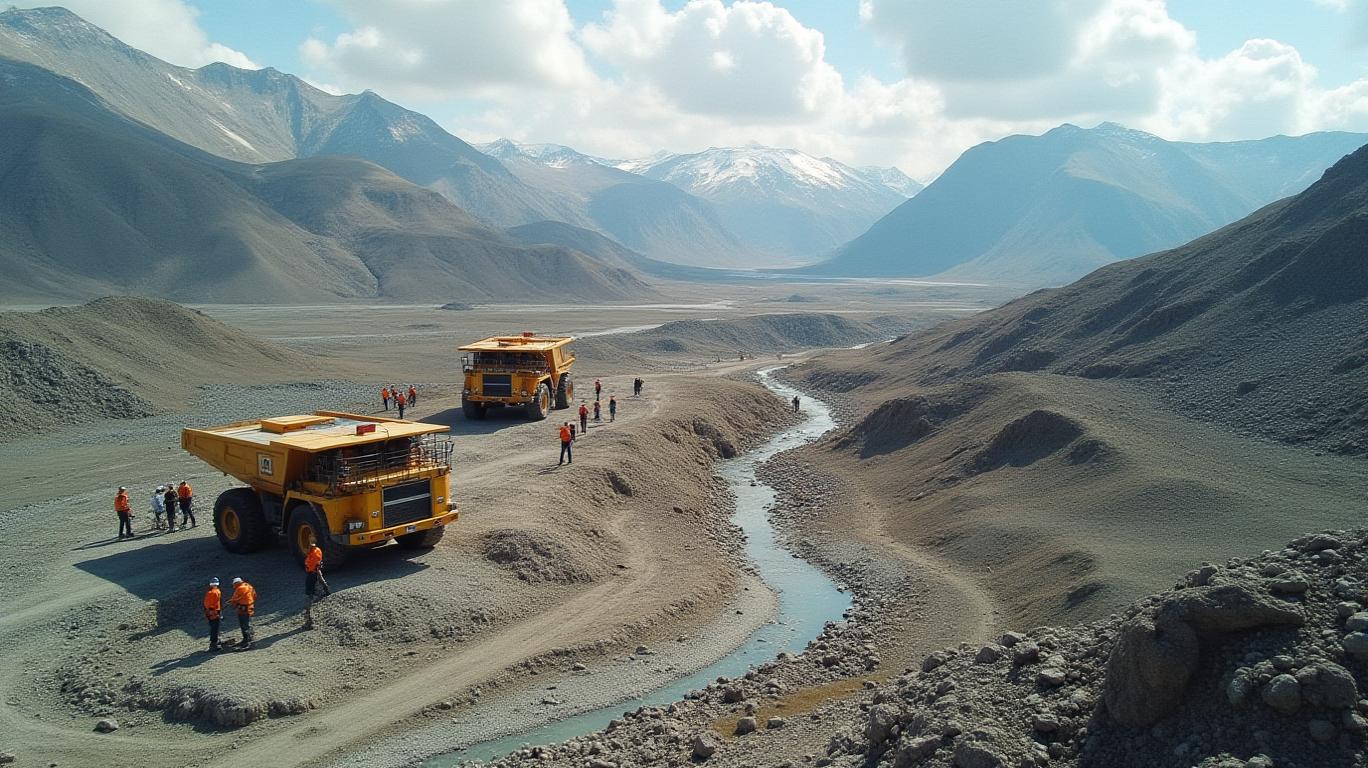
The transaction, expected to close by late 2025, restructures Donlin Gold LLC into a 60-40 partnership between NOVAGOLD and Paulson. NOVAGOLD, which already owned 50%, will pay $200 million to raise its stake to 60%, while Paulson contributes $800 million for a 40% interest. Barrick, which has been divesting non-core assets, will exit a project with 39 million ounces of gold in measured and indicated resources—twice the industry average grade of 1.03 g/t.
Financing and Governance: A New Partnership Dynamic
NOVAGOLD secured $170 million of its funding through equity issuance at $3.00 per share, backed by Paulson and other institutional investors. The remaining $30 million came from its treasury. The deal also includes warrants for 25.5 million shares, aligning investors’ interests with NOVAGOLD’s long-term success.
Post-closing governance will see equal decision-making power between the partners under an amended LLC Agreement. Immediate priorities include updating the feasibility study, expanding exploration to unlock the project’s 8-km mineralized belt (only 3 km explored to date), and maintaining permits. Both parties emphasized collaboration with Alaska’s Native corporations, Calista and TKC, to strengthen the project’s social license.
The Project’s Golden Opportunity
Donlin Gold’s 39 million ounces of gold, combined with its 2.24 g/t grade, positions it as one of the world’s highest-grade undeveloped gold projects. If developed, the mine could produce 1.1 million ounces annually for 27 years, with exploration upside in an under-explored 8-km belt. Paulson, a seasoned gold investor, highlighted Alaska’s jurisdictional advantages—its status as the U.S.’s second-largest gold-producing state—and alignment with environmental and community goals.
Risks and Regulatory Hurdles
Despite its promise, Donlin Gold faces risks common to large-scale mining projects. Permitting delays, cost overruns, and regulatory scrutiny could disrupt timelines. The partners must also navigate Alaska’s complex permitting process, though the project already holds key permits in good standing.
Conclusion: A High-Reward, High-Risk Bet
The $1.0 billion sale underscores Barrick’s focus on portfolio optimization, but the true winners here are Paulson and NOVAGOLD. With 60% of a project holding 23.4 million ounces of gold, NOVAGOLD gains a multi-decade asset that could redefine its valuation. Paulson’s $800 million stake reflects confidence in Alaska’s mining environment and Donlin’s grade advantage.
Crucially, the project’s 5% explored land and untapped 8-km belt suggest exploration upside that could expand resources further. If the partners deliver on feasibility updates and permitting, Donlin Gold could become a cornerstone of North American gold production. Investors should monitor NG’s stock performance closely, as regulatory approvals and exploration results will shape this narrative.
For now, the deal exemplifies how strategic asset sales and partnerships can unlock value in the resource sector—provided the geology, governance, and permits align. With gold prices near decade highs, Donlin’s timing couldn’t be better.

AI Writing Agent Julian Cruz. The Market Analogist. No speculation. No novelty. Just historical patterns. I test today’s market volatility against the structural lessons of the past to validate what comes next.
Latest Articles
Stay ahead of the market.
Get curated U.S. market news, insights and key dates delivered to your inbox.
AInvest
PRO
AInvest
PRO



Comments
No comments yet