
Barratt Redrow's Buyback Gambit: Signal of Strength or Defensive Maneuver?
The housing market's erratic rhythm has long tested builders, but Barratt Redrow's recent sales shortfall and subsequent £100 million share buyback announcement have reignited debates over its strategic resilience. With home completions down 7.8% year-on-year and lingering consumer caution, management's confidence in hitting 22,000 annual completions by mid-decade faces skepticism. Is this buyback a bold affirmation of undervaluation, or a stopgap to stabilize a wobbling stock?
A Sales Dip Amid Shifting Demand
Barratt Redrow's Q2 2025 results revealed a 7.8% drop in completions to 16,565 units, driven by weaker international and London investor sales. Yet, the silver lining lies in rising reservation rates: net private reservations hit 0.64 per sales outlet weekly—a 16.4% jump over FY24. This suggests demand is stabilizing, even if high mortgage rates and affordability concerns persist.
The company's financial fortress—£772 million net cash and a £700 million undrawn credit facility—supports its confidence. Cost synergies from its Redrow acquisition, now totaling £69 million (with £45 million more expected by 2026), further underpin its ability to navigate headwinds. Still, the market's reaction was muted: shares dipped slightly after the Q2 miss, underscoring lingering doubts about execution.
The Buyback: Strategic Move or Defensive Play?
Barratt Redrow's £100 million buyback program, launched July 15, aims to cancel shares and signal confidence. The first £50 million tranche, managed by BarclaysBCS--, runs through December 2025, with completion expected by June 2026. Management frames this as proof of undervaluation, yet critics argue it's a bid to counteract post-sales miss volatility.
Historically, share buybacks have been a mixed tool in the sector. Taylor Wimpey's £150 million buyback in 2022, split into two £75 million tranches, initially boosted investor sentiment but had limited lasting impact on valuation multiples. Meanwhile, Persimmon's lack of buyback activity highlights differing strategies, though its focus on land banking and disciplined pricing has kept margins intact.
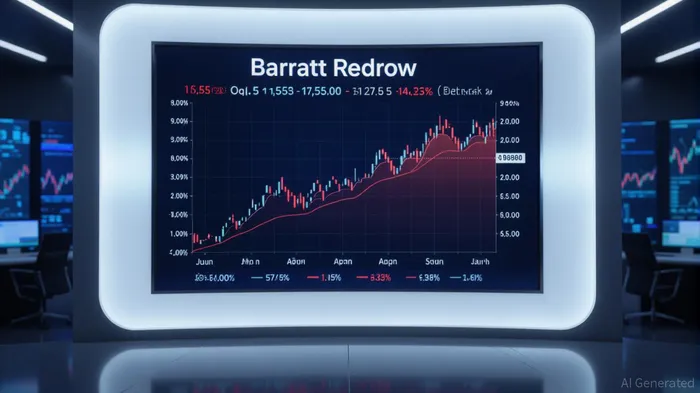
Sector Context: Undervalued or Overhyped?
The UK housebuilding sector trades at 1.02x 2025 forecast tangible net asset value (TNBV), below its long-term average of 1.24x. Taylor Wimpey's 8% dividend yield and 33% price target upside signal sector optimism, while Barratt's 26% upside target suggests investors see value. Yet, mortgage rates—now dipping below 4% for fixed deals—could revive demand.
The tension lies in whether Barratt's buyback addresses undervaluation or masks execution risks. Reservation rate growth (up 16.4%) and PRS-driven sales (contributing 0.08 to reservations) hint at a rebound, but FY26 completions are projected at 17,200–17,800 units—a cautious midpoint of 17,500, well below the 22,000 target. This gap raises questions about timing and market readiness.
Investment Implications: Buy, Hold, or Proceed with Caution?
For investors, the buyback offers a tactical opportunity if the market overreacted to the Q2 miss. Barratt's strong liquidity and synergy progress provide a solid foundation, while improving reservation rates suggest demand is not dead. However, risks remain:
- Macro Uncertainty: Wage growth and mortgage rate stability are critical for sustained sales.
- Execution Risk: Hitting 22,000 completions by mid-decade requires flawless land planning and cost control.
- Sector Valuation: The sector's undervaluation relative to historical averages could support gains, but skepticism persists.
A balanced approach favors a hold stance with a long-term horizon. Investors should monitor FY26 completions and reservation trends, while comparing Barratt's progress to Taylor Wimpey's buyback outcomes and Persimmon's disciplined land strategy. If reservation momentum continues and completions rebound, the buyback could prove prescient. If not, the sector's undervaluation may still offer a margin of safety.
Final Analysis
Barratt Redrow's buyback is both a strategic move to capitalize on perceived undervaluation and a defensive response to post-sales skepticism. While management's confidence is backed by strong balance sheets and improving demand signals, the path to 22,000 completions remains fraught. Investors should treat this buyback as one piece of a broader puzzle, keeping a close eye on macro trends and competitor performance. For now, the jury is out—but the data suggests patience could pay off.

Stay ahead of the market.
Get curated U.S. market news, insights and key dates delivered to your inbox.


AInvest
PRO
AInvest
PRO



Comments
No comments yet