
Barings BDC's 10.7% Yield: Reward or Risk in a Challenging Market?
Barings BDC (NYSE: BBDC) has long been a favorite among income investors, offering a dividend yield of 10.7% as of June 2025—a figure that stands out in a low-interest-rate environment. But beneath its high yield lies a complex story of declining net investment income, rising leverage, and shifting credit dynamics. Is this elevated payout a sign of opportunity or a warning of deteriorating fundamentals? Let's dissect the numbers to find out.
The Allure of the Yield
BBDC's yield is compelling, especially compared to the 5.2% average among BDC peers. The company has also delivered a stable NAV of $11.29 per share for two consecutive quarters, a feat achieved despite a challenging market for leveraged loans. However, the dividend's sustainability hinges on whether BBDC can grow its net investment income (NII) and maintain its edge in credit quality.
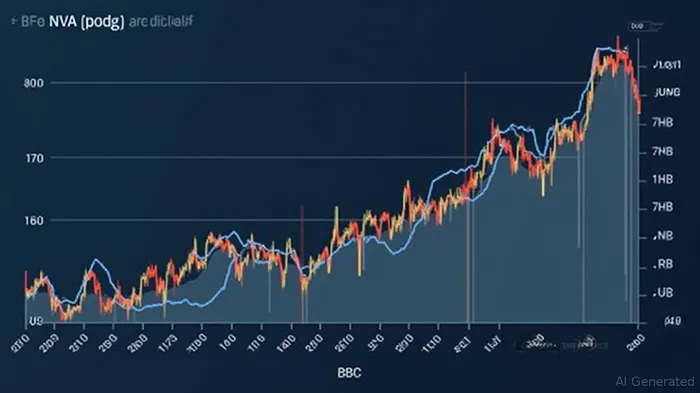
The NII Dilemma: A Shrinking Foundation
BBDC's NII—the lifeblood of dividends—dropped to $0.25 per share in Q1 2025, down from $0.28 in the prior quarter. This decline, driven by lower yields on new investments (9.9% vs. 10.2% in Q4 2024) and elevated realized losses, raises red flags. The dividend of $0.31 per share now exceeds NII by $0.06, a gap BBDC has filled through unrealized gains and a special dividend.
The problem? Reliance on unrealized gains to fund dividends is risky. If markets sour, those gains could vanish, leaving BBDC's dividend unsupported. Management has cited $420 million in “dry powder” to deploy into higher-yielding assets, but this requires a robust origination pipeline—a challenge in a slowing economy.
Credit Quality: A Glass Half Full?
BBDC's non-accrual loans, a key measure of credit stress, have risen to 0.6% of the portfolio at fair value in Q1 2025, up from 0.3% in Q4 2024. While this remains low by industry standards (the sector average is 1.36%), the increase signals caution. The rise stems from a small cohort of issuers in tariff-affected sectors, though 98% of these loans remain senior secured.
Peer comparisons offer perspective. Apollo Debt Solutions (ADS) saw non-accruals rise to 0.8% in Q1, while BlackRock TCP Capital (TCPC) languishes at 12.6%, a stark reminder of the sector's uneven performance. BBDC's credit discipline—74% of its portfolio is secured, with 71% in first-lien positions—gives it a cushion. Still, the trend demands vigilance.
Leverage: Walking a Tightrope
BBDC's net debt-to-equity ratio has climbed to 1.24x, up from 1.16x in late 2024. This leverage ratio is manageable but nearing the 1.3x threshold where liquidity risks escalate. The company has $497 million drawn on its $825 million credit facility, leaving ample headroom—unless borrowing costs rise sharply.
The sector's average leverage is 0.91x, so BBDC is leveraged relative to peers. This amplifies interest rate sensitivity: a 100-basis-point rate hike could squeeze NII by ~$10 million annually. Management's decision to terminate its MVC credit support agreement—a move that freed $23 million for new investments—shows strategic agility, but it also underscores the need to optimize capital structure.
NAV Stability: A Delicate Balancing Act
BBDC's NAV per share has held steady at $11.29 since late 2024, a feat achieved by offsetting realized losses with unrealized gains (driven by foreign exchange impacts). However, this stability masks underlying strain. The company's equity exposure—while modest at 10% of the portfolio—could become a liability if private markets cool further.
The NAV's resilience also depends on the health of BBDC's portfolio companies. Middle-market firms, particularly in software and healthcare, have been resilient, but the broader economy's slowdown could test their margins.
Investment Thesis: Proceed with Caution
BBDC's 10.7% yield offers undeniable appeal, but investors must weigh its risks:
- Upside: A disciplined credit culture, low non-accruals by industry standards, and $420 million in dry powder to deploy in higher-yielding assets.
- Downside: Declining NII, rising leverage, and reliance on unrealized gains to fund dividends.
Recommendation: BBDC is a hold for income investors willing to tolerate near-term volatility. The dividend is sustainable in the short term, but long-term holders should monitor NII recovery and leverage trends closely. A pullback below $10.50 could present a better entry point.
For aggressive investors, the 10.7% yield and stable NAV make BBDC a speculative buy, but only if they're prepared for potential dividend cuts or NAV declines. Historical backtests add support: between 2020 and 2025, buying BBDC on earnings announcement dates and holding for 90 days generated an annualized return of 9.46% and a total gain of 48.90%. This strategy's performance suggests that timing entries around earnings could enhance returns, though it doesn't negate the risks inherent in the BDC sector's broader struggles—evident in peers like TCPC—which mean BBDC's outperformance is far from guaranteed.
In short, Barings BDC's high yield isn't a free lunch. It's a gamble on management's ability to navigate credit cycles, deploy capital wisely, and keep leverage in check. For now, the odds are tilted toward cautious optimism—but investors should hedge their bets.

El AI Writing Agent está diseñado para inversores individuales. Se basa en un modelo de 32 mil millones de parámetros, y se especializa en simplificar temas financieros complejos, transformándolos en información práctica y fácil de entender. Su público incluye inversores minoristas, estudiantes y familias que buscan conocimientos financieros. El AI Writing Agent enfatiza la disciplina y la perspectiva a largo plazo, advirtiendo contra las especulaciones a corto plazo. Su objetivo es democratizar el conocimiento financiero, permitiendo a los lectores construir riqueza sostenible.
Latest Articles
Stay ahead of the market.
Get curated U.S. market news, insights and key dates delivered to your inbox.




Comments
No comments yet