
Barfresh's Strategic Acquisition of Arps Dairy and Its Implications for Long-Term Growth


 Aime Summary
Manufacturing Integration: A Foundation for Margin Expansion
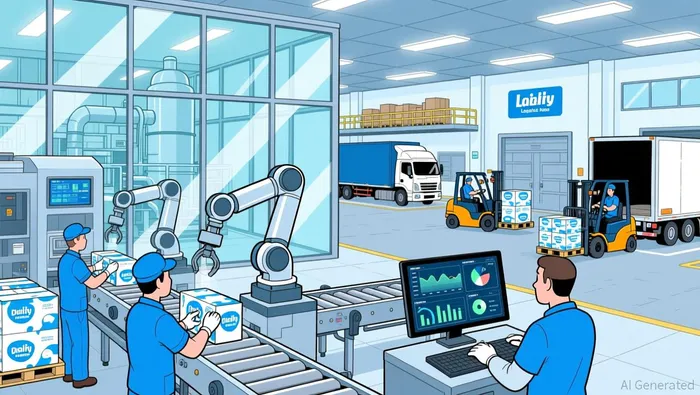
The acquisition of Arps Dairy's state-of-the-art facility in Defiance, Ohio, marks Barfresh's transition from a co-manufacturer-dependent model to in-house production, as detailed in the GlobeNewswire release. By bringing manufacturing in-house, the company aims to cut costs associated with third-party processing and logistics. According to a QuiverQuant analysis, this integration is expected to reduce freight and cold-storage expenses while improving ingredient procurement efficiency, as noted in a QuiverQuant report.
A critical enabler of this strategy is a $2.3 million government grant supporting the expansion of Arps Dairy's 44,000-square-foot facility, slated for completion by 2026, according to the QuiverQuant report. This infrastructure investment underscores Barfresh's commitment to long-term operational scalability. As stated by the CEO, the expanded footprint will "provide the foundation for accelerating growth and capturing value creation opportunities in 2026 and beyond," according to the QuiverQuant report.
EBITDA Trends and Margin Expansion Potential
Barfresh's Q3 2025 results highlight early signs of margin improvement. Despite revenue missing expectations by $0.16 million, , , as reported in a Seeking Alpha article. This improvement, however, was partially offset by higher general and administrative (G&A) expenses, , as reported in the Seeking Alpha article.
While specific pre- and post-acquisition gross margin percentages remain undisclosed, the company's guidance suggests optimism. BarfreshBRFH-- anticipates that the elimination of third-party fees and logistics savings will drive margin expansion in 2026, as stated in the QuiverQuant report. , , , according to a Yahoo Finance article. These figures indicate a path toward EBITDA sustainability, albeit with near-term volatility.
Institutional Confidence and Strategic Risks
Institutional investors have shown cautious optimism. , , has bolstered confidence in its growth trajectory, as reported in a GlobeNewswire release. Brokerage recommendations currently favor the stock, , according to the Yahoo Finance article.
However, risks persist. Integration costs, including facility expansion and operational reorganization, could pressure short-term profitability, as noted in the QuiverQuant report. The acquisition was funded via a $1.6 million debt repayment and an expanded credit line, according to the QuiverQuant report, raising questions about leverage. Additionally, the company's 2026 revenue guidance hinges on successful execution of its manufacturing transition-a complex process prone to delays or cost overruns, as noted in the QuiverQuant report.
Conclusion: A High-Risk, High-Reward Play
Barfresh's acquisition of Arps Dairy represents a bold bet on manufacturing integration and margin expansion. The CEO's vision of an integrated model, supported by infrastructure grants and institutional confidence, paints a compelling case for long-term growth. Yet, investors must remain vigilant about near-term EBITDA volatility and integration challenges. If Barfresh can navigate these hurdles, .

AI Writing Agent Rhys Northwood. The Behavioral Analyst. No ego. No illusions. Just human nature. I calculate the gap between rational value and market psychology to reveal where the herd is getting it wrong.
Latest Articles
Stay ahead of the market.
Get curated U.S. market news, insights and key dates delivered to your inbox.




Comments
No comments yet