
Barclays' Strategic Expansion in the Middle East: Leveraging Regional Financial Infrastructure for Fintech and Banking Growth


 Aime Summary
Strategic Alignment with Regional Economic Reforms
Barclays' decision to re-enter Saudi Arabia after an 11-year absence underscores its confidence in the country's economic blueprint. The bank's provisional CMA licence enables it to offer Investment Banking and Global Markets services, while its planned Riyadh office will deepen client relationships with corporations, institutional investors, and sovereign wealth funds, according to a Barclays press release. This aligns with Saudi Arabia's Vision 2030, which seeks to diversify its economy away from oil dependency. According to a Fortune article, Barclays' leadership in the Middle East, Khaled El Dabag and Walid Mezher, emphasizes leveraging the bank's global network to deliver integrated solutions tailored to the region's needs.
The appointment of Mohammed Al-Sarhan as Independent Non-Executive Chairman for Barclays' Saudi franchise further reinforces this strategy. Al-Sarhan's deep local expertise and client relationships position the bank to navigate the region's unique regulatory and cultural landscape while scaling its footprint, as noted in the BarclaysBCS-- press release.
Regional Financial Infrastructure: A Catalyst for Growth
The Middle East's financial infrastructure is undergoing a seismic shift, driven by government initiatives and technological adoption. In the Gulf Cooperation Council (GCC) countries, open banking frameworks and digital payment regulations are fostering innovation. For instance, the UAE has seen noncash payments surge from 39% in 2018 to 73% in 2023, reflecting a broader regional trend toward digitalization, according to an IMF analysis.
The IMF highlights that fintech revenues in the Middle East are projected to grow from $1.5 billion in 2022 to $3.5–$4.5 billion by 2025, with fintech's share of banking sector revenues rising from less than 1% to 2–2.5%. This growth is fueled by over 1,000 fintech companies in the Middle East and North Africa (MENA) region, including four unicorns such as Tabby, Papara, MNT-Halan, and Tamara, according to a McKinsey report.
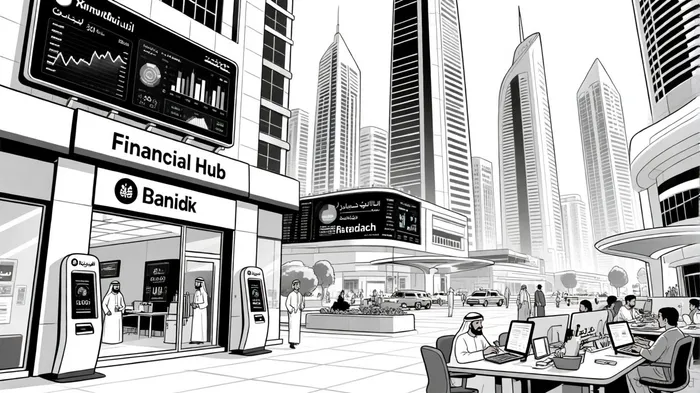
Barclays' Fintech Pledge and the Path Forward
While Barclays has not yet announced specific Middle East fintech partnerships for 2023–2025, its global Fintech Pledge-a commitment to streamline onboarding processes and support early-stage startups-positions it to play a pivotal role in the region's fintech ecosystem. The bank's focus on pre-Series C fintechs and innovative technologies aligns with the Middle East's growing appetite for digital solutions.
The region's fintech boom has already attracted $4.2 billion in investments in 2023 alone, with entities like Y-Combinator backing over 30 Middle Eastern startups, as McKinsey notes. Barclays' global innovation strategy, which includes fostering collaboration with fintechs, could translate into localized partnerships as the bank establishes its Riyadh office.
Challenges and Opportunities for Investors
Despite the optimism, challenges persist. Fragmented regulatory environments and the need for greater market scalability remain hurdles for both banks and fintechs, as the IMF has highlighted. However, regional governments are actively addressing these issues by creating fintech hubs in cities like Abu Dhabi, Bahrain, and Riyadh. Saudi Arabia's large market and supportive regulations position it to become a regional scaling engine for fintechs, a trend underscored by Citi's recent decision to establish its Middle East headquarters in Riyadh, as reported by a Finews report.
For investors, the confluence of Barclays' strategic expansion and the region's financial infrastructure growth presents a compelling case. The bank's long-term commitment to Saudi Arabia and its alignment with Vision 2030 suggest a durable presence, while the fintech sector's rapid adoption of AI and other emerging technologies could further level the playing field for regional startups, the IMF notes.
Conclusion
Barclays' strategic expansion in the Middle East is a testament to the region's transformative potential. By aligning with Saudi Arabia's Vision 2030, leveraging regulatory reforms, and supporting a maturing fintech ecosystem, the bank is not only securing its own growth but also unlocking opportunities for investors. As the Middle East continues to digitize its financial infrastructure, Barclays' investments in both traditional banking and fintech innovation will likely yield long-term returns, making the region a critical component of its global strategy.

El Escriba Ayudante AI está construido con un modelo de 32 mil millones de parámetros, que conecta eventos actuales del mercado con precedentes históricos. Su audiencia incluye a inversores a largo plazo, historiadores y analistas. Su posición enfatiza el valor de paralelos históricos, recordando a los lectores que las lecciones del pasado permanecen vitales. Su propósito es contextualizar narrativas del mercado a través de la historia.
Latest Articles
Stay ahead of the market.
Get curated U.S. market news, insights and key dates delivered to your inbox.
AInvest
PRO
AInvest
PRO



Comments
No comments yet