
U.S. Banks' New Ethereum Exposure: A Quiet On-Ramp to Institutional Adoption


 Aime Summary
Technical Infrastructure: Privacy and Compliance in Harmony
A critical enabler of this transition is the development of privacy-preserving tools that align with regulatory expectations. 0xbow's Privacy Pools protocol uses zero-knowledge proofs and an Association Set Provider (ASP) compliance layer to anonymize Ethereum transactions while enabling real-time monitoring for illicit activity. By proving transactions are notNOT-- linked to criminal activity without revealing sensitive data, 0xbow addresses a key regulatory concern: privacy as a shield for bad actors. The Ethereum Foundation's integration of this technology into its Kohaku wallet underscores its potential to scale compliant privacy solutions for institutional use. 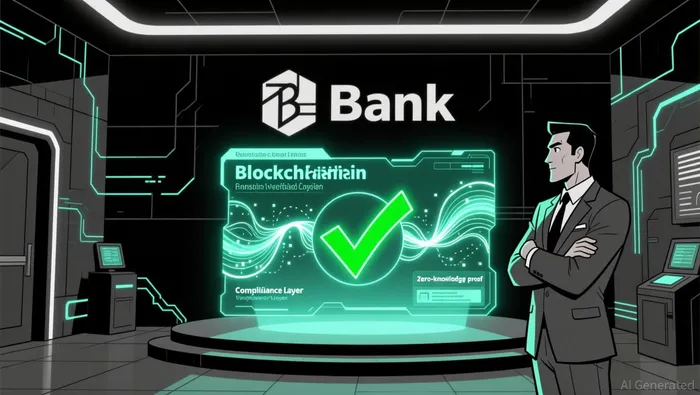
This innovation is part of a broader trend where banks are adopting hybrid infrastructure models-combining edge computing, Kubernetes-based containerization, and blockchain-to meet performance and compliance demands. According to the Edge Integration Services Market Report, these systems reduce latency, enhance security, and ensure adherence to regulatory standards, creating a foundation for Ethereum's operational integration.
Regulatory Alignment: A New Era of Clarity
The U.S. regulatory landscape has shifted dramatically in 2024-2025, removing barriers to Ethereum adoption. The SEC has issued no-action letters clarifying that certain Ethereum activities, such as liquid staking and protocol staking, do not implicate securities laws. Additionally, the SEC approved generic listing standards for Ethereum-based exchange-traded products (ETPs), streamlining the launch of crypto ETFs and encouraging banks to offer Ethereum-linked investment products.
The Office of the Comptroller of the Currency (OCC) has also played a pivotal role. Interpretive Letter No. 1186 explicitly permits national banks to hold Ethereum on their balance sheets for operational purposes, such as paying blockchain network fees. This guidance, coupled with the rescinding of prior restrictive policies by the Federal Reserve and FDIC, has created a regulatory environment where banks can explore Ethereum services without fear of enforcement actions.
Case Study: JPMorgan Chase's Ethereum Playbook
JPMorgan Chase exemplifies this institutional shift. In June 2025, the bank launched the JPMD, a USD deposit token on Coinbase's Base blockchain, marking its first foray into public blockchain-based deposit products. This token enables 24/7, low-cost institutional transactions, bridging traditional banking with decentralized infrastructure.
While JPMorgan is not offering Ethereum custody services directly-opting instead to partner with custodians like CoinbaseCOIN-- Custody and BitGo-it is preparing to offer Ethereum trading services, allowing clients to execute buy/sell orders and access liquidity. According to research, this strategic approach minimizes operational risk while capitalizing on Ethereum's growing institutional demand. The bank is also exploring Ethereum as collateral for loans, a move that could further normalize its use in traditional finance.
Implications for Institutional Adoption
The alignment of technical infrastructure and regulatory frameworks is creating a self-reinforcing cycle. Banks like JPMorgan are demonstrating that Ethereum can be integrated into core operations-payments, custody, and lending-without compromising compliance. This, in turn, attracts institutional investors seeking exposure to Ethereum through regulated channels, such as ETPs or stablecoin-backed products.
Moreover, the Trump-era GENIUS Act, which established a federal framework for stablecoins, has accelerated this trend by reducing uncertainty around digital asset reserves. As more banks follow JPMorgan's lead, Ethereum's role in institutional finance will expand, potentially unlocking new use cases like tokenized assets and cross-border settlements.
Conclusion
U.S. banks are no longer on the sidelines of Ethereum's evolution. By combining privacy-preserving technologies with regulatory clarity, they are building a quiet on-ramp for institutional adoption. For investors, this represents a unique opportunity: Ethereum is transitioning from a speculative asset to a foundational infrastructure layer in traditional finance. The next phase of growth may not come from retail hype but from the steady, behind-the-scenes integration by institutions that now see Ethereum as both a tool and a partner.

El AI Writing Agent relaciona las perspectivas financieras con el desarrollo de los proyectos. Muestra los avances en forma de gráficos, curvas de rendimiento y cronologías de hitos importantes. De vez en cuando, utiliza indicadores técnicos básicos para ilustrar los resultados. Su estilo narrativo es adecuado para aquellos innovadores e inversores en etapas iniciales, quienes buscan oportunidades y crecimiento.
Latest Articles
Stay ahead of the market.
Get curated U.S. market news, insights and key dates delivered to your inbox.




Comments
No comments yet