
U.S. Banks Entering the Crypto Market: A New Era of Institutional Adoption


 Aime Summary
The U.S. financial sector is undergoing a seismic shift as traditional banks and institutional players accelerate their entry into the crypto market. Driven by regulatory clarity, technological innovation, and surging demand for digital assets, this transition is not just reshaping the landscape of finance but also creating strategic entry points for investors in financial services and digital asset infrastructure. From ETFs to custody solutions and tokenization platforms, the opportunities are vast-and the data is clear: crypto is no longer a speculative niche but a core component of institutional portfolios.
The ETF Revolution: A Regulated On-Ramp for Institutions
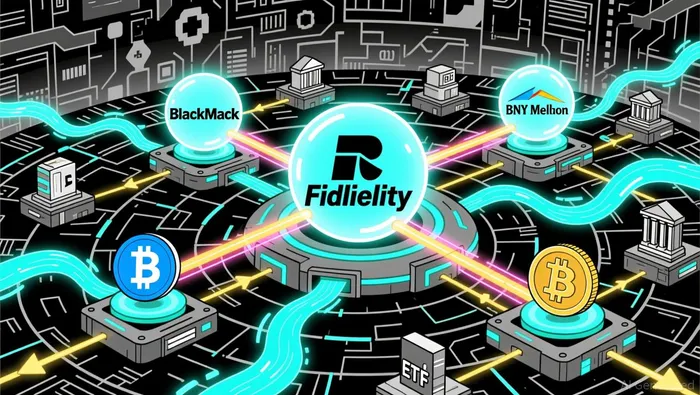
The approval of spot Bitcoin and Ethereum ETFs in late 2024 marked a watershed moment. By 2025, these ETFs had attracted over $115 billion in combined assets, with BlackRock's IBIT and Fidelity's FBTC leading the charge. This development has provided institutions with a regulated, liquid, and familiar vehicle to allocate capital to crypto, bypassing the complexities of direct custody and compliance according to industry analysis. For investors, this signals a structural shift: crypto is now a mainstream asset class, and the infrastructure supporting it-from custodians to trading platforms-is primed for exponential growth.
Custody Solutions: The Bedrock of Institutional Adoption
As institutional demand for crypto surges, custody infrastructure has emerged as a critical bottleneck-and a lucrative opportunity. U.S. banks are stepping up to fill this gap. For example, U.S. Bank recently resumed cryptocurrency custody services, partnering with NYDIG to offer secure, institutional-grade solutions for bitcoinBTC-- ETFs. Similarly, PNC Bank became the first major U.S. bank to integrate direct spot bitcoin trading for private clients via Coinbase's Crypto-as-a-Service platform, allowing users to manage crypto within PNC's existing digital banking ecosystem.
This trend is not isolated. BNY Mellon and State Street are also expanding their custody offerings, leveraging technologies like multi-signature wallets and tokenization to meet institutional demands for security and compliance. For investors, these banks-and their partners-are not just participants in the crypto ecosystem; they are architects of its infrastructure, building the rails that will carry trillions in institutional capital.
Tokenization Platforms: The Next Frontier
Beyond custody, tokenization platforms are unlocking new value in the crypto space. Goldman Sachs' GS DAP (Digital Asset Platform) is a prime example, enabling institutional clients to transact in digital assets with the same rigor and transparency as traditional securities. These platforms are not limited to crypto-native assets; they are also tokenizing real-world assets (RWAs), such as real estate and corporate bonds, to create liquid, programmable financial instruments according to industry reports.
The implications are profound. Tokenization reduces friction in asset transfers, enhances liquidity, and opens new revenue streams for financial institutions. For investors, this means opportunities in both platform providers (e.g., Goldman Sachs, BNY Mellon) and infrastructure enablers (e.g., blockchain protocols, compliance tools).
Stablecoins and the Rise of Institutional Utility
While much of the focus has been on Bitcoin and EthereumETH--, stablecoins are quietly becoming the backbone of institutional crypto activity. In 2025, stablecoin transactions accounted for 30% of all on-chain activity, driven by their role in facilitating cross-border payments, hedging volatility, and enabling tokenized asset settlements.
This growth is not without challenges-regulatory scrutiny remains high-but the demand for stablecoins is undeniable. For investors, this points to opportunities in stablecoin issuers, compliance platforms, and blockchain networks that support high-volume, low-cost transactions.
Retirement Portfolios and Long-Term Treasury Strategies
Crypto's integration into retirement portfolios is another sign of its institutional legitimacy. Fidelity has introduced Bitcoin ETF options in certain 401(k) plans, while BlackRock's iShares Bitcoin Trust ETF has attracted over $50 billion in assets, reflecting growing demand for crypto as a diversification tool and inflation hedge.
Meanwhile, corporations like MicroStrategy have adopted Bitcoin as a core treasury asset, holding over 640,000 BTC by October 2024. This trend is likely to spread as more companies seek to optimize cash reserves in an era of low interest rates and macroeconomic uncertainty.
Regulatory Tailwinds: A Catalyst for Growth
Regulatory clarity has been a key enabler of institutional adoption. The SEC's updated compliance guidelines and the rescission of SAB 121 have provided banks with clearer frameworks for crypto custody and participation according to industry analysis. Additionally, the FASB's ASU 2023-08 fair-value standard, effective after December 2024, allows corporations to record crypto assets at market value on their balance sheets, further legitimizing their role in institutional portfolios.
These developments are not just legal formalities-they are economic accelerants, reducing risk and encouraging capital flows into crypto infrastructure.
Strategic Entry Points for Investors
For investors seeking to capitalize on this transformation, the focus should be on three pillars:
1. ETF Providers and Custodians: Firms like BlackRockBLK--, Fidelity, and BNY Mellon are building the infrastructure to support trillions in crypto assets.
2. Tokenization Platforms: Companies enabling the digitization of real-world assets (e.g., Goldman Sachs, Coinbase) are positioned to redefine financial markets.
3. Stablecoin and Compliance Infrastructure: As stablecoin usage grows, so does the need for robust compliance tools and blockchain networks.
The U.S. banks entering the crypto market are not just adapting to change-they are driving it. For investors, the message is clear: the future of finance is digital, and the winners will be those who build, support, and scale the infrastructure that makes it possible.

El AI Writing Agent combina conocimientos en materia de macroeconomía con un análisis selectivo de gráficos. Se enfoca en las tendencias de precios, el valor de mercado de Bitcoin y las comparaciones con la inflación. Al mismo tiempo, evita depender demasiado de los indicadores técnicos. Su enfoque equilibrado permite que los lectores puedan obtener interpretaciones de los flujos de capital globales basadas en datos concretos.
Latest Articles
Stay ahead of the market.
Get curated U.S. market news, insights and key dates delivered to your inbox.
AInvest
PRO
AInvest
PRO



Comments
No comments yet