
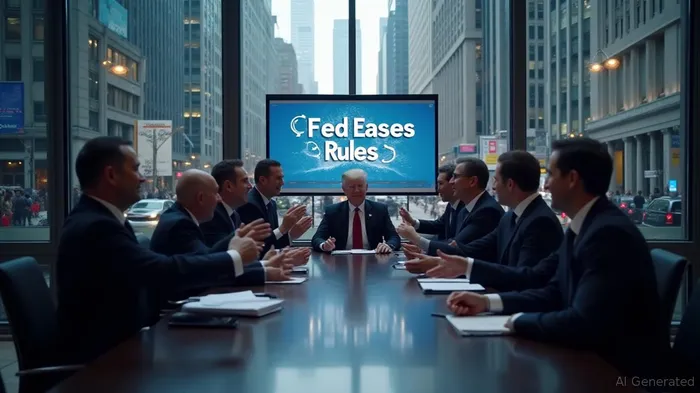
U.S. Banks Cleared to Offer Crypto Services as Fed Eases Rules
 Aime Summary
Federal Reserve Chair Jerome Powell announced on June 24, 2025, that U.S. banks are now permitted to offer services to cryptocurrency firms, provided they maintain proper risk management practices. This development addresses long-standing regulatory uncertainties, allowing banks to engage more freely with the crypto industry and potentially accelerating institutional investment in digital assets [1].
The policy shift follows reports that some major U.S. banks had previously restricted access to crypto platforms through high fees and operational barriers, a practice critics referred to as “Operation Chokepoint 3.0.” Powell’s statement suggests a more open approach from the Fed, encouraging banks to explore opportunities in the crypto sector without compromising regulatory standards [2].
The announcement had an immediate impact on the market. Bitcoin and Ethereum saw significant inflows, particularly into Bitcoin spot ETFs, indicating growing institutional confidence. Analysts attribute this movement to the improved clarity provided by the Fed, which reduces ambiguity for banks considering crypto services and supports broader adoption of digital assets [3].
Despite the regulatory clarity, challenges persist. Some industry observers note that large banks may still act as gatekeepers in the crypto and fintech space, using tactics such as data restrictions and app-blocking to limit competition. While the Fed’s stance is shifting, the extent to which the broader banking sector will adapt remains uncertain [4].
Powell’s remarks also occur amid heightened political tensions. U.S. President Donald Trump has repeatedly criticized the Federal Reserve and has called for the board to take control if interest rates are not lowered. However, prediction markets do not currently reflect a strong belief that Trump will succeed in removing Powell from his position by the end of August [5].
The shift in crypto policy is part of a broader regulatory evolution. The U.S. Securities and Exchange Commission has also been working to reintegrate crypto asset distributions into the U.S. financial system, signaling a coordinated effort to bring digital assets into mainstream finance. Meanwhile, some analysts argue that the U.S. should be more proactive in developing a central bank digital currency rather than delaying such initiatives [6].
Overall, Powell’s statement reflects a more mature and pragmatic approach to cryptocurrency, acknowledging its growing role in the global financial landscape. While the Fed has removed a key regulatory barrier, the success of this policy will depend on how banks and other stakeholders respond to the new framework.
Source:
[1] https://x.com/MarkTodd_pol/status/195184****158799015
[2] https://www.ainvest.com/news/banks-hinder-crypto-growth-high-fees-restricted-access-2508/
[3] https://www.ainvest.com/news/major-banks-accused-blocking-fintech-growth-high-fees-data-barriers-2508/
[4] https://financialpost.com/news/economy/trump-fed-board-assume-control-rates
[5] https://finance.yahoo.com/news/trump-demands-fed-board-remove-213102387.html
[6] https://www.bankless.com/read/the-secs-crypto-180-2

Stay ahead of the market.
Get curated U.S. market news, insights and key dates delivered to your inbox.


AInvest
PRO
AInvest
PRO



Comments
No comments yet