
Bankruptcy and Beyond: Navigating the Canned Food Industry's New Reality
The Chapter 11 bankruptcy filing of Del Monte Foods on July 1, 2025, marks a watershed moment for the canned food industry. With over $1 billion in debt and a court-supervised sale of its U.S. operations—including iconic brands like Del Monte canned fruits and S&W vegetables—the company's restructuring underscores the fragility of traditional food producers in an era of rapid digital transformation. For investors, this crisis presents a stark choice: abandon legacy players clinging to outdated models or reallocate capital to agile competitors leveraging e-commerce, innovation, and cost efficiency to capture market share.
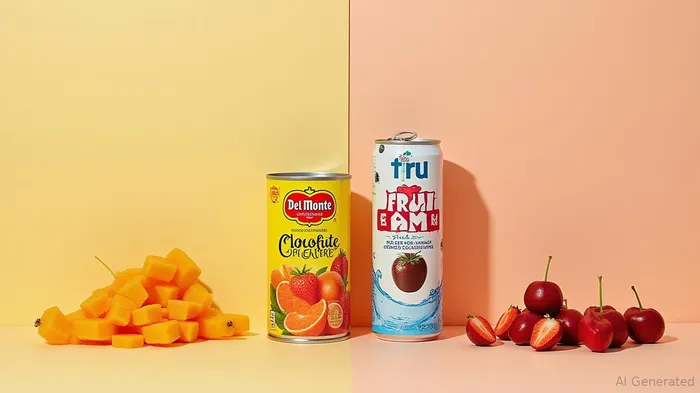
The Vulnerabilities Exposed by Del Monte's Collapse
Del Monte's financial distress reflects systemic weaknesses in conventional food manufacturing. Its $912.5 million debtor-in-possession (DIP) financing—a lifeline requiring immediate asset sales—highlights the peril of over-leverage and under-diversification. The company's reliance on physical retail channels, aging supply chains, and a brand portfolio perceived as culturally entrenched yet stagnant has left it vulnerable to disruptors. Competitors like Campbell SoupCPB-- and B&G Foods, which also face declining margins, are now under pressure to adapt or risk similar fates.
The sale of its U.S. subsidiary to a “fire sale” dynamic further signals the industry's consolidation phase. Buyers will likely target undervalued assets—such as distribution networks or brand equity—to fuel their own growth. Yet, the true winners will be those already positioned to exploit the next wave of consumer trends: health-centric diets, convenience-driven demand, and the e-commerce boom.
Undervalued Competitors: Agility in a Digital-First World
While Del Monte falters, a cohort of smaller, nimbler players is thriving. These companies combine strong e-commerce penetration with cost-efficient operations, offering investors compelling risk-adjusted returns. Key examples include:
- Liquid Death (Canned Water Innovator):
- Growth Engine: 1,011% five-year search growth, fueled by edgy branding and DTC sales.
- Edge: Leverages social media and viral marketing to target Gen Z, with plans to expand into flavored sparkling waters.
Tru Fru (Chocolate-Covered Fruit Specialist):
- Niche Mastery: Achieved an 84% revenue surge in 2023, driven by online sales of its Hyper-Chilled/Hyper-Dried snacks.
Cost Efficiency: Low capital intensity, with minimal physical retail presence.
NotCo (AI-Powered Plant-Based Foods):
- Tech Advantage: Uses AI (Giuseppe) to develop scalable, cost-effective plant-based alternatives.
Global Reach: Expanded to 20+ countries via e-commerce, reducing reliance on traditional distribution.
OLIPOP (Prebiotic Sodas):
- Health Focus: Targets the $500 million functional beverage market with low-sugar, probiotic-infused products.
- DTC Model: Direct sales and subscription services bypass middlemen, boosting margins.
These firms share common traits: low debt, lean operations, and a focus on high-margin, health-driven products. Unlike Del Monte, they avoid the “commodity trap” of low-margin canned goods by differentiating through innovation and digital engagement.
Sector-Wide Trends: Consolidation and the Rise of the Digital Native
Del Monte's bankruptcy will accelerate two critical trends reshaping the industry:
- Consolidation of Legacy Brands:
The sale of Del Monte's U.S. operations could catalyze M&A activity, as rivals like PepsiCoPEP-- or Hormel acquire distressed assets at discounts. However, investors must scrutinize buyers' ability to integrate these assets into modern supply chains.
E-Commerce Dominance:
- The canned food sector's shift online is irreversible. Companies like Remedy Organics (9,100% search growth) and Mid-Day Squares (40-50% YoY growth via CostcoCOST-- partnerships) are capturing the “convenience premium” through direct-to-consumer channels.
Investment Strategy: Reallocate to the Resilient
The Del Monte saga is a clarion call to divest from overleveraged, slow-moving incumbents and pivot to disruptors. Key recommendations:
- Short Legacy Players: Sell or underweight stocks like Del Monte Pacific (DMLPF) or B&G Foods (BGS), which lack e-commerce moats and face margin pressure.
- Buy the Innovators: Invest in high-growth e-commerce-driven firms (e.g., Liquid Death, OLIPOP) and those with scalable supply chains (e.g., NotCo, Tru Fru).
- Monitor Consolidation Plays: Consider companies with balance sheets to acquire undervalued assets—PepsiCo (PEP) or UnileverUL-- (UL) could emerge as consolidators, but only if they prioritize digital integration.
Conclusion: The Future Belongs to the Agile
Del Monte's bankruptcy is not an isolated crisis but a symptom of an industry in flux. For investors, the path forward is clear: abandon the relics of the past and embrace the disruptors building tomorrow's food landscape. The canned food sector's next chapter will be written by those who master e-commerce, innovation, and cost discipline—not by those clinging to the flavors of yesteryear.
The question now is: Who will seize the opportunity?

Stay ahead of the market.
Get curated U.S. market news, insights and key dates delivered to your inbox.




Comments
No comments yet