
Bankruptcies and Beyond: Navigating Retail's Overexpansion Crisis
The retail sector's recent wave of bankruptcies—from movie theater chains to fast-fashion giants—has exposed a systemic vulnerability: overexpansion in niche markets and the lethal cocktail of high debt and declining consumer demand. Between 2023 and 2025, store closures surged to an estimated 15,000 in the U.S. alone, with debt-laden retailers collapsing under the weight of their own ambitions. This article dissects the root causes of these failures, their implications for consumer-facing industries, and how investors can profit from the wreckage—or avoid it entirely.
Case Studies in Overexpansion
The collapse of Joann Fabric and Crafts and Party City epitomize how market saturation and overleveraged balance sheets can undo even storied brands.
Joann's Downfall
Once a leader in craft supplies, Joann filed for bankruptcy in 2024 after years of debt-fueled overexpansion. With 800 stores and $1 billion in debt (accumulated during a private equity buyout), the retailer struggled to compete against online rivals like EtsyETSY-- and WalmartWMT--. By early 2025, all U.S. locations were shuttered.
Party City's Final Act
Party City, a symbol of celebratory retailing, closed its 700 U.S. stores by February 2025. Despite shedding $1 billion in debt during a 2023 bankruptcy, rising inflation and shifting consumer priorities (e.g., prioritizing essentials over discretionary spending) sealed its fate.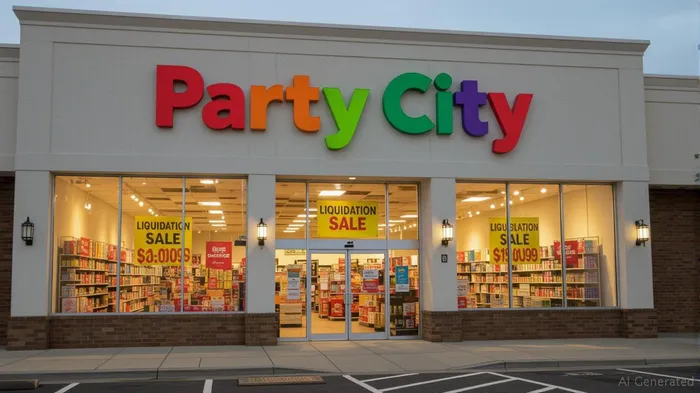
Movie Theaters: A Case of Structural Decline
Even stalwarts like Regal Cinemas and Alamo Drafthouse succumbed to declining attendance and streaming's rise. Box office revenue plummeted to $8.7 billion in 2024—23.5% below pre-pandemic levels—while North American screens dropped by 5,691. Chains like AMC survived by pivoting to premium formats (IMAX, 4DX), but smaller players lacked the capital to adapt.
Market Saturation & Debt: The Fatal Combination
The data is clear: overexpansion and private equity-driven debt are the twin drivers of collapse.
- Debt Burden: Private equity-backed retailers accounted for 56% of U.S. corporate bankruptcies in 2024, per Coresight Research. Leveraged buyouts left firms like Joann and Forever 21 with unsustainable debt-to-equity ratios.
- E-commerce Dominance: Fast-fashion giants like Shein and Temu undercut physical retailers on price and speed, while mall vacancies hit 8.7% in 2024.
- Operational Costs: Rising wages (up 14% since 2020) and high rental costs further squeezed margins. Theft and inventory shrinkage cost retailers $112 billion in 2022 alone.
Implications for Consumer Industries
The crisis isn't confined to retail. Pharmacies, restaurants, and entertainment sectors face similar risks:
- Pharmacies: WalgreensWBA-- and CVSCVS-- are closing 1,200 and 900 stores, respectively, as remote healthcare and generic drug competition disrupt traditional models.
- Fast Casual Dining: Chains like Hooters (bankrupt in 2025) and Applebee's face declining foot traffic as consumers favor home-cooked or healthier options.
- Entertainment: Even AMC's survival hinges on premium experiences; smaller theater chains without such strategies are failing.
Investment Strategies
The collapse of overextended retailers offers opportunities for short sellers and contrarian investors:
- Short Overleveraged Retailers
Target firms with high debt-to-equity ratios and declining sales. For example: - Big Lots: Despite a partial buyout in 2025, its reliance on pandemic-era furniture sales (now obsolete) makes it vulnerable.
The Body Shop: Bankrupt in 2024, its mall-heavy footprint and lack of online agility make a rebound unlikely.
Invest in Resilient Competitors
Seek companies with lean footprints, agile supply chains, or premium services:- AMC Entertainment: Survived by focusing on IMAX and 4DX theaters, which command higher ticket prices.
- Amazon (AMZN): Dominates e-commerce but also invests in physical stores like Whole Foods, which offer synergies with its logistics network.
- Dollar General (DG): Thrived by targeting rural markets and offering essentials, avoiding the discretionary spending trap.
Conclusion
The retail sector's bankruptcy wave is a clarion call: market saturation and overexpansion are existential threats. Investors should avoid companies with bloated store counts, high debt, and reliance on fading consumer trends. Instead, bet on firms that pivot to online-first models, premium experiences, or essential goods. For the daring, shorting the most vulnerable could yield handsome returns—but tread carefully, as recovery in some sectors (e.g., premium theaters) is possible.
In an era of shifting consumer preferences, adaptability—and financial discipline—are non-negotiable. The next chapter of retail will belong to those who embrace leaner, smarter strategies—or those bold enough to bet against the rest.

Stay ahead of the market.
Get curated U.S. market news, insights and key dates delivered to your inbox.




Comments
No comments yet