
Banking on Resilience: High Street Closures and the Path to Investment Opportunity
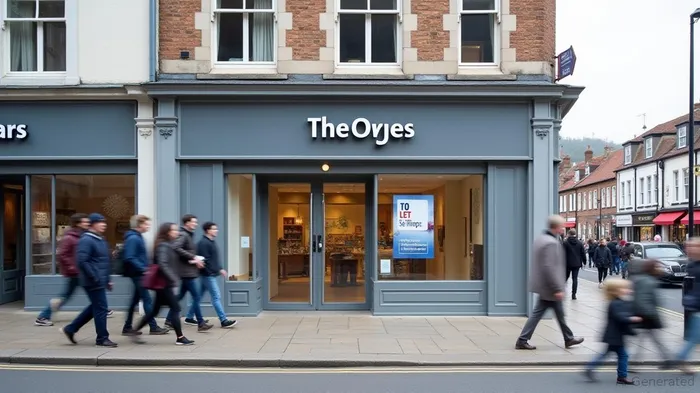
The closure of Halifax and NatWestNWG-- branches in Leek, Staffordshire—a town that lost two high street banking hubs within weeks in June 2025—symbolizes a seismic shift in how financial services are delivered. This trend, driven by the digitization of banking and cost-cutting imperatives, is reshaping local economies and creating unique investment opportunities in adaptive real estate, fintech, and community-focused financial services.
A Tale of Two Closures: Leek as a Microcosm
The dual closures in Leek, which occurred on June 4 (Halifax) and June 16 (NatWest), underscore the urgency of this transition. While banks like NatWest emphasize digital alternatives—80% of their customers now use online platforms—the immediate impact on the community is stark. Small businesses, particularly those reliant on cash transactions (e.g., family-run shops like Delia Metcalfe and Mosaic Boutique), face logistical hurdles. Elderly residents, who prefer face-to-face interactions, are left questioning their financial accessibility.
This localized disruption mirrors a national crisis: over 6,000 UK bank branches have closed since 2015, per Which? research, with vulnerable populations disproportionately affected. Yet, the void left by these closures also opens doors for agile investors.
The Broader Trend: Digitalization and Its Discontents
The shift to digital banking is irreversible, but its uneven adoption has exposed fissures in regional resilience. Banks like Lloyds and NatWest are rationalizing their branch networks—Lloyds aims to close 254 branches by 2026—while reinvesting in digital infrastructure and alternatives such as Banking Hubs and partnerships with Post Offices. However, these measures are often insufficient for rural areas, where broadband access and digital literacy lag behind urban centers.
For investors, this creates two clear opportunities:
1. Real Estate Revitalization: Vacant bank branches in towns like Leek present undervalued commercial properties. Repurposing them into community hubs (e.g., co-working spaces, cafes, or small business incubators) could capitalize on the "high street reinvention" trend.
Data will likely show depressed valuations in areas with multiple closures, offering entry points for developers.
- Fintech Solutions for SMEs: Small businesses struggling with cash dependency or digital transitions need tailored tools. Fintech firms offering low-fee payment processing, cash management apps, or hybrid banking platforms (e.g., Revolut's Small Business Suite) could see demand surge.
Companies demonstrating scalable solutions for SMEs may outperform peers as traditional banks retreat from high streets.
The Undervalued Sector: Community Financial Services
While megabanks pivot to digital, community-focused institutions such as credit unions and regional banks are positioned to capture stranded customers. Nationwide Building Society, for instance, has seen increased branch usage due to its emphasis on in-person service—a model that resonates with older demographics.
Investors should explore:
- Credit unions and mutual banks with strong local ties.
- Digital-first neobanks that prioritize user-friendly interfaces for non-tech-savvy users (e.g., Wise's simplified cash transfer tools).
Risks and Considerations
- Regulatory Shifts: Governments may mandate cash access in high streets, altering the landscape for real estate and fintech.
- Technological Barriers: Rural areas with poor broadband may limit fintech adoption, favoring physical alternatives like Post Office banking services.
Conclusion: Betting on Adaptation
The Leek closures are a harbinger of a new financial reality. For investors, the path forward lies in backing solutions that bridge the gap between digitization and human need.
Actionable Strategies:
1. Acquire undervalued commercial real estate in towns with multiple branch closures, targeting adaptive reuse projects.
2. Invest in fintech firms with SME-focused products and strong community engagement.
3. Consider regional financial institutions that blend digital innovation with localized service delivery.
The high street's evolution is inevitable. The winners will be those who adapt fastest—and invest in resilience.
This article reflects the author's analysis and is not financial advice. Always conduct due diligence before making investment decisions.

Stay ahead of the market.
Get curated U.S. market news, insights and key dates delivered to your inbox.
AInvest
PRO
AInvest
PRO



Comments
No comments yet