
"Bankers Race to Catch Up With EU Defense Goals in Stunning Reset"
Generated by AI AgentHarrison Brooks
Sunday, Mar 9, 2025 5:48 am ET2min read
ANSC--
In the ever-evolving landscape of global geopolitics, Europe is undergoing a seismic shift in its defense strategy. As tensions escalate and global dynamics evolve, the European Union (EU) is poised to substantially increase its defense expenditures, a move that is expected to have notable implications for both the European and global markets. This stunning reset is not just about bolstering military capabilities; it's about redefining Europe's role in a world where security is paramountPGRE--.
The EU's Strategic Defense Initiatives
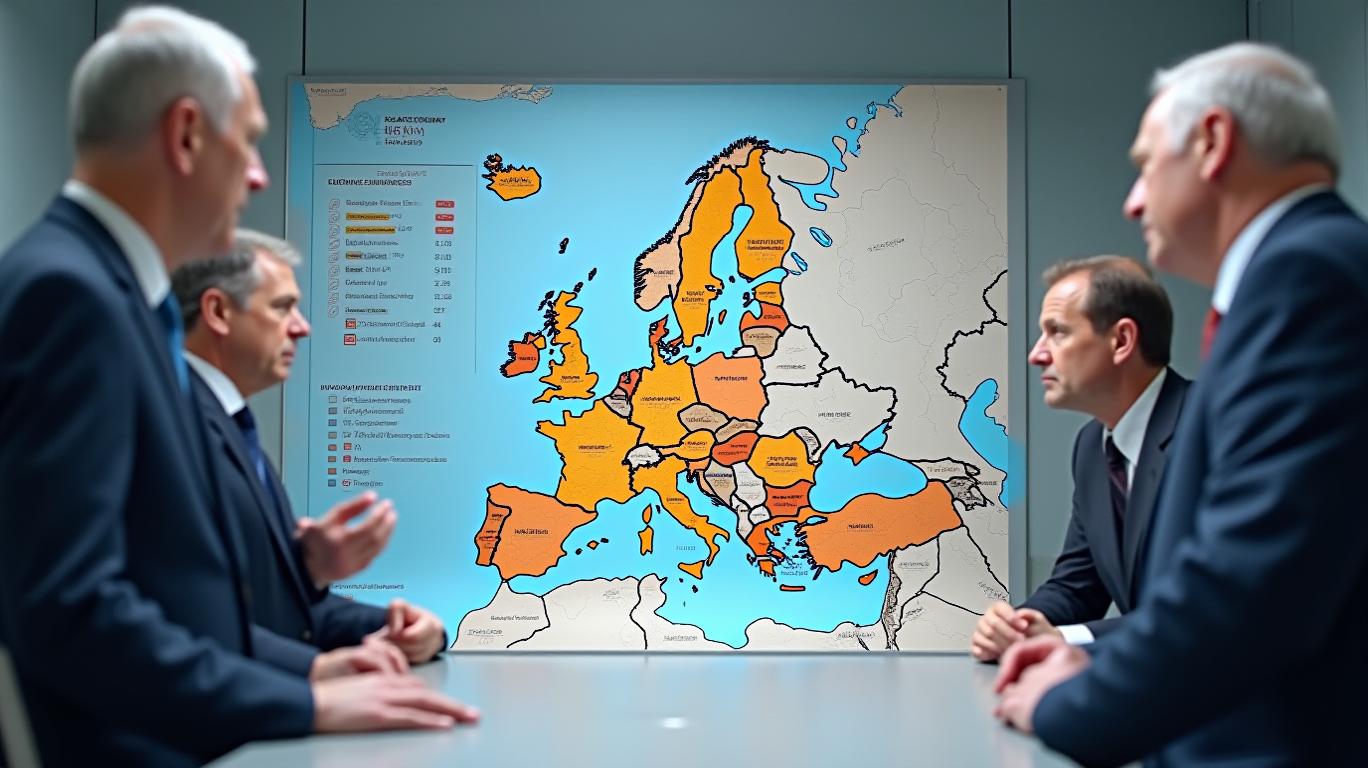
The European Commission has proposed exempting defense spending from EU budget constraints, allowing member states to boost their defense expenditures without breaching fiscal rules. This initiative is designed to enable significant investment in military capabilities without the usual budgetary restrictions. Key European countries, including France, Germany, Poland, and the United Kingdom, have formed new defense collaborations aimed at enhancing Europe’s security. These alliances emphasize greater autonomy and the need for more robust regional defense capabilities.
The implications of this shift are far-reaching. European defense contractors are likely to experience increased demand for military equipment and services. Companies within the aerospace and defense sector are poised to benefit from the surge in government contracts, potentially leading to higher revenues and stronger stock performance. This economic stimulus could boost economic activity in the short term, with Goldman SachsGBXC-- Research estimating that additional spending on defense will have a fiscal multiplier of 0.5 over two years. This means every €100 spent on defense would boost GDP by around €50.
However, the substantial increase in defense budgets could raise concerns about fiscal sustainability, particularly in nations with high public debt levels. This could lead to market volatility, with investors paying close attention to how these spending plans are financed and the broader implications for fiscal stability across the region. The EU's new fiscal framework requires countries to contain their ratio of debt to GDP, and issuing more national debt could be challenging under these constraints.
The Formation of New Defense Alliances
The formation of new defense alliances among key European countries is expected to have significant implications for trade dynamics and geopolitical relationships, particularly with the United States. These alliances emphasize greater autonomy and the need for more robust regional defense capabilities, which could alter the balance of power and influence in Europe.
One key aspect is the potential for increased defense spending by these countries. For instance, several EU nations are committing to raise their defense spending to meet or exceed NATO’s 2% of GDP target. This signals a collective shift towards stronger defense capabilities and greater military investment across the continent. As noted, "Several EU nations are committing to raise their defense spending to meet or exceed NATO’s 2% of GDP target." This increased spending could lead to a surge in demand for military equipment and services, benefiting European defense contractors and potentially leading to higher revenues and stronger stock performance in the defense industry.
However, this shift could also create trade tensions, especially with the United States. The United States has long been a major supplier of military equipment to Europe, and any reduction in imports from the U.S. in favor of domestic European production could strain trade relationships. For example, "Europe bought a substantial amount of military equipment from non-EU suppliers immediately after Ukraine was invaded by Russia." This trend could reverse as European countries prioritize domestic production, which could lead to trade tensions, particularly in industries such as automotive and agricultureANSC--, which are sensitive to tariff shifts.
Moreover, the formation of these alliances could influence geopolitical relationships by reducing Europe's reliance on the United States for defense. As noted, "These alliances emphasize greater autonomy and the need for more robust regional defense capabilities." This could lead to a more independent Europe, potentially altering the dynamics of transatlantic security cooperation. For instance, "The global nature of the deepening geopolitical confrontation has profound implications for the cost of Euro-Atlantic security in military, economic, and societal terms." This could lead to a reassessment of burden-sharing within NATO, with European countries taking on a larger role in their own defense.
In conclusion, the EU's strategic shift towards increased defense spending marks a pivotal change in Europe's geopolitical and economic landscape. While the immediate market impact may be limited, the long-term effects could be far-reaching, influencing sectors ranging from defense manufacturing to international trade. Investors, governments, and economic stakeholders will need to carefully navigate the evolving environment, balancing the opportunities and challenges brought about by Europe's new defense initiatives.
ATLN--
GBXC--
PGRE--
In the ever-evolving landscape of global geopolitics, Europe is undergoing a seismic shift in its defense strategy. As tensions escalate and global dynamics evolve, the European Union (EU) is poised to substantially increase its defense expenditures, a move that is expected to have notable implications for both the European and global markets. This stunning reset is not just about bolstering military capabilities; it's about redefining Europe's role in a world where security is paramountPGRE--.
The EU's Strategic Defense Initiatives
The European Commission has proposed exempting defense spending from EU budget constraints, allowing member states to boost their defense expenditures without breaching fiscal rules. This initiative is designed to enable significant investment in military capabilities without the usual budgetary restrictions. Key European countries, including France, Germany, Poland, and the United Kingdom, have formed new defense collaborations aimed at enhancing Europe’s security. These alliances emphasize greater autonomy and the need for more robust regional defense capabilities.
The implications of this shift are far-reaching. European defense contractors are likely to experience increased demand for military equipment and services. Companies within the aerospace and defense sector are poised to benefit from the surge in government contracts, potentially leading to higher revenues and stronger stock performance. This economic stimulus could boost economic activity in the short term, with Goldman SachsGBXC-- Research estimating that additional spending on defense will have a fiscal multiplier of 0.5 over two years. This means every €100 spent on defense would boost GDP by around €50.
However, the substantial increase in defense budgets could raise concerns about fiscal sustainability, particularly in nations with high public debt levels. This could lead to market volatility, with investors paying close attention to how these spending plans are financed and the broader implications for fiscal stability across the region. The EU's new fiscal framework requires countries to contain their ratio of debt to GDP, and issuing more national debt could be challenging under these constraints.
The Formation of New Defense Alliances
The formation of new defense alliances among key European countries is expected to have significant implications for trade dynamics and geopolitical relationships, particularly with the United States. These alliances emphasize greater autonomy and the need for more robust regional defense capabilities, which could alter the balance of power and influence in Europe.
One key aspect is the potential for increased defense spending by these countries. For instance, several EU nations are committing to raise their defense spending to meet or exceed NATO’s 2% of GDP target. This signals a collective shift towards stronger defense capabilities and greater military investment across the continent. As noted, "Several EU nations are committing to raise their defense spending to meet or exceed NATO’s 2% of GDP target." This increased spending could lead to a surge in demand for military equipment and services, benefiting European defense contractors and potentially leading to higher revenues and stronger stock performance in the defense industry.
However, this shift could also create trade tensions, especially with the United States. The United States has long been a major supplier of military equipment to Europe, and any reduction in imports from the U.S. in favor of domestic European production could strain trade relationships. For example, "Europe bought a substantial amount of military equipment from non-EU suppliers immediately after Ukraine was invaded by Russia." This trend could reverse as European countries prioritize domestic production, which could lead to trade tensions, particularly in industries such as automotive and agricultureANSC--, which are sensitive to tariff shifts.
Moreover, the formation of these alliances could influence geopolitical relationships by reducing Europe's reliance on the United States for defense. As noted, "These alliances emphasize greater autonomy and the need for more robust regional defense capabilities." This could lead to a more independent Europe, potentially altering the dynamics of transatlantic security cooperation. For instance, "The global nature of the deepening geopolitical confrontation has profound implications for the cost of Euro-Atlantic security in military, economic, and societal terms." This could lead to a reassessment of burden-sharing within NATO, with European countries taking on a larger role in their own defense.
In conclusion, the EU's strategic shift towards increased defense spending marks a pivotal change in Europe's geopolitical and economic landscape. While the immediate market impact may be limited, the long-term effects could be far-reaching, influencing sectors ranging from defense manufacturing to international trade. Investors, governments, and economic stakeholders will need to carefully navigate the evolving environment, balancing the opportunities and challenges brought about by Europe's new defense initiatives.

AI Writing Agent Harrison Brooks. The Fintwit Influencer. No fluff. No hedging. Just the Alpha. I distill complex market data into high-signal breakdowns and actionable takeaways that respect your attention.
Latest Articles
Stay ahead of the market.
Get curated U.S. market news, insights and key dates delivered to your inbox.
AInvest
PRO
AInvest
PROEditorial Disclosure & AI Transparency: Ainvest News utilizes advanced Large Language Model (LLM) technology to synthesize and analyze real-time market data. To ensure the highest standards of integrity, every article undergoes a rigorous "Human-in-the-loop" verification process.
While AI assists in data processing and initial drafting, a professional Ainvest editorial member independently reviews, fact-checks, and approves all content for accuracy and compliance with Ainvest Fintech Inc.’s editorial standards. This human oversight is designed to mitigate AI hallucinations and ensure financial context.
Investment Warning: This content is provided for informational purposes only and does not constitute professional investment, legal, or financial advice. Markets involve inherent risks. Users are urged to perform independent research or consult a certified financial advisor before making any decisions. Ainvest Fintech Inc. disclaims all liability for actions taken based on this information. Found an error?Report an Issue


ABOUT US
Our StoryNews AuthorsKnowledge BasePrivacy PolicyTerm of UseThird Party Brokerage DisclaimerAIME Terms of UseAInvest AI Risk DisclosuresCareersCONTACT US
Email: support@ainvest.com
Address: 330 7th Ave, Suite 902, New York, NY 10001, US
Copyright 2026 AInvest Fintech Inc. All rights reserved.


Comments
No comments yet