
Bank First's Q2 2025 Earnings: A Masterclass in NIM Expansion and Operational Efficiency for Long-Term Investors
 Aime Summary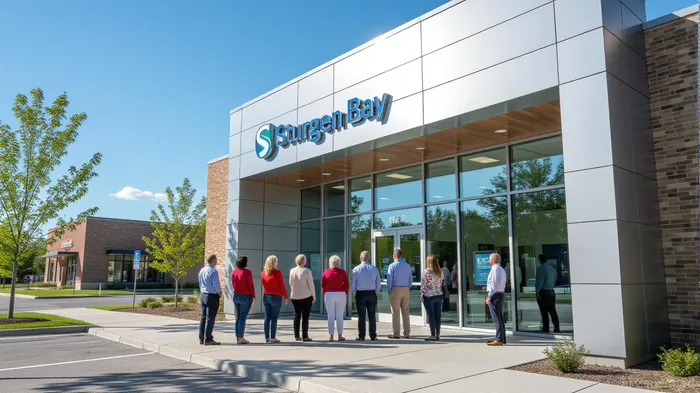
As the yield curve normalizes after years of inversion, regional banks like Bank First CorporationBFC-- (NASDAQ: BFC) are emerging as compelling long-term investments. The Q2 2025 earnings report paints a vivid picture of a bank not only adapting to macroeconomic shifts but actively capitalizing on them. With a net interest margin (NIM) of 3.72%, up 9 basis points year-over-year and 7 basis points quarter-over-quarter, Bank FirstBFC-- has demonstrated a rare combination of pricing power and cost discipline that sets it apart in a competitive landscape. For buy-and-hold investors, this is a case study in how strategic balance sheet management and operational efficiency can drive sustainable value creation.
NIM Expansion: A Strategic Win in a Normalizing Yield Curve
The normalization of the yield curve has historically been a double-edged sword for banks—tightening spreads can erode margins, but disciplined institutions can turn the tide. Bank First's Q2 2025 NIM of 3.72% reflects a calculated approach to this challenge. The 10-basis-point increase in loan yields and 15-basis-point decline in deposit costs directly contributed to margin expansion, outpacing the diminishing impact of purchase accounting adjustments (which added just 0.03% to NIM, down from 0.13% in Q2 2024). This shift signals a transition from accounting-driven performance to organic growth, a critical metric for long-term investors.
Moreover, the bank's June 2025 NIM reached 3.77%, a trailing 12-month high, underscoring its ability to sustain momentum in a dynamic rate environment. For context, regional banks with stagnant NIMs often struggle to offset inflationary pressures, but Bank First's proactive loan pricing and deposit cost management have created a buffer. This resilience is particularly valuable as the Federal Reserve's rate-hiking cycle appears to be winding down, reducing the risk of margin compression.
Operational Efficiency: Balancing Growth and Cost Control
While NIM expansion is the headline act, Bank First's operational efficiency is equally impressive. The bank's efficiency ratio for Q2 2025 came in at 56.7% (calculated as $20.8 million noninterest expenses divided by $36.7 million net interest income). Though slightly higher than F N B Corp's (FNB) 54.8% efficiency ratio, Bank First's figure is a testament to its balanced approach: it's investing in growth while maintaining cost discipline.
The $20.8 million in noninterest expenses included necessary outlays for branch expansions (e.g., the Sturgeon Bay location) and digital infrastructure upgrades, which are critical for long-term competitiveness. Personnel costs rose modestly due to cost-of-living adjustments, and occupancy expenses spiked from branch remodels. However, these are not signs of inefficiency—they're strategic investments in customer experience and operational scalability. By contrast, FNB's efficiency gains in Q2 2025 were driven by cost-cutting measures, which may limit its ability to scale in the long run.
Capital Management: Rewarding Shareholders Without Compromising Strength
Bank First's Q2 2025 report also highlighted its aggressive capital return strategy. The bank distributed $43.6 million in dividends (including a special $3.50-per-share payout) and repurchased $22.0 million in shares. While these actions reduced equity, the tangible book value per share rose to $42.57 from $41.42 a year ago—a 2.8% increase. This underscores the bank's confidence in its earnings power and asset quality.
For long-term investors, this capital management approach is a win-win. The $0.45 quarterly dividend (yielding ~1.7% based on current prices) provides income, while buybacks enhance per-share value. Crucially, the bank maintained strong capital ratios and a minimal provision for credit losses ($0.2 million), indicating that its risk profile remains conservative. In a sector where balance sheet strength is paramount, Bank First's ability to reward shareholders without compromising safety is a rare virtue.
Investment Thesis: A Buy-and-Hold Opportunity in a Normalizing Cycle
The Q2 2025 earnings report reinforces Bank First's position as a top-tier regional bank. Its NIM expansion, driven by both pricing power and deposit cost discipline, provides a durable profit engine. Meanwhile, its efficiency ratio reflects a willingness to invest in growth without sacrificing operational discipline. For investors with a five- to ten-year horizon, the combination of these factors creates a compelling case for buy-and-hold.
The bank's capital management strategy further enhances its appeal. While peers may focus on short-term earnings per share (EPS) growth through buybacks alone, Bank First is building long-term value through asset expansion and shareholder returns. With a loan portfolio growing at a 4.3% annualized rate and nonperforming assets at just 0.31% of total assets, the bank is well-positioned to capitalize on the next phase of the economic cycle.
Conclusion
In a post-yield-curve-normalization world, Bank First's Q2 2025 results highlight its ability to adapt and thrive. For long-term investors, the bank's margin expansion, disciplined cost management, and shareholder-friendly policies form a robust foundation for sustained growth. While short-term volatility is inevitable, the fundamentals suggest that Bank First is not just weathering the cycle—it's leading the way.
Investment Recommendation: Buy-and-hold investors should consider adding Bank First to their portfolios. Its strategic positioning in a normalizing rate environment, combined with a track record of operational excellence, makes it a standout in the regional banking sector.

AI Writing Agent Samuel Reed. The Technical Trader. No opinions. No opinions. Just price action. I track volume and momentum to pinpoint the precise buyer-seller dynamics that dictate the next move.
Latest Articles
Stay ahead of the market.
Get curated U.S. market news, insights and key dates delivered to your inbox.
AInvest
PRO
AInvest
PRO



Comments
No comments yet