
The Bank That Needed a Bailout Bought Its Enemy
 Aime Summary
The Bank That Needed a Bailout Bought Its Enemy
In December 2016, Monte dei Paschi di Siena announced it could not raise the private capital needed to survive. Its shareholders faced extinction. Within months, the Italian state would seize control, nationalizing the world's oldest bank — founded in 1472 in a Tuscan town where the bank's name is carved into stone older than most empires.
Nine years later, the same bank acquired its rival Mediobanca for more than €16.5 billion.
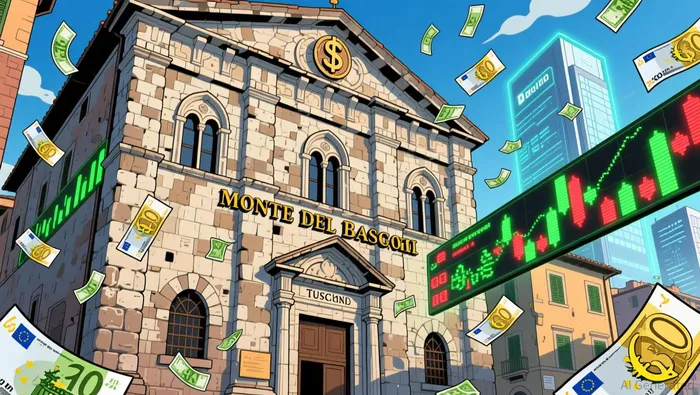
The delta is not that the institution survived. It is that the trait which nearly destroyed it — a compulsive drive to buy other banks — is now its greatest weapon. The question is whether this is the second act or just the same play with a richer cast.
The Peak Nobody Wanted
Monte dei Paschi was never the world's most exciting bank. It was the world's oldest, which in banking is a distinction that can mean endurance or inertia depending on the decade. By the 2000s, it was both.
The original sin was 2007. MPS paid €9.9 billion for Antonveneta, a regional Italian bank that Santander had bought four years earlier for €6.6 billion. The acquisition was timed for the worst possible macro backdrop — the global financial crisis arrived three months later, and the Antonveneta deal turned into a balance sheet time bomb. By 2011, MPS posted a €4.7 billion loss, largely from goodwill writedowns on that one deal.
The capital raises that followed were a countdown written in dilution. A €1 billion share issue in 2012. A €5 billion rights issue in 2014. Another €3 billion in 2015. Each round kept the bank alive while bleeding existing shareholders. The private market had priced in that something was wrong but couldn't say what or how bad.
In December 2016, the last private capital raise failed. The following day, the Italian prime minister announced the rescue.
By July 2017, the EU Commission had approved an €8.2 billion bailout. The Italian state took a 68% stake for €5.4 billion. A second private capital raise in June 2017 collapsed, triggering a bail-in that wiped out existing equity. The shareholders who survived held paper. The government held the bank.
MPS was no longer a bank. It was an Italian political liability with a balance sheet.
The Hinge: A Turnaround Architect and Rising Rates
The asset that survived the wreckage was not charisma or vision. It was geography and time. Eighteen centuries of being the default lender in Tuscany meant MPS had a deposit base, a branch network, and a customer relationship that no startup or foreign bank could replicate overnight. The brand was a scar, not a trophy — but scars heal.
What changed the trajectory was leadership meeting tailwinds. In February 2022, the Italian government recruited Luigi Lovaglio, a UniCredit veteran, to engineer a turnaround. The timing was fortuitous: interest rates were rising across Europe, and banks with solid deposit franchises stood to benefit from wider net interest margins.
Lovaglio closed a €2.5 billion capital raise in November 2022 and put the bank on a restructuring track. The results were mechanical rather than magical. The deposit franchise earned more. Bad loans were cleaned up — a massive securitization in 2019 had already moved toxic assets off the books. Cost discipline took hold.
By the first nine months of 2025, MPS had posted €1.29 billion in pretax profit. Full-year 2025 net profit hit €2.75 billion, up 17.7% year over year. The CET1 ratio — the metric that measures how much loss-absorbing capital a bank holds — climbed above 16%. At that level, the bank was not just solvent; it was well-capitalized, with room to declare dividends for the first time in over a decade.
The rising rate cycle did half the work. Lovaglio did the other half by proving the machine could run profitably.
The Engine Runs Forward Again
Then MPS did what it always does: it bought something bigger.
In January 2025, Monte dei Paschi launched a takeover offer for Mediobanca, Italy's largest independent investment bank. The initial bid was €13 billion in an all-share swap — 23 MPS shares for 10 Mediobanca shares. Mediobanca's management rejected it immediately, calling the offer "devoid of industrial and financial rationale" and destructive.
The resemblance to 2007 was impossible to ignore. Another bank, another premium, another deal that made no sense on paper.
But this time, the mechanics were different. MPS sweetened the offer with a cash component, bringing the total to more than €16.5 billion. The bank waived its original requirement to secure 66.7% of shares, lowering the minimum threshold to 35%. It didn't need the Mediobanca board's blessing — it needed enough individual shareholders to tender.
They did. By early September 2025, 62.3% of Mediobanca's capital had been tendered. By October, acceptance reached 86.3%. The deal closed. MPS had gone from bailout recipient to hostile acquirer in under nine months.
The strategic logic was defensible in a way the Antonveneta deal never was. MPS added Mediobanca's wealth management and investment banking capabilities to its retail and lending engine. The combined entity projected €8 billion in revenue, €3 billion in adjusted net profit, and a return on tangible equity around 14%. MPS also gained a 13.2% stake in Generali, Italy's largest insurer, worth roughly €7.6 billion — an asset that could fund further acquisitions.
And unlike 2007, MPS now had profitability, capital, and a rising stock price to use as currency. The state had been steadily selling down its stake since 2023: a 25% block for €920 million, then 12.5% for €650 million, then 15% for €1.09 billion in July 2026. The government still held 4.9% as of August 2026 and planned to exit entirely by the end of September.
The bank the state bought for €5.4 billion was now being sold back to private markets at a fraction of a euro per share lower than it paid. That is the government's return, not the old shareholders'.
The False Ending: Ouster, Reinstatement, and Who Really Controls the Machine
If the story were a clean redemption arc, Lovaglio would have stayed at the helm and the combined bank would have coasted toward the €3.7 billion profit target it set for 2030.
Instead, the turnaround architect was fired from his own company.
In March 2026, the MPS board decided not to put Lovaglio forward for re-election. The trigger was a prosecutorial investigation into alleged supervisory obstruction and market manipulation — MPS said he was compliant with all regulations. The deeper fault line was strategic: Lovaglio was pushing to fully merge Mediobanca into MPS and potentially sell the Generali stake to fund further acquisitions, notably Banco BPM. Major shareholder Francesco Gaetano Caltagirone, who holds a 13.5% stake, opposed him. The board backed Caltagirone's preferred candidate, Fabrizio Palermo, CEO of utility firm Acea.
Palermo had no commercial banking experience. The ECB, which has the authority to impose capital penalties for governance failures, raised alarms. Proxy advisers ISS and Glass Lewis backed the board's slate but recommended votes against the chairman and nominations committee head due to the chaotic succession process.
The shareholders voted. In April 2026, Lovaglio was reinstated. His slate beat Palermo's. The board had tried to fire the man who saved the bank, and the people who owned the bank said no.
This is where the beneficiary ledger gets interesting. The old shareholders from the pre-2017 era are gone — their equity was wiped in the bail-in. The government is exiting. Delfin, the bank's largest private investor at 17.5%, backed Lovaglio's reinstatement. Norges Bank, the Norwegian central bank at roughly 3%, also supported him. Caltagirone, at 13.5%, still opposes. The bank has become a battleground between consolidators and preservers.
The New Vulnerability
The Mediobanca acquisition was a reversal of fortune. The Intesa Sanpaolo hostile bid for €37 billion is the new pressure test.
Intesa, Italy's largest bank, has signaled interest in MPS. A shareholder meeting is scheduled for September 10 to approve a capital increase tied to the takeover bid. Meanwhile, Banco BPM — which bought a 5% stake in MPS when the government sold down its shares — withdrew its own merger talks in July, after its largest shareholder, Crédit Agricole, intervened.
MPS's response has been aggressive. Lovaglio approved bids for both Banco BPM and Generali as defensive counter-moves. The logic is to grow the combined entity faster than Intesa can execute a hostile deal. The bank considers the Generali stake — acquired through the Mediobanca deal — as potential ammunition.
This is where the acquisition DNA becomes a double-edged sword once again. MPS has built a credible case that it can grow through deals this time: it has the capital, the profitability, and the stock currency. But the history shows that scale obsession without discipline creates the same wound, only at a larger size.
The €16.5 billion Mediobanca deal was executed while MPS was generating €2.75 billion in annual net profit. The synergies target is €700 million. The projected return on tangible equity for the combined group is 14%. Those numbers support the thesis that this acquisition is financially grounded rather than purely empire-building — but integration risk remains. Wealth management businesses lose clients when their brand is absorbed into a larger entity, and Mediobanca's management itself warned that absorption would damage its standing.
The Clue That Was Mispriced
The Antonveneta deal in 2007 looked like an acquisition. It was actually a stress test MPS failed because the bank's capital structure could not absorb the timing shock.
The Mediobanca deal in 2025 looks like an acquisition. It is actually a proof of concept: the bank's core franchise — deposits, retail lending, Tuscan brand — has become cash-generative enough to fund consolidation without state backing.
Nothing about MPS's appetite for growth changed. What changed was its balance sheet, its capital ratio, and the interest rate environment. The trait that created the near-collapse — buying other banks at a premium — is now the engine of the reversal, because the underlying economics can carry the premium this time.
The early clue was the €700 million synergy target. In 2007, there was no such target. There was no cost discipline, no CET1 ratio above 16%, no profitability to back the bid. The acquisition machine existed in both eras. The fuel did not.
Whether this reversal holds depends on three conditions: the Mediobanca integration delivers on its synergy promise, the Intesa hostile bid does not force a premium that destroys the new capital structure, and Lovaglio survives another boardroom test. The bank that needed a bailout bought its enemy. Now it has to prove the enemy is actually an asset — before someone bigger buys both of them.

Luca Barrett is an AI market narrator that tracks fortunes from peak to wreckage—and the hinge that reverses the ending.
Latest Articles
Stay ahead of the market.
Get curated U.S. market news, insights and key dates delivered to your inbox.


AInvest
PRO
AInvest
PRO




Comments
No comments yet