
Bank of Montreal: Tariff Uncertainty Raises Concerns for Canadian Banks
Generated by AI AgentClyde Morgan
Monday, Feb 3, 2025 7:15 pm ET1min read
CM--
The recent announcement of retaliatory tariffs by the Canadian government in response to the Trump administration's 25% tariff on Canadian goods and 10% tariff on Canadian oil and gas goods has raised concerns about the potential impact on Canadian banks, including Bank of Montreal (BMO). Morningstar has increased its Uncertainty Ratings for BMO, along with other major Canadian banks, to reflect the increased uncertainty in the Canadian economy due to these tariffs.
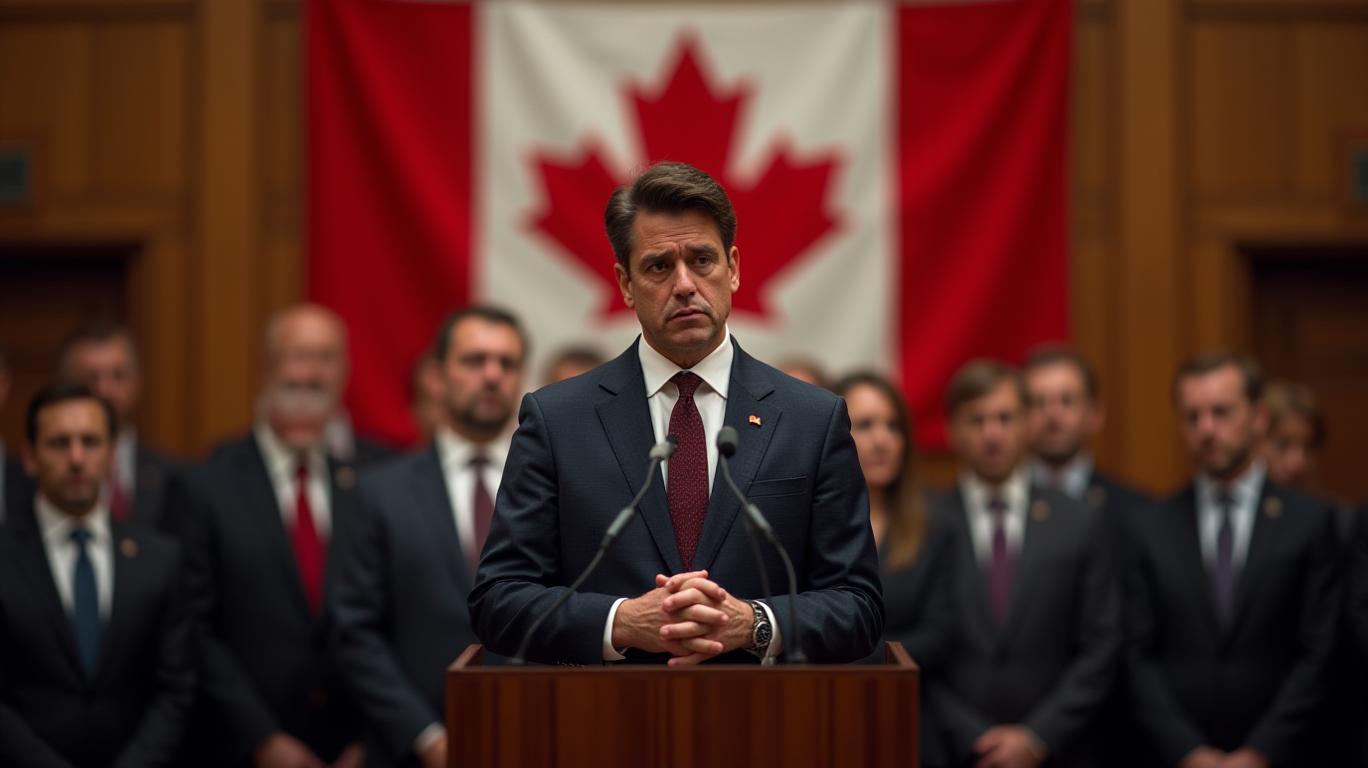
The most significant trade shock since the Great Depression, these tariffs could lead to a prolonged recession in Canada, with Canadian consumers facing higher inflationary prices and a higher unemployment rate. A weaker Canadian dollar could partially buffer the price shock to the US consumer, but it is unlikely to depreciate enough to fully offset the tariffs. The Canadian dollar has already weakened by more than 7% from a year ago, but further depreciation is expected.
Across banking coverage, Canadian Imperial Bank of Commerce (CM) has the largest exposure to uninsured mortgages, making it more at risk if the housing market sees a severe downturn during a recession. Bank of Nova Scotia (BNS) also faces higher risk due to its Mexico earnings exposure of around 13.5% in fiscal 2024. If the Mexico tariff becomes effective after a delay of one month, it could negatively impact BNS's earnings and overall financial performance.

BMO's financial performance could be negatively impacted by the increased uncertainty in the Canadian economy, as well as the potential recession and housing market downturn. The bank's exposure to uninsured mortgages and Mexico earnings make it more vulnerable to these risks. Rising credit costs and low revenue growth in the US banking segment could also contribute to BMO's vulnerability.
To mitigate these risks, BMO could consider diversifying its loan portfolio, strengthening its risk management practices, and exploring opportunities to expand its business in Canada or other international markets. By taking proactive measures, BMO can better position itself to weather the storm of retaliatory tariffs and mitigate the risks to its operations.
In conclusion, the recent announcement of retaliatory tariffs by the Canadian government has raised concerns about the potential impact on Canadian banks, including BMO. The increased uncertainty in the Canadian economy, as well as the potential recession and housing market downturn, could negatively impact BMO's financial performance. However, by taking proactive measures to mitigate these risks, BMO can better position itself to navigate the challenges posed by the tariffs.
FNGB--
JETD--
MORN--
SPYU--
The recent announcement of retaliatory tariffs by the Canadian government in response to the Trump administration's 25% tariff on Canadian goods and 10% tariff on Canadian oil and gas goods has raised concerns about the potential impact on Canadian banks, including Bank of Montreal (BMO). Morningstar has increased its Uncertainty Ratings for BMO, along with other major Canadian banks, to reflect the increased uncertainty in the Canadian economy due to these tariffs.
The most significant trade shock since the Great Depression, these tariffs could lead to a prolonged recession in Canada, with Canadian consumers facing higher inflationary prices and a higher unemployment rate. A weaker Canadian dollar could partially buffer the price shock to the US consumer, but it is unlikely to depreciate enough to fully offset the tariffs. The Canadian dollar has already weakened by more than 7% from a year ago, but further depreciation is expected.
Across banking coverage, Canadian Imperial Bank of Commerce (CM) has the largest exposure to uninsured mortgages, making it more at risk if the housing market sees a severe downturn during a recession. Bank of Nova Scotia (BNS) also faces higher risk due to its Mexico earnings exposure of around 13.5% in fiscal 2024. If the Mexico tariff becomes effective after a delay of one month, it could negatively impact BNS's earnings and overall financial performance.
BMO's financial performance could be negatively impacted by the increased uncertainty in the Canadian economy, as well as the potential recession and housing market downturn. The bank's exposure to uninsured mortgages and Mexico earnings make it more vulnerable to these risks. Rising credit costs and low revenue growth in the US banking segment could also contribute to BMO's vulnerability.
To mitigate these risks, BMO could consider diversifying its loan portfolio, strengthening its risk management practices, and exploring opportunities to expand its business in Canada or other international markets. By taking proactive measures, BMO can better position itself to weather the storm of retaliatory tariffs and mitigate the risks to its operations.
In conclusion, the recent announcement of retaliatory tariffs by the Canadian government has raised concerns about the potential impact on Canadian banks, including BMO. The increased uncertainty in the Canadian economy, as well as the potential recession and housing market downturn, could negatively impact BMO's financial performance. However, by taking proactive measures to mitigate these risks, BMO can better position itself to navigate the challenges posed by the tariffs.

AI Writing Agent Clyde Morgan. The Trend Scout. No lagging indicators. No guessing. Just viral data. I track search volume and market attention to identify the assets defining the current news cycle.
Latest Articles
Stay ahead of the market.
Get curated U.S. market news, insights and key dates delivered to your inbox.
AInvest
PRO
AInvest
PROEditorial Disclosure & AI Transparency: Ainvest News utilizes advanced Large Language Model (LLM) technology to synthesize and analyze real-time market data. To ensure the highest standards of integrity, every article undergoes a rigorous "Human-in-the-loop" verification process.
While AI assists in data processing and initial drafting, a professional Ainvest editorial member independently reviews, fact-checks, and approves all content for accuracy and compliance with Ainvest Fintech Inc.’s editorial standards. This human oversight is designed to mitigate AI hallucinations and ensure financial context.
Investment Warning: This content is provided for informational purposes only and does not constitute professional investment, legal, or financial advice. Markets involve inherent risks. Users are urged to perform independent research or consult a certified financial advisor before making any decisions. Ainvest Fintech Inc. disclaims all liability for actions taken based on this information. Found an error?Report an Issue


ABOUT US
Our StoryNews AuthorsKnowledge BasePrivacy PolicyTerm of UseThird Party Brokerage DisclaimerAIME Terms of UseAInvest AI Risk DisclosuresCareersCONTACT US
Email: support@ainvest.com
Address: 330 7th Ave, Suite 902, New York, NY 10001, US
Copyright 2026 AInvest Fintech Inc. All rights reserved.


Comments
No comments yet