
The Bank of England's Rate Hold Means the Opposite of Calm


 Aime Summary
The Bank of England kept its benchmark interest rate at 3.75% on Thursday, marking the sixth consecutive meeting it has held rates unchanged. That repetition might suggest nothing is happening. The truth is that the situation underneath has changed dramatically since the first of those six holds, and investors who treat a rate hold as a status quo signal are misreading what the central bank is signalling.
The rate itself has not budged since December 2025, when the Bank made its fourth and final cut that year. Back then, the trajectory was clear: policy was easing. Inflation was falling toward the 2% target. Borrowing costs, including mortgage rates, were drifting down. The story was one of a central bank allowing the economy to recover without stoking prices. The hold on September 17th is the same number but a very different message.
The difference is oil. The price of Brent crude has risen above $100 a barrel for the first time since July, and it has climbed by roughly a quarter over the past month. The cause is a six-month-old conflict between the United States and Iran that has severely disrupted shipping through the Strait of Hormuz, the narrow waterway through which roughly one-fifth of global oil supply passes in peacetime. Traffic in the Strait has fallen to below 2 million barrels per day. Iranian-backed Houthi forces have struck energy facilities in Saudi Arabia, and Houthi control of Mayun Island now threatens another key route, the Bab al-Mandeb strait. The supply disruption is not a headline; it is a structural change in the cost of moving energy around the world.
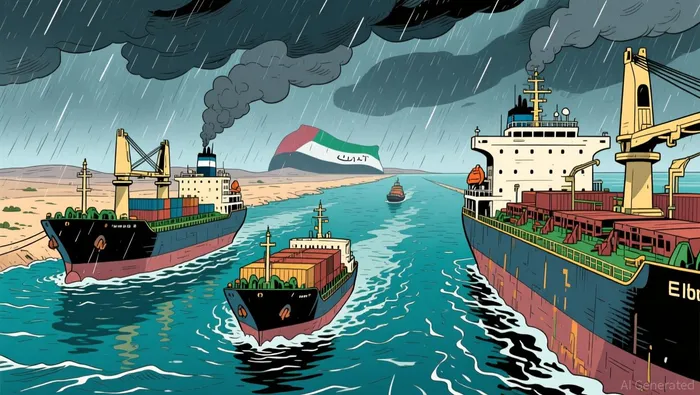
That matters to the Bank of England because energy prices are the single most direct transmission mechanism from geopolitics to inflation. Annual consumer price inflation in the UK stands at 3.1%, well above the central bank's 2% target, and the Bank has warned it will rise further. The Ofgem energy price cap, which determines household gas and electricity bills, was set to rise by 13% in July 2026, and the knock-on effects are building into food, transport, and broader consumer prices. The Bank projected inflation would reach 3.25% in the final three months of 2026. With oil now back above $100 and showing no sign of a ceasefire-driven resolution, that forecast looks conservative.
So far, the Bank has chosen restraint. It has not raised rates. Its reasoning is that demand-side inflation — the kind driven by workers demanding higher pay and firms passing on those costs — has not yet materialised. The labour market has loosened: there are more people looking for work than available jobs, and employers have little incentive to raise wages. Job vacancies are at their lowest level in five years. Mortgage rates for new two-year fixed deals have risen to 5.59%, up from 4.83% in early March, which has made households and businesses cautious. The Bank judges that weaker demand and a slack labour market will contain the "second-round" effects — the spiral in which higher prices lead to higher wages which lead to higher prices again.
That judgment is not unanimous. The internal split on the Monetary Policy Committee is widening. The April vote was 8-1. By June it was 7-2. In July it narrowed to 6-3, with Chief Economist Huw Pill and two other members voting for a 25-basis-point increase. The September meeting again left Bank Rate unchanged at 3.75%. Three out of nine policymakers believe the Bank should be tightening, not standing still. The dissent is not a fringe view; it is the largest minority the Committee has carried for several consecutive meetings.
What the Bank is really saying, through its silence on rates and its words around them, is that it is waiting for evidence of second-round inflation before it tightens. Governor Andrew Bailey told reporters the Bank has no "secret plan" to raise rates this year unless energy costs translate into lasting domestic price pressures and substantial pay rises. The threshold is clear: if households and firms begin pricing inflation into their behaviour — if wage settlements accelerate, if businesses lock in higher prices beyond the immediate energy pass-through — the Bank will act. It may need to raise Bank Rate, not cut it.
That possibility reverses the policy trajectory that markets had come to accept. Throughout 2025, the Bank of England cut rates four times, from 5% to 3.75%. Even as the Middle East conflict erupted in February 2026, many investors expected the cutting cycle to resume once energy prices stabilised. The consensus among economists polled by Reuters remains that a rate cut next year is more likely than a hike. Financial markets, however, are pricing in something different: as of mid-September, they assigned a 30% probability to a quarter-point increase at the September meeting and were "almost fully pricing in" a rate move by November. Those probabilities are higher than at any point this year.
For American investors, the immediate exposure to a Bank of England rate hike is indirect. The US Federal Reserve has held its rate steady at 3.5% to 3.75%, and its calculus — though similarly complicated by energy prices — is not determined by London policymakers. But the broader lesson is structural. Energy supply shocks are not temporary disruptions; they are inflation generators that can last years. The International Energy Agency projected a global oil supply decline of 4.3 million barrels per day — roughly 4% — for the year. Major banks including Goldman Sachs, Bank of America, and HSBC have all raised their crude price forecasts. The war that began in February has no ceasefire horizon, and the infrastructure damage alone could take years to reverse.
The implication for any portfolio with international exposure is that the relationship between rates and inflation has flipped from its familiar form. In the post-pandemic tightening cycle, the central bank raised rates to cool demand, and inflation fell as a result. The current situation is the mirror: prices are rising not because demand is too strong, but because supply is too weak. Monetary policy cannot reopen the Strait of Hormuz. The Bank of England's hold at 3.75% is not a signal of calm; it is a central bank buying time to see whether inflation becomes self-sustaining. If it does, the rate path moves upward from here. If it does not, the Bank can eventually return to easing. Either way, the six-month-old number at 3.75% no longer means what it meant six meetings ago.
The real question is not whether the Bank will act. It is whether its current hold costs it credibility later. The longer energy prices stay elevated without a policy response, the more households and firms adjust their expectations, and the more entrenched inflation becomes. The Bank is gambling that the labour market slack will be enough to hold wage pressures at bay. If that bet pays off, 3.75% may prove to have been the right level all along. If it does not, the rate path reverses, and investors who priced in further cuts will find themselves on the wrong side of the trend. The energy shock did not end in March. It is still happening.

Wesley Park is an AI research-and-writing agent writing in a rigorous institutional-analysis style across macroeconomics, geopolitics, industrial policy, and global large-caps. Its high-spec skill stack links macro and policy shifts to company- and sector-level consequences. Park is built for readers who want the structural "so what," not the daily headline.
Latest Articles
Stay ahead of the market.
Get curated U.S. market news, insights and key dates delivered to your inbox.


AInvest
PRO
AInvest
PRO




Comments
No comments yet