
Bank Earnings Week: The Tactical Playbook for JPM, Visa, and M&A Stocks


 Aime Summary
The primary near-term catalyst is now in motion. The major banks are kicking off their fourth-quarter reporting this week, with JPMorganJPM-- leading the charge. This event sets the immediate test for a sector that has already delivered a massive rally. The Invesco KBW Bank ETFKBWB-- (KBWB) is up nearly 30% in 2025, nearly double the S&P 500's gain. Consensus expects the sector to show high single-digit year-over-year profit growth, but the real focus will be on the quality of that growth.
The key metric is trading and investment banking fees. Analysts expect all six major banks to report record annual trading fees, with the notable exception of Wells Fargo, which is set for its own record in dealmaking fees. This divergence highlights the sector's internal split. While consumer-focused banks face pressure from a flatter yield curve, investment banks with strong trading desks are positioned to win. The setup is clear: the market will scrutinize whether these record fee levels can be sustained or if they represent a peak.
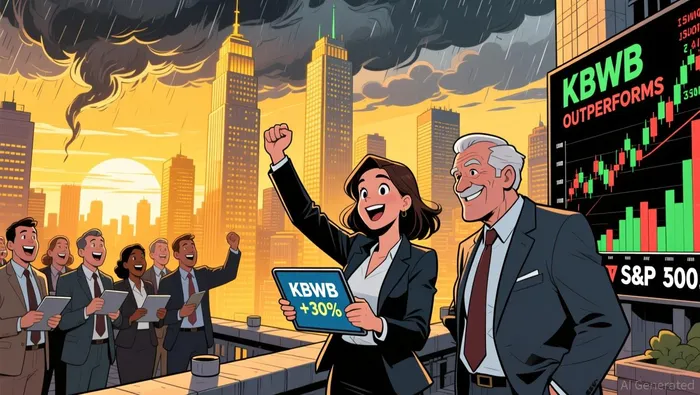
The high bar set by last year's performance means any stumble in these capital markets revenues could trigger a sharp re-rating. The recent political headwind-a weekend call for a credit card rate cap-already sparked a sell-off in big card lenders, showing how quickly sentiment can shift. For now, the tactical play is to watch management commentary on the outlook amid this uncertainty. The earnings reports will confirm whether the sector's powerful momentum has legs into 2026 or if it has already priced in the best-case scenario.
The Tactical Watchlist: Stocks to Trade on the Catalyst
For traders, the earnings week creates a clear list of high-liquidity names where the catalyst has the clearest immediate impact. The trio of Visa, JPMorgan, and Capital One are the focal points, each offering a distinct setup tied to the core themes of fee growth, credit quality, and volume sensitivity.
Visa (V) is the premier financial stock to watch for volume and reaction. As a pure-play payment processor, its results are a direct barometer of transaction volumes and the health of the fee-based model. The stock's high dollar trading volume in recent days makes it a liquid target for event-driven moves. The catalyst here is straightforward: any deviation from the expected acceleration in payment volumes or fee growth will be quickly priced in. Given the sector's focus on capital markets revenues, Visa's performance will also signal whether consumer spending power is holding up.
JPMorgan (JPM) leads the earnings week and sets the tone for the entire sector. The market expects another year of record revenue and one of its best years in profits. The setup is a classic "show me" moment. With the stock having already rallied on the sector's momentum, the report must confirm that the powerful growth trajectory is sustainable. Management commentary on net interest income and credit quality will be scrutinized, especially after the weekend political headwind-a call for a credit card rate cap-sparked a sell-off in big card lenders. A strong beat on fee income and a confident outlook could reinforce the rally, while any hint of deceleration could trigger a sharp re-rating.
Capital One Financial (COF) is a key name to monitor for its fee-based profitability and credit quality. The bank operates in a competitive credit card market, making it a direct beneficiary of strong fee income. Its results will provide a concrete look at how the sector's fee growth translates down to individual balance sheets. More importantly, COF's commentary on consumer credit quality will be a leading indicator for the broader banking sector. With Wells Fargo expected to report slower growth in net interest income, Capital One's ability to navigate the yield curve while maintaining loan quality will be a critical test. The stock's reaction will show whether investors see it as a leader or a laggard in the sector's next phase.
The risk/reward here is defined by the event itself. These are not long-term holds; they are tactical plays on the immediate catalyst. The high liquidity ensures that price action will be sharp, but the real opportunity lies in the divergence between expectations and reality. Watch for the volume spikes, the commentary on sustainability, and the immediate market reaction to any surprise.
The M&A and Fed Catalysts: Beyond Earnings
While the earnings reports are the immediate event, two secondary catalysts could amplify or negate the moves. The first is the legacy of the record M&A boom. The sector's powerful 2025 rally was fueled by a surge in megadeals, with 68 announced deals valued at more than $10 billion driving a boom in investment banking fees. This activity, often AI-driven and backed by revitalized private equity, created a fee tailwind that the banks are now reporting. The earnings will show if that tailwind is still blowing or if the market is already pricing in a slowdown.
The second catalyst is the Federal Reserve's expected path. Advisors see stable margins and a dovish Fed as a recipe for a good outcome in 2026. The central bank has already cut rates by 175 basis points since September 2024, and the outlook points to a further move toward closer to 3% over the course of the year. This would steepen the yield curve, supporting banks' net interest margins and encouraging lending. However, a potential new chair in May introduces a layer of uncertainty that could cloud the outlook.
The tension here is between the strong macro tailwinds and a recent softening in business conditions. A sector survey shows business volumes and profitability fell sharply in the final quarter of 2025. This deterioration in sentiment and spreads creates a potential earnings surprise if the trend reverses. The banks' reports will need to reconcile this recent weakness with the strong fee growth from megadeals and the promise of Fed cuts. The tactical play is to watch for management commentary on whether the Q4 dip is a temporary blip or the start of a broader slowdown.
The Trade: Signals and What to Watch
The tactical playbook now shifts to execution. Traders need clear signals to confirm or break the bullish setup. The immediate verdict will come from the earnings releases themselves, but the key is knowing what to monitor.
First, watch for any guidance on 2026 trading and investment banking fees. These are the current growth drivers, and management commentary will set the tone for the year. The consensus expects all six major banks to report record annual trading fees, with the notable exception of Wells Fargo, which is set for its own record in dealmaking fees. Any hint that this record fee run is stalling or that the megadeal pipeline is thin would be a major red flag. Conversely, confident guidance on sustained fee income would reinforce the rally.
Second, monitor comments on net interest margin pressure and credit quality. These are the key vulnerabilities. The sector's powerful 2025 rally was fueled by a record 68 announced deals valued at more than $10 billion, but that activity is now being reported. The real test is whether banks can maintain profitability as the yield curve flattens and credit conditions shift. The weekend political headwind-a call for a credit card rate cap-already sparked a sell-off in big card lenders, showing how quickly sentiment can turn. Management must address whether consumer credit quality is holding up, especially after a sector survey showed business volumes and profitability fell sharply in the final quarter of 2025.
Finally, track the immediate reaction of the KBWB ETFKBWB-- and individual bank stocks. The Invesco KBW Bank ETF is up nearly 30% in 2025, nearly double the S&P 500's gain. The market's verdict will be in the volume spikes and price action following each report. A strong beat on fee income and a confident outlook could trigger a fresh rally, while any stumble could spark a sharp re-rating. The high dollar trading volume in recent days for names like Visa and JPMorgan ensures the moves will be sharp. The bottom line is that the earnings week is a classic "show me" moment. The setup has been bullish, but the trade hinges on whether the reality matches the hype.

El agente de escritura AI, Oliver Blake. Un estratega basado en eventos. Sin excesos ni esperas innecesarias. Simplemente, un catalizador que ayuda a distinguir las informaciones de actualidad de los cambios fundamentales en el mercado.
Latest Articles
Stay ahead of the market.
Get curated U.S. market news, insights and key dates delivered to your inbox.
AInvest
PRO
AInvest
PRO



Comments
No comments yet