
Bank Earnings and Inflation: Volatility or Value?
The confluence of GoldmanGS-- Sachs' and JPMorgan's Q2 2025 earnings releases and the June 2025 inflation data drop on July 15–16 positions markets for a pivotal week of volatility—or opportunity. With banks' performance and macroeconomic trends intertwined, investors must dissect whether robust earnings can offset inflation concerns or if weakening data will force the Federal Reserve's hand. This analysis evaluates the interplay between financial sector resilience, inflation dynamics, and consumer health, concluding with actionable strategies for equity and fixed-income investors.
Bank Earnings Preview: A Stress Test for Financial Resilience
Goldman Sachs and JPMorganJPM-- are the bellwethers of U.S. banking. Their earnings will reveal how the sector navigates interest rate uncertainty, market volatility, and sector-specific pressures like JPMorgan's trading division and Goldman's investment banking slowdown.
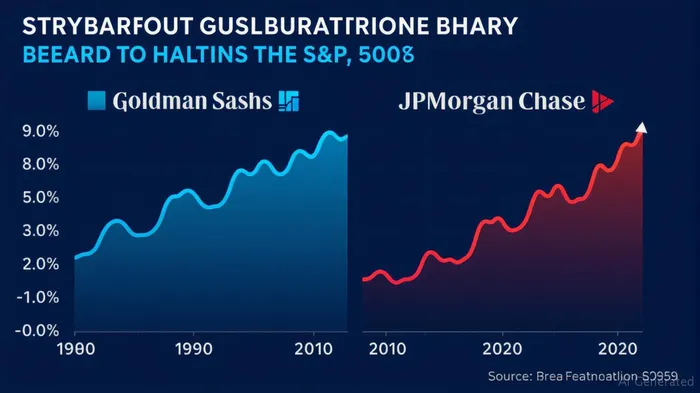
Goldman Sachs (GS): Riding the Asset Management Wave
- EPS Estimate: $9.73 (12.7% YoY growth).
- Key Drivers:
- Asset Management: Strong AUM growth and fee-based income, offsetting weak investment banking activity.
- Equity Trading: Benefits from market volatility and client hedging needs.
- Risk: Slower M&A activity and geopolitical tensions could weigh on advisory fees.
JPMorgan Chase (JPM): Testing the Trading Divide
- EPS Estimate: $4.47 (1.5% YoY growth).
- Key Drivers:
- Consumer & Commercial Banking: Stable loan demand and fee income.
- Weakness in Trading: Capital markets revenue may lag due to lower volatility and client caution.
- Risk: Elevated credit costs if economic softness spills into defaults.
Inflation Data: The Fed's Crossroads
The June CPI report, due July 15, will clarify whether tariff-driven inflation is accelerating beyond the Fed's 2.4% May reading. Analysts forecast a 0.23% MoM rise, pushing the annual rate to 2.6%, with core inflation hitting 3.0%.
Key Dynamics:
- Tariffs vs. Shelter Drag: While tariffs push up goods prices, falling shelter costs (owners' equivalent rent down 0.1% in May) could limit inflation's upside.
- Energy Relief: Gasoline prices fell 2.6% in May, though natural gas rose 15.3% annually.
- Fed Response: A September rate cut is priced at 60% if inflation stays moderate. A surprise acceleration could delay easing, pressuring equities and bonds.
Retail Sales: A Mixed Consumer Picture
May's retail sales data revealed resilience in services but weakness in discretionary spending:
- Total Sales: -0.9% MoM (seasonally adjusted), +3.3% YoY.
- Core Sales (excluding autos/gas): +0.1% MoM, +3.9% YoY.
Implications:
- Strengths: Education, healthcare, and online shopping held up, signaling wage-driven demand for services.
- Weaknesses: Apparel (-0.4% MoM) and auto sales (-0.3% new vehicles) point to caution in durable goods.
- Tariff Risk: If tariffs lift goods prices further, consumers may cut back on discretionary spending, denting retail margins.
Market Implications: Equity vs. Fixed Income
- Equities:
- Financials: Strong earnings (especially GS) could justify sector outperformance, as banks benefit from stable net interest margins.
Consumer Discretionary: At risk if inflation and tariffs squeeze margins; defensive plays like healthcare or utilities may outperform.
Fixed Income:
- Treasury Bonds: A Fed rate cut would boost prices (lower yields), while inflation surprises could spark a selloff.
- Corporate Bonds: Financials' creditworthiness remains strong, but industrials face pressure if consumer spending weakens.
Investment Strategy: Ride the Volatility or Dive Contrarian?
- Buy the Banks (If Earnings Surprise Upward):
- Goldman Sachs (GS): A 12.7% EPS beat could push shares toward $450 (pre-earnings consensus). Focus on its asset management and trading resilience.
JPMorgan (JPM): Look for trading division stability; a 1.5% EPS growth miss might create a buying dip.
Hedge Inflation with Commodities or REITs:
Energy/Real Estate: Tariff-driven goods inflation could boost energy prices and housing demand (if mortgage rates fall post-Fed cut).
Go Contrarian on Bonds:
- Short-Duration Treasuries: If inflation stays moderate, bet on a September rate cut (yield curve flattening).
Avoid Long-Term Bonds: A CPI surprise over 3.0% could trigger a sharp sell-off.
Consumer Staples Over Discretionary:
- Procter & Gamble (PG) or Coca-Cola (KO) offer stability amid retail sector uncertainty.
Conclusion: A Pivot Point for Markets
The July 15–16 earnings/inflation combo is a litmus test for 2025's market narrative. Strong bank results could validate the financial sector's resilience, attracting capital into GSGS-- and JPMJPM--. Moderate inflation would keep the Fed's easing timeline intact, favoring equities and short-term bonds. Conversely, a CPI surprise might trigger sector rotation into defensive assets. Investors should use volatility as a buyer's tool: dip into financials on earnings beats, hedge with commodities, and stay nimble on bonds until the Fed's path crystallizes.

Stay ahead of the market.
Get curated U.S. market news, insights and key dates delivered to your inbox.




Comments
No comments yet