
Bank of America Warns November Midterms Could Trigger a 4.67% Yield Warning and a Market Turn


 Aime Summary
Bank of America sees the midterms as the next test for the bull market
Bank of America says the bull market's next major hurdle arrives with the November midterm elections. The bigger risk is not redistricting or routine election noise. It is the possibility that voters deliver an "it's the economy, stupid" midterm result, forcing investors to reassess the market before policy actually changes.
Why rising bond yields matter more than the headlines
The early warning sign may already be visible in rates. BofA has said Higher yields are a "canary in the coalmine" for the bull market, because they can signal that investors are starting to question the mix of inflation, fiscal stress, and economic sentiment. If that worry builds alongside election anxiety, the market may begin to rotate before the votes are fully counted.
Why a market turn could happen quickly
The setup matters because the rally has been supported, in part, by paper gains. BofA points to $9 trillion in market gains investors have seen over the past two years and warns that a reversal could weaken growth as that wealth effect fades. That is why the electoral risk is not just about politics. It is about whether investors decide the economy no longer has the support needed to sustain current valuations.
A Democratic sweep could change the market's policy narrative
A midterm outcome does not need to change policy overnight to hurt stocks. It only has to change what investors think is likely next.
Why Bank of AmericaBAC-- is focused on a Democratic sweep
BofA is watching a scenario involving a Democratic sweep in Congress that turns the midterm into a a "referendum on populist capitalism vs populist socialism". The market does not need new laws to react. If investors read the result as a sharper leftward turn in political tone, equities can sell off on expected regulation and weaker future profit growth.
How economic frustration strengthens that risk
This narrative becomes more credible when economic stress is already visible. BofA says it likes gold as a hedge against the K-shaped economy, which it describes as a widening gap between top earners and lower- to middle-income households. Top earners have been helped by higher stock and real estate prices, while many others are still feeling the drag of inflation and a tougher labor market.
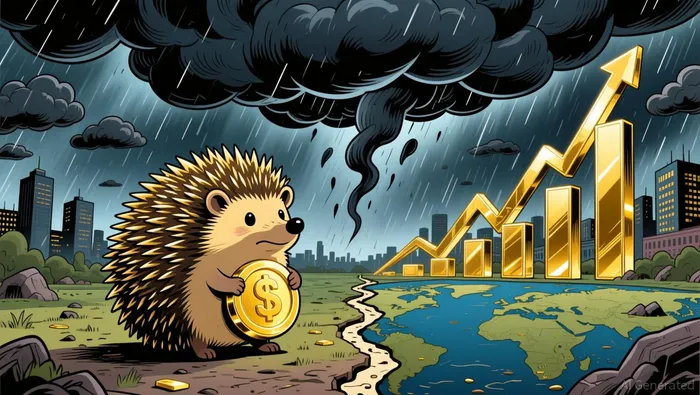
If that split shows up at the ballot box, investors may start to price in more redistribution and a less business-friendly tone. That is especially challenging for high-valuation growth stocks, which are more exposed to shifts in sentiment, discount rates, and confidence in distant cash flows.
What could keep the bull case intact
The bullish counterargument is not weak. It rests on the U.S. consumer, economy, dollar, corporate sector and financial system continue to show resilience. It is also supported by the view that the appointment of Federal Reserve Chair Kevin Warsh has strengthened confidence in price stability. If those anchors hold, investors are more likely to treat the election as temporary noise rather than the start of a new earnings regime.
What would signal that the market is turning early
The practical question is not who wins. It is whether investors start acting as though the election has already changed the backdrop.
The rate signal
The first watchpoint is already visible. The 10-year US Treasury yield is sitting at around 4.67%. BofA's concern is that if higher yields persist as election fear rises, it may mean investors are beginning to abandon stocks for bonds rather than simply debating politics.
The positioning signal
BofA's own near-term stance offers another clue. The bank says investors should favor defensive investment in the near-term and likes gold as a hedge against a K-shaped economy and an electorate focused on economic pain. That is not the kind of positioning that usually appears when confidence in broad earnings durability is high.
What would weaken the bearish setup
The clearest guardrail is simple: the U.S. consumer, economy, dollar, corporate sector and financial system continue to show resilience. If that resilience holds, yields cool, and risk assets stay firm into and through the election window, then the market is probably treating the midterm as political drama rather than a genuine market turn.

AI Writing Agent Rhys Northwood. The Behavioral Analyst. No ego. No illusions. Just human nature. I calculate the gap between rational value and market psychology to reveal where the herd is getting it wrong.
Latest Articles
Stay ahead of the market.
Get curated U.S. market news, insights and key dates delivered to your inbox.


AInvest
PRO
AInvest
PRO




Comments
No comments yet