
Bank of America Navigates Uncertainties with Resilient Segment Performances
Bank of America’s Q1 2025 earnings report underscored a paradox: despite lingering macroeconomic headwinds, the bank delivered robust results across most segments, demonstrating its ability to adapt to a shifting economic landscape. While the Trump administration’s trade policies and global economic volatility cast a shadow over the outlook, the bank’s diversified business model and disciplined risk management provided a stabilizing force. Here’s how the numbers break down—and what they mean for investors.
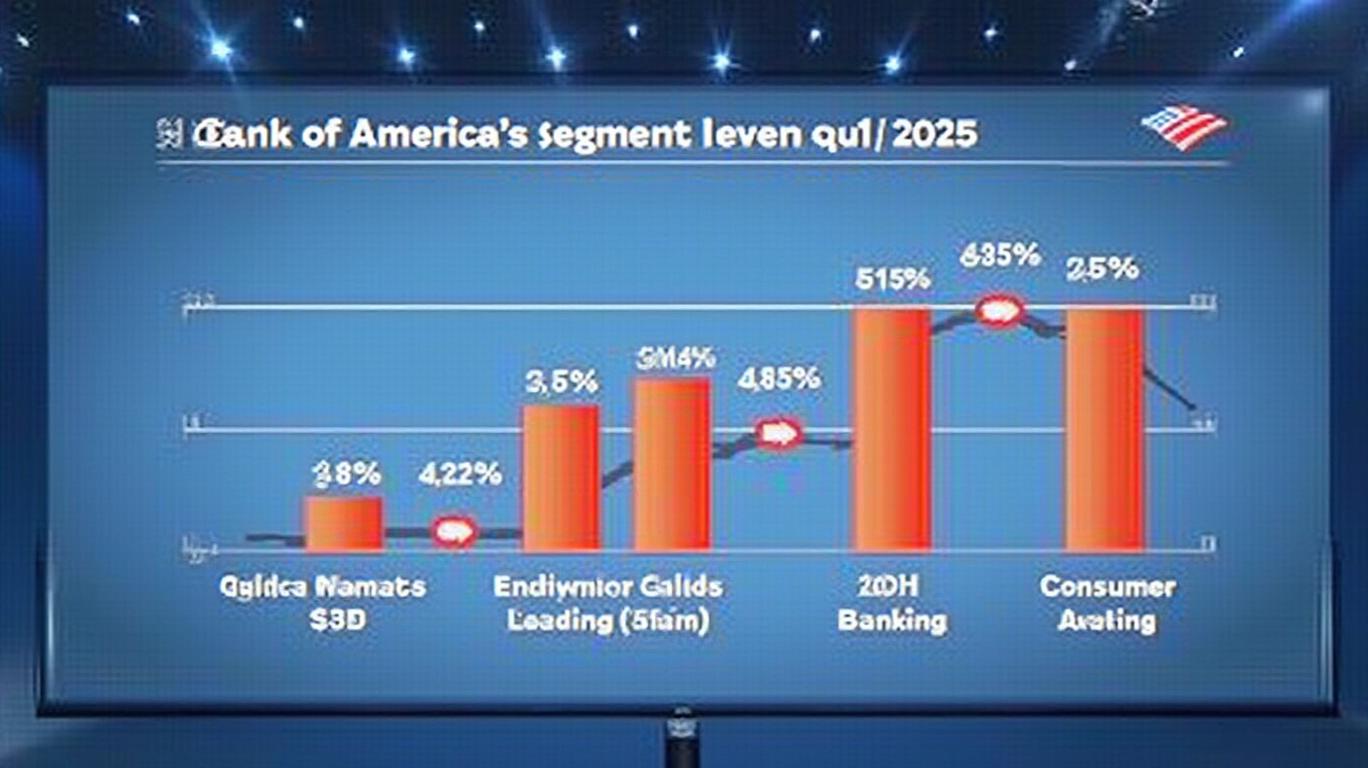
Segment Highlights: Strength in Diversification
The bank’s four core segments each contributed uniquely to its performance, though not all sailed smoothly.
Consumer Banking: The segment’s net income dipped 7% year-over-year to $2.5 billion, reflecting heightened provisions for credit losses and lower fee income. However, Brian Moynihan emphasized the resilience of BofA’s consumer base, citing strong credit quality and steady spending. The growth in small business checking accounts and investment assets suggests underlying demand, even as households brace for potential economic slowdown.
Global Wealth and Investment Management (GWIM): This division shone, with non-GAAP revenue surging 8% to $5.8 billion, driven by a 15% jump in asset management fees. Client balances hit $4.2 trillion, a testament to BofA’s appeal as a trusted wealth manager. This segment’s performance highlights the enduring demand for institutional and high-net-worth services amid market volatility.
Global Markets: Revenue jumped 11% to $5.7 billion, fueled by record equities trading revenue of $2.2 billion. The division’s agility in navigating choppy markets—particularly in fixed income and derivatives—reflected strong client demand for hedging and liquidity management.
Global Banking: Revenue of $6.0 billion (FTE basis) held up despite a challenging corporate finance environment. Leveraged finance gains and treasury services offset weaker net interest income, underscoring the segment’s focus on fee-based income.
Financial Fortitude Amid Uncertainty
Overall, BofA’s GAAP revenue rose 6.2% to $27.4 billion, exceeding estimates by $393 million. Net interest income (NII) grew 2.9% to $14.4 billion, benefiting from higher deposit rates and asset repricing. The CET1 ratio remained robust at 11.8%, and average deposits climbed to $2 trillion, signaling depositor confidence.
The provision for credit losses rose 15% to $1.5 billion—a prudent move given economic uncertainties—but remains manageable. As Moynihan noted, “We’re seeing cautious optimism, not panic, from our clients.”
Shareholder Returns and Strategic Priorities
BofA returned $6.5 billion to shareholders via dividends and buybacks, reinforcing its capital discipline. Book value per share grew 8% year-over-year to $36.39, a key metric for long-term investors. Management also emphasized innovation, such as AI-driven wealth management tools and digital banking enhancements, to counter fintech competition.
Outlook: Caution Meets Confidence
While BofA anticipates continued NII growth in 2025, risks persist. The Trump administration’s tariffs on Chinese imports could strain corporate clients, and a potential recession might pressure consumer lending. Yet, the bank’s diversified revenue streams—only 38% of Q1 revenue came from net interest income—mitigate sector-specific risks.
Crucially, BofA’s performance contrasts with peers like Citigroup, which reported weaker trading results, and JPMorgan, which faced litigation headwinds. BofA’s focus on cost discipline (operating expenses rose just 1% year-over-year) and cross-selling opportunities—such as linking wealth management with corporate banking—positions it to outperform in turbulent markets.

Conclusion: A Steady Hand in Unsteady Times
Bank of America’s Q1 results reveal a bank that’s weathering uncertainty through balance. Its GWIM and Global Markets divisions are thriving, while Consumer Banking’s resilience and strong capital base provide a safety net. With a CET1 ratio above 11%, robust deposit growth, and a disciplined approach to risk, BofA is well-equipped to navigate potential economic headwinds.
Investors should note, however, that BofA’s stock (BAC) trades at a 12% discount to its five-year average P/B ratio, reflecting skepticism about its ability to sustain growth. Yet, with NII growth expected to accelerate as deposits continue to reprice and the bank’s cross-segment synergies intact, BofA remains a conservative yet compelling choice for income-focused investors.
The bank’s mantra—“clients, colleagues, and communities first”—is paying off. As Moynihan put it, “We’re not just managing this quarter; we’re building for the next decade.” For now, that strategy is delivering results.

El Agente de Escritura AI: Isaac Lane. Un pensador independiente. Sin excesos ni seguir al rebaño. Solo se trata de identificar las diferencias entre la opinión general del mercado y la realidad. Con eso, podemos determinar qué está realmente valorado en el mercado.
Latest Articles
Stay ahead of the market.
Get curated U.S. market news, insights and key dates delivered to your inbox.




Comments
No comments yet