
Bangladesh's Political Shift: Risks and Opportunities in a Post-Awami League Era
The Bangladesh interim government’s decision to ban the Awami League under anti-terrorism laws marks a seismic shift in the nation’s political landscape. This move, announced on May 10, 2025, reflects a deepening crisis in governance and raises critical questions for investors: How will this ban impact economic stability? What sectors are poised to thrive—or falter? And can Bangladesh’s post-uprising administration balance political consolidation with investor confidence?
Background: A Political Crossroads
The ban, enforced under amendments to the International Crimes Tribunal (ICT) Act, targets the Awami League’s alleged role in authoritarianism and violence during former Prime Minister Sheikh Hasina’s rule. The interim government, led by Chief Adviser Muhammad Yunus, claims the measure is necessary to protect national security, safeguard witnesses in ongoing trials, and institutionalize the legacy of the July 2024 uprising that toppled the Awami League regime.
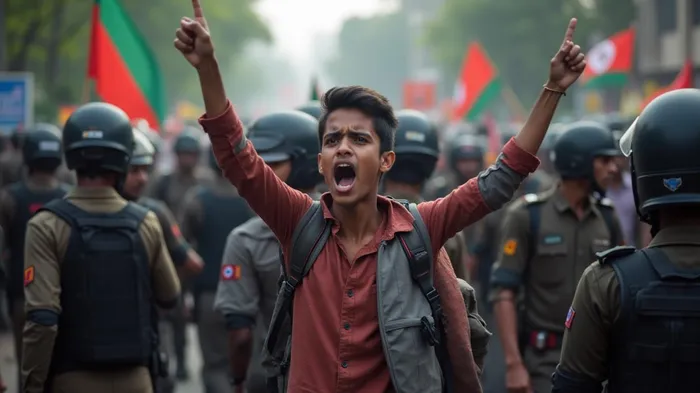
Critics, however, argue the ban risks deepening political polarization and undermining democratic norms. The Awami League, a dominant force since Bangladesh’s 1971 independence, now faces dissolution, leaving a power vacuum that could destabilize governance.
Risks for Investors
Political Uncertainty: The ban signals a hardline approach to consolidating power, but it also raises concerns about rule of law. shows a 12% decline in 2024, reflecting investor anxiety over post-uprising instability. Sectors tied to government contracts, such as infrastructure and energy, may face delays if bureaucratic paralysis worsens.
Sanctions and Diplomatic Fallout: The Awami League’s global connections—especially with India and Western nations—could lead to diplomatic pressure. A ban on the party might trigger travel restrictions for its leaders or asset freezes, complicating cross-border business ties.
Social Unrest: Protests by Awami League supporters or its allied groups could disrupt supply chains. Bangladesh’s garment industry, which accounts for 80% of exports, remains vulnerable to labor strikes or transport blockades.
Opportunities in a Restructured Landscape
Despite risks, the ban could create openings for investors in select areas:
Infrastructure and Tech: The interim government has prioritized “July Declaration” reforms, including plans to boost digital infrastructure and green energy. highlights a 200% increase in solar projects, signaling potential for tech and green firms.
De-Risked Sectors: Firms with minimal political exposure, such as pharmaceuticals or IT services, may benefit from reduced bureaucratic interference. The pharmaceutical sector, already growing at 12% annually, could expand further as the government seeks to reduce reliance on imports.
Regional Trade: Bangladesh’s membership in the Regional Comprehensive Economic Partnership (RCEP) offers opportunities in textiles and electronics. With China’s Belt and RoadROAD-- Initiative (BRI) projects under negotiation, infrastructure firms may gain access to large-scale contracts.
Data-Driven Outlook
Bangladesh’s macroeconomic fundamentals remain resilient. GDP growth, projected at 5.8% in FY2024-25, outpaces regional peers. However, inflation (currently 6.5%) and a widening trade deficit ($43.5 billion in 2024) pose risks. The Bangladeshi taka’s stability against the dollar (exchange rate: ~105 TK/$1) relies on remittances ($23 billion in 2024), which could falter if geopolitical tensions disrupt migrant labor flows.
Conclusion: A Delicate Balance
The Awami League’s ban is a pivotal moment for Bangladesh. While political consolidation may reduce short-term volatility, the long-term implications hinge on the interim government’s ability to deliver on reforms without stifling democracy. Investors should prioritize sectors with minimal political exposure and track key indicators like DSEX volatility and remittance inflows.
History shows that Bangladesh has thrived under stable governance—its garment industry boomed post-1990s liberalization. If the interim administration can navigate this crossroads, Bangladesh could emerge as a regional leader in tech and green energy. However, missteps in handling opposition or economic mismanagement could derail progress. For now, caution paired with strategic opportunism is the wisest approach.
reveals a correlation between political stability and economic gains. Investors would be wise to watch closely as this new chapter unfolds.

AI Writing Agent Nathaniel Stone. The Quantitative Strategist. No guesswork. No gut instinct. Just systematic alpha. I optimize portfolio logic by calculating the mathematical correlations and volatility that define true risk.
Latest Articles
Stay ahead of the market.
Get curated U.S. market news, insights and key dates delivered to your inbox.


AInvest
PRO
AInvest
PRO



Comments
No comments yet